Priya's Wednesday, two ways
9 lessons · 25 prompts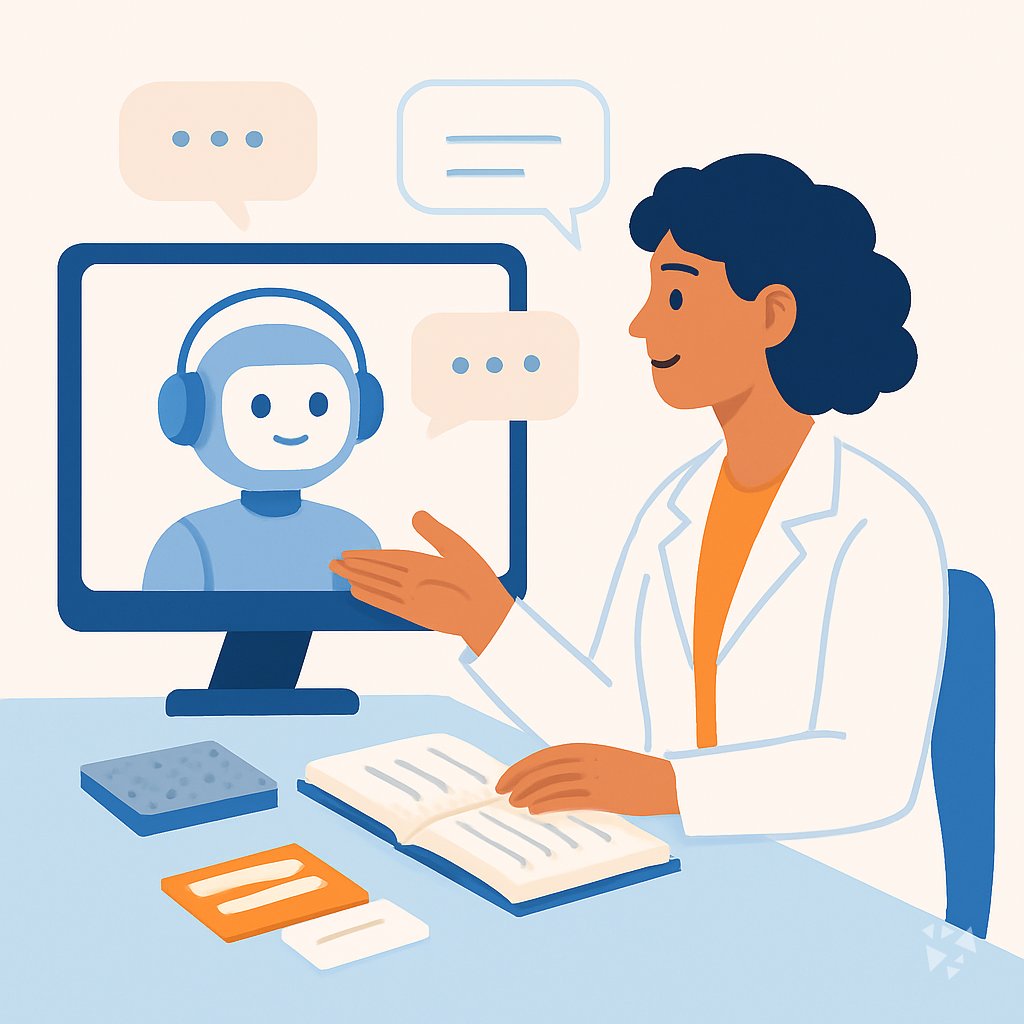
A day in the life of a Materials Scientist: what changes with these prompts.
Track progress as a memberPriya, a materials scientist at a battery startup
Priya starts her Wednesday with a stack of papers on solid-state electrolytes. She opens ChatGPT and uses the literature review prompt. She asks for a table of methods, findings, and gaps. In ten minutes she has a one-page brief for her team meeting.
At the bench, a synthesis of a new cathode coating turned cloudy overnight. She takes a photo and uses the troubleshooting prompt in Claude. She describes the temperature and the mixing speed. The AI suggests a possible moisture issue and a small change to the drying step.
Later, her manager asks for a progress update for a sponsor. Priya uses the grants and stakeholders prompt in Gemini. She pastes her recent results and asks for three bullet points. She edits the wording and sends it off.
By four o'clock, Priya has finished her literature brief, diagnosed the cloudy batch, and sent the update. She leaves on time and takes her daughter to the climbing gym. The time she won back went to her family, not to more busywork.
Before
- Reading papers until her eyes blur
- Guessing why the batch turned cloudy
- Rewriting the same update three times
- Staying late to finish the brief
After this course
- Papers summarized before her coffee cools
- Cloudy batch diagnosed from a photo
- Update drafted in five minutes
- Home in time for climbing practice
What you'll learn
- Literature review: Use AI to digest materials science literature and pull out methods, findings, and comparisons you can act on.
- Explain concepts: Use AI to get clear explanations of materials concepts, mechanisms, and characterization techniques for different audiences.
- Plan experiments: Use AI to turn research questions into practical experimental plans, DOE matrices, and durability test designs.
- Design materials: Use AI to generate and screen candidate material compositions before you commit lab time.
- Analyze data: Use AI to inspect your data, choose statistics, and fit property models when you provide the numbers.
- Troubleshoot lab: Use AI to troubleshoot failed syntheses, instrument problems, and visible defects from your descriptions or photos.
- Write reports: Use AI to draft and refine the methods, results, abstract, conclusions, and reviewer responses for research reports.
- Present and collaborate: Use AI to prepare talks, figure captions, and engineering-ready summaries of your findings.
How this course works
- 9 lessonsOne task of your job each, from literature review basics to grants and stakeholders.
- Ready-to-paste promptsCopy, fill in the parts in {{brackets}}, paste into ChatGPT, Claude or Gemini.
- Tick and completeTick the prompts you tried and mark each lesson complete.
- Get certifiedFinish and keep the prompts as your own library.