Priya's Wednesday, Two Ways
8 lessons · 24 prompts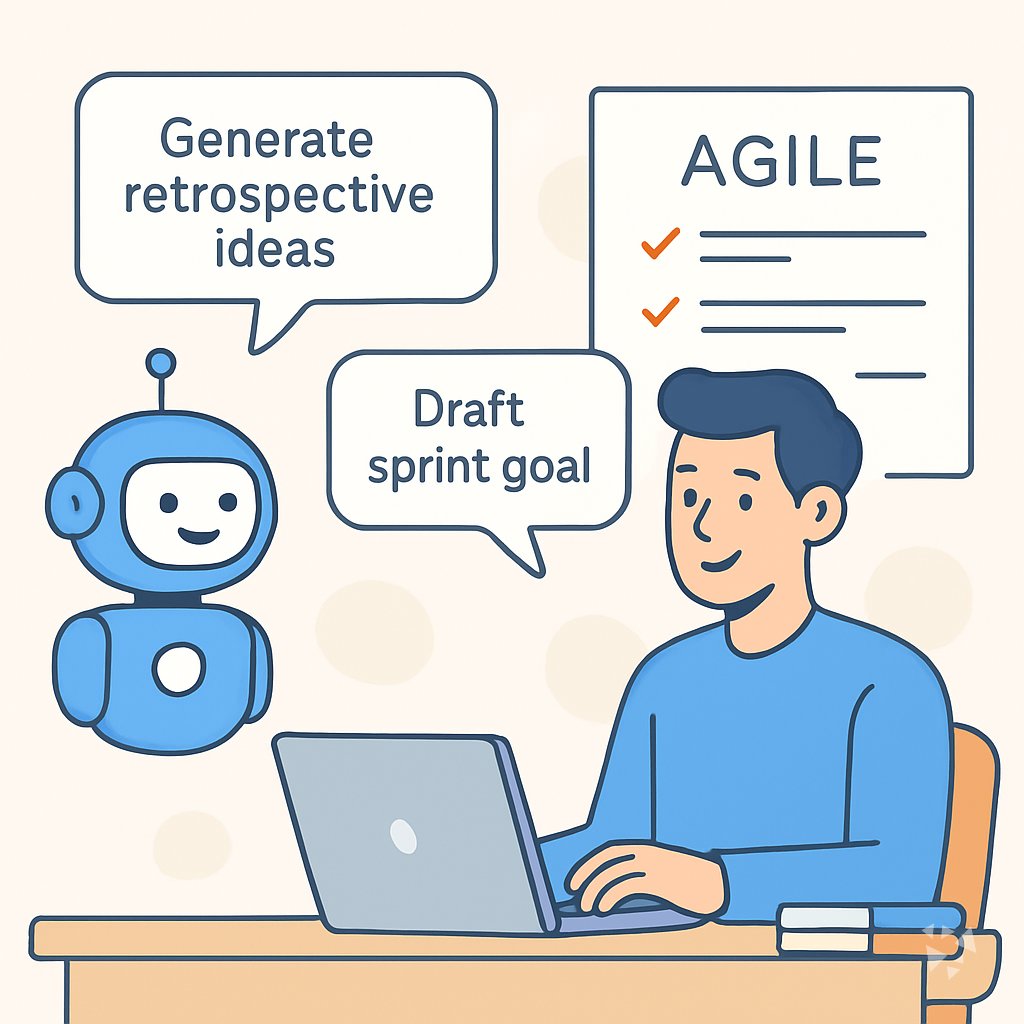
A day in the life of a Scrum Master: what changes with these prompts.
Track progress as a memberPriya is a Scrum Master for a payments team at a mid-sized company.
Priya starts her Wednesday at 8:45 with a coffee and a messy stand-up notes file. She opens ChatGPT and uses the Daily Stand-Up prompt: 'Summarize these updates into three lines and list any blockers.' She pastes the notes, and the AI gives her a clean summary she can read in the meeting. The blocker about the payment gateway test environment is easy to spot.
After stand-up, she has a sprint planning session at 11. She uses the Sprint Planning prompt to draft an agenda with a clear goal and three capacity questions. She edits the goal to match the team's focus on refunds. The meeting finishes ten minutes early because everyone knows what to decide.
At 2, she needs to refine a large backlog story about user notifications. She uses the Backlog Refinement prompt to split it into three smaller stories and add acceptance criteria. She pastes the result into Jira and adds a note for the product owner. Later, she uses the Retrospective prompt to design a quick check-in for Friday, with a theme around handoffs.
With the time she saves, Priya walks to pick up her daughter from school instead of rushing. She also uses twenty minutes to call a teammate who seemed quiet, which turns into a useful coaching conversation.
Before
- Notes pile up after every meeting
- Sprint planning runs long and loose
- Blockers get lost in chat threads
- Retros feel like a repeat of last time
After this course
- Stand-up summaries are ready before the call
- Planning has a clear goal and agenda
- Backlog stories are small and clear
- Retros end with real action items
What you'll learn
- Prepare Stand-Up: Use AI to prepare daily stand-up prompts, summarize updates, and turn notes into clear blockers.
- Plan the Sprint: Use AI to plan a focused sprint planning session with a clear agenda, goal, and capacity questions.
- Refine the Backlog: Use AI to improve backlog items by rewriting stories, adding acceptance criteria, and splitting large work.
- Prepare the Review: Use AI to prepare sprint review communication, summarize feedback, and update stakeholders clearly.
- Design a Retro: Use AI to design retrospectives, find themes in feedback, and turn discussion into action items.
- Remove Blockers: Use AI to describe blockers, brainstorm options, and keep an impediment summary ready for escalation.
- Coach the Team: Use AI to explain Agile ideas, prepare coaching conversations, and draft team working agreements.
- Report Metrics: Use AI to explain sprint metrics, draft progress reports, and generate review questions for the team.
How this course works
- 8 lessonsOne task of your job each, from daily stand-up facilitation to sprint metrics reporting.
- Ready-to-paste promptsCopy, fill in the parts in {{brackets}}, paste into ChatGPT, Claude or Gemini.
- Tick and completeTick the prompts you tried and mark each lesson complete.
- Get certifiedFinish and keep the prompts as your own library.