AI tool
Actually Asked
Actually Asked embeds a FAQ section into your site using your own design. Visitors ask questions that are answered from your pages, and unanswered queries are forwarded to you. It is for site owners who want a self-improving FAQ that captures real...
About Actually Asked
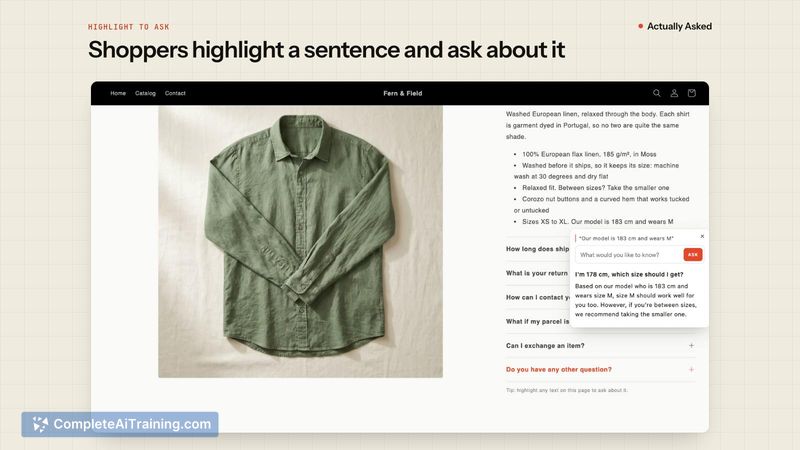
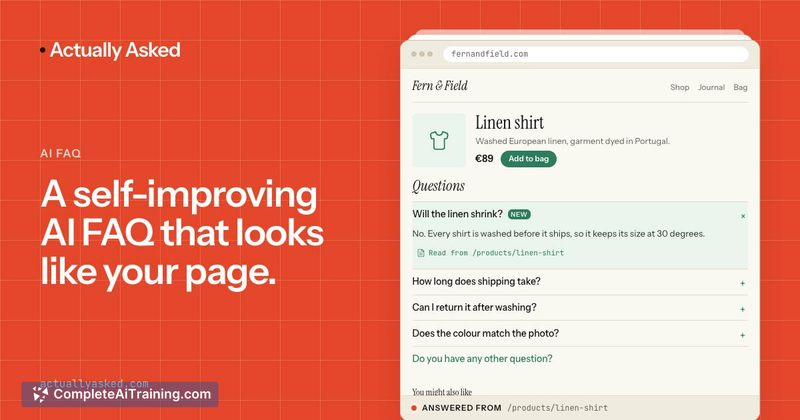
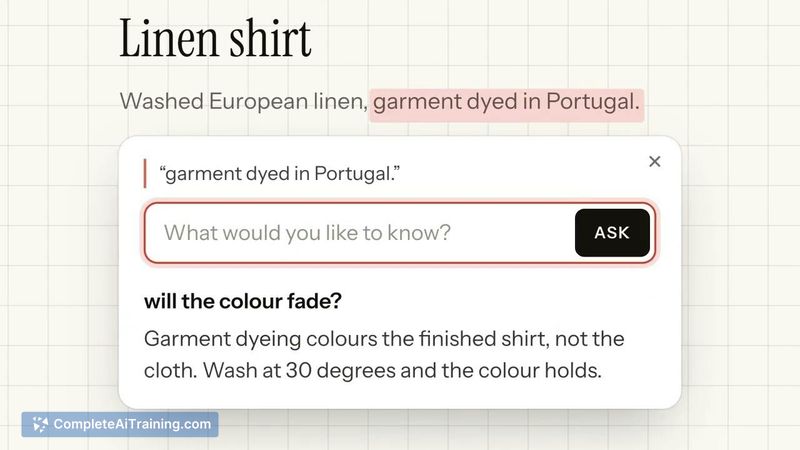
Actually Asked is an AI FAQ tool that embeds directly into a website's existing design, using the site's own fonts and colors rather than appearing as a chat bubble. Visitors can open FAQ entries, type their own questions, or highlight any sentence on the page to ask about it, with answers drawn exclusively from the site's pages, products, policies, and uploaded files. Questions that get asked repeatedly are automatically added to the public FAQ, and a weekly email summarizes what the site's content couldn't answer.
Review
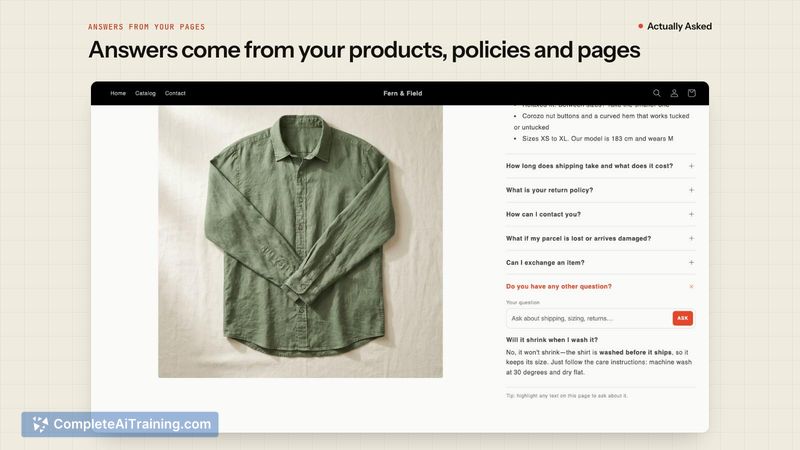
Actually Asked takes a different approach to site-based Q&A by keeping the interaction inside the page layout instead of floating a chat widget over it. The tool pulls answers only from materials the site owner provides-public pages, private knowledge bases, and files-and it won't fabricate responses from outside sources. What makes the workflow distinct is the combination of automatic FAQ growth and a structured feedback loop for unanswered questions.
Key Features
- Inline FAQ with custom styling: The FAQ section inherits the site's fonts and colors and sits within the page content. Visitors can expand entries or submit their own questions directly underneath existing ones.
- Sentence highlighting: A visitor selects 3-300 characters of text on any page, and a small "Ask about this" button appears next to the selection. Clicking it opens a question box tied to that specific text. The popup never opens automatically, and highlighting is ignored inside form fields, editable text areas, and the FAQ itself.
- Automatic FAQ population: When multiple visitors ask the same question within a month, the system groups the variations, writes a single clean question, generates an answer from the learning materials, and adds it to the FAQ. Questions asked on a product page appear on that product's FAQ. Answers the site owner has manually edited, pinned, or removed stay as they were left.
- Monday email report: Each week, the tool sends a summary of questions that the site's pages couldn't answer, giving site owners a concrete list of content gaps to address.
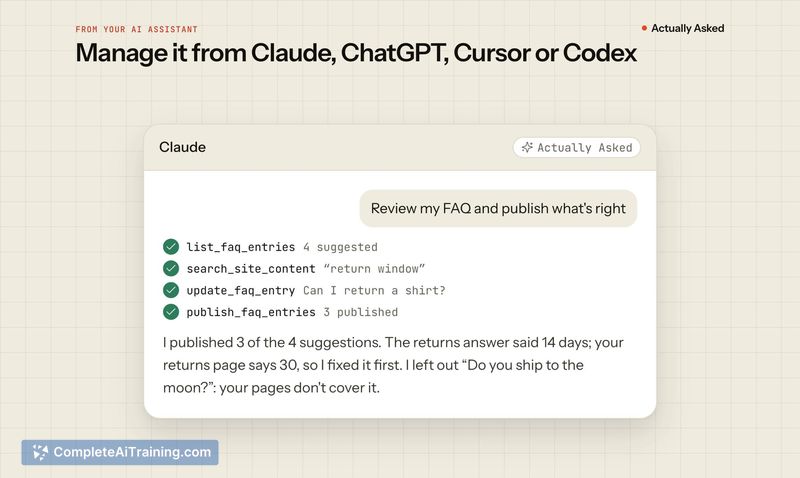
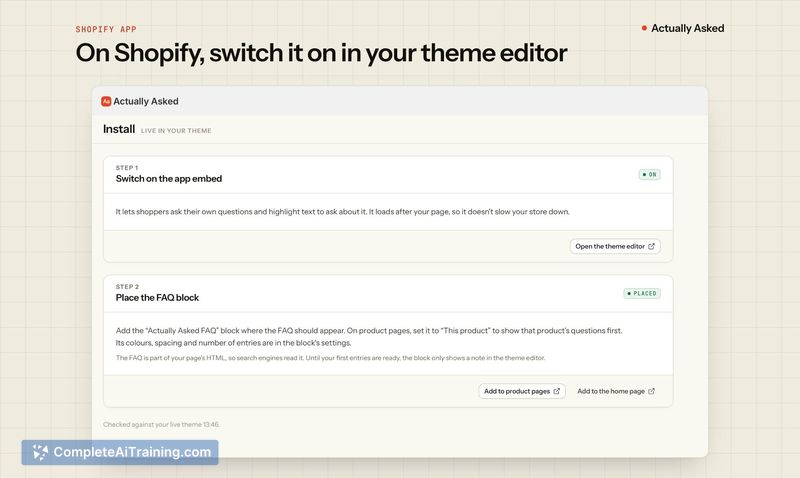
- Platform integrations: Available as a Shopify theme block, a Framer plugin, a Claude connector, and on WordPress, Webflow, or any other site via two lines of HTML. Management is possible through Claude, ChatGPT, Cursor, or Codex over MCP.
Pricing and Value
The free plan includes 50 AI-generated answers per month on one site, with no credit card required. The reference content does not detail paid plan tiers or pricing beyond the free tier, so the cost for higher usage levels is not yet defined publicly.
Pros
- FAQ section matches the site's visual design instead of looking like a third-party overlay.
- Highlight-to-ask gives visitors a way to question specific passages without leaving the page.
- Answers stay within the boundaries of the provided materials, reducing fabricated responses.
- Self-updating FAQ reduces the manual work of maintaining a knowledge base over time.
- Weekly unanswered-question report surfaces content blind spots that analytics alone would miss.
Cons
- The highlight feature currently cannot exclude UI elements like buttons or navigation, though the maker has noted this as a planned improvement.
- Answer quality depends entirely on the depth and accuracy of the site's own content-thin or outdated pages will produce thin answers.
- The tool is not well suited for sites that need real-time human escalation or live chat handoff, since the interaction model is asynchronous and content-based.
Actually Asked fits sites where the primary support need is answering factual questions from existing documentation, particularly e-commerce stores, SaaS help sections, and tutorial-heavy pages. The automatic FAQ growth and weekly gap reports make it practical for small teams who don't have time to manually curate a knowledge base. Sites that depend on live agent intervention or complex conversational flows won't find that here, but for content-driven Q&A that blends into the page itself, the approach is focused and specific.