AI tool
PostNitro for Agents
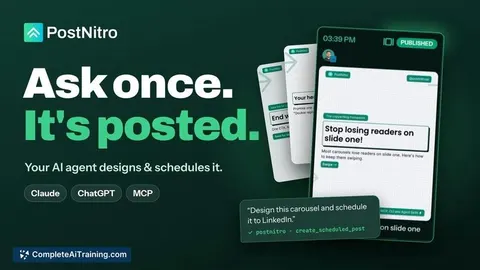
PostNitro for Agents lets AI agents design and schedule social media posts. An agent can turn a topic or article into a carousel, image, or video, then publish across six platforms. It works with Claude or ChatGPT via OAuth, an MCP server, CLI, or...
About PostNitro for Agents
PostNitro for Agents is an extension of the PostNitro social media design tool that lets AI agents handle the full content creation workflow. Instead of only publishing text or pre-made media, an agent can design branded carousels, image posts, and short videos from a topic, article URL, or X thread. It connects directly to Claude, ChatGPT, or custom setups via an MCP server, CLI, or REST API, and can schedule finished posts to LinkedIn, Instagram, TikTok, Threads, Facebook, and Pinterest.
Review
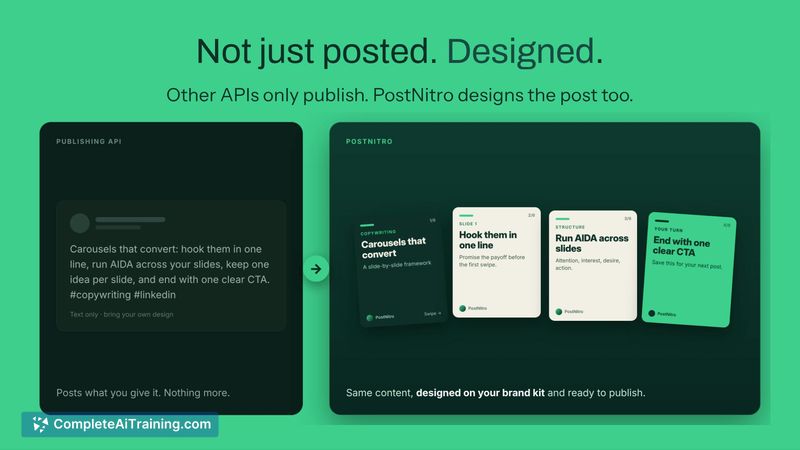
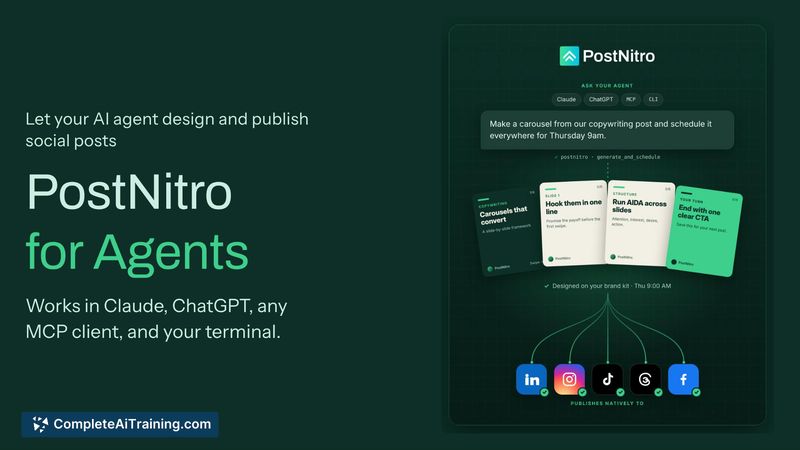
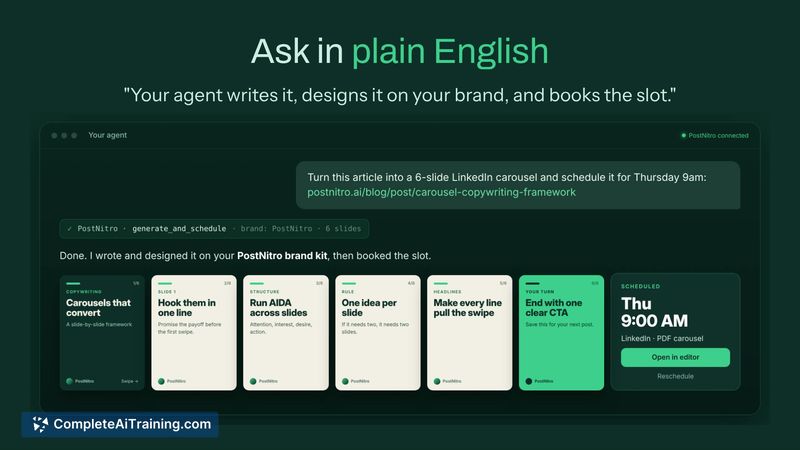
PostNitro started as a manual carousel generator in 2023, but the team noticed users were increasingly bypassing the editor and asking their AI agents to handle everything. Most social APIs stop at publishing - they won't design a post from scratch. PostNitro for Agents plugs that gap by exposing the full design engine to an agent, so a single prompt can go from raw idea to scheduled, on-brand post without switching tools.
Key Features
- Agent-driven post design: An AI agent turns a topic, article URL, or X thread into a branded carousel, image post, or animated video using your fonts, colors, and logo across 100+ templates.
- Multi-platform native scheduling: Publishes directly to LinkedIn (as a PDF document), Instagram, TikTok, Threads, Facebook Pages, and Pinterest, with each platform receiving its own caption and format.
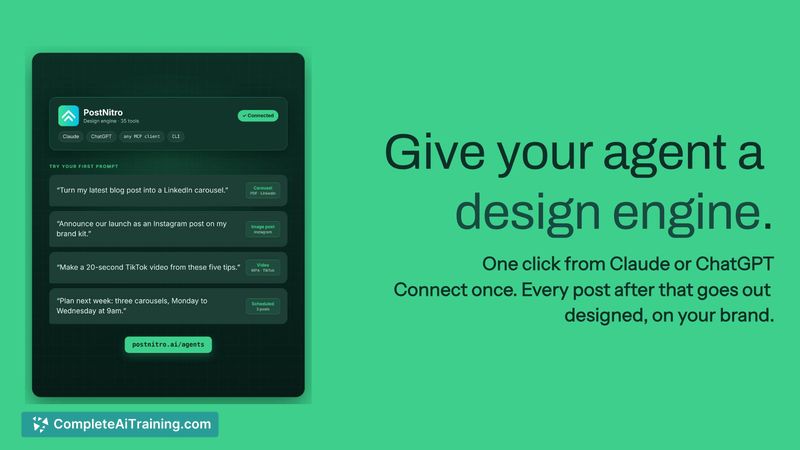
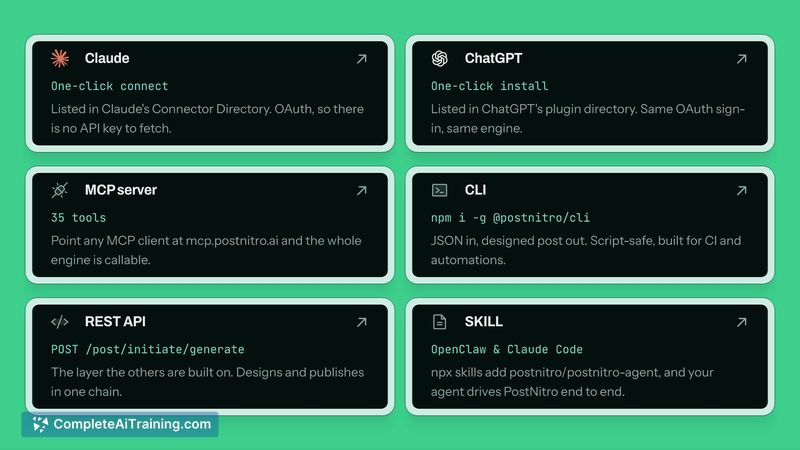
- Multiple connection methods: One-click OAuth integration from Claude or ChatGPT directories (no API key required), plus a 35-tool MCP server at mcp.postnitro.ai, an npm CLI, and a REST API. Also works with n8n, Zapier, Make, and OpenClaw.
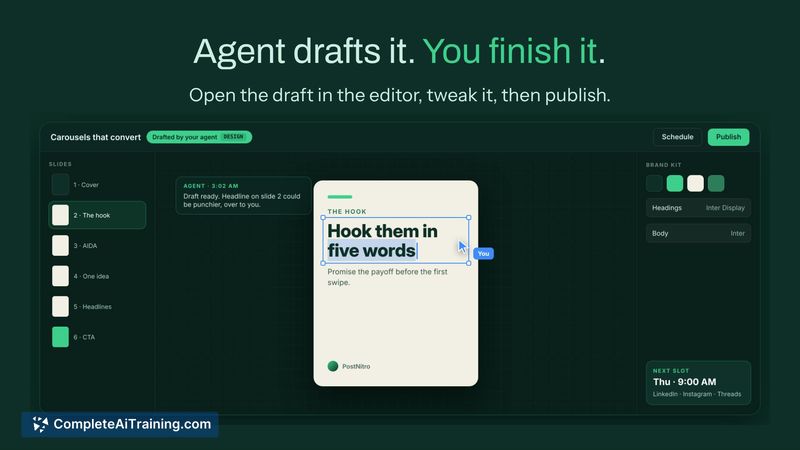
- Human hand-off option: Agents can output an editable draft that opens in the PostNitro editor for review before scheduling, rather than publishing automatically.
- Platform-aware formatting: Agents select the correct template dimensions for each platform - 2:3 for Pinterest, 9:16 for TikTok - and set video duration automatically.
Pricing and Value
PostNitro for Agents operates on a subscription model. Users can start with a trial subscription to test agent functionality. A Product Hunt launch promotion (code PH40AGENTS) takes 40% off annual Creator+ or Team+ plans until October 23. Exact pricing tiers beyond this promotion are not detailed in the available material. The free options mentioned on the launch page are not fully defined in terms of credit transparency, and one user review noted that the free version prompted an upgrade after only two uses without clearly showing remaining credits.
Pros
- Closes the gap between AI-written captions and actual visual post creation, which most social APIs leave untouched.
- Connects in one click from Claude or ChatGPT without managing API keys.
- Outputs platform-specific formats natively - LinkedIn gets a PDF carousel, TikTok gets a slideshow or reel, Pinterest gets a carousel Pin.
- Lets users stay in control by requesting editable drafts instead of direct publishing.
- Works with automation tools like n8n, Zapier, and Make for teams that already have workflow pipelines.
Cons
- Free tier credit limits are not transparent; a user review reports hitting an upgrade prompt after just two posts.
- Not well suited for teams that need general-purpose design work - PostNitro focuses narrowly on social media posts, unlike broader tools such as Canva.
- Reliance on AI agents for design means output quality depends heavily on the underlying model's ability to follow brand guidelines consistently.
PostNitro for Agents fits teams and creators who already use Claude, ChatGPT, or automation workflows to draft social content and want to remove the manual design step. It makes the most sense when you're producing platform-specific carousels and short videos at volume and need them to stay on-brand without opening a separate editor. For one-off posts or general design tasks outside social media, a broader tool would likely be more practical.