AI tool
Willder
Willder is a context layer that syncs apps, agents, and teams. It gives each agent a scoped, revocable token so what one writes, others read on their next call. The engine is MIT-licensed and self-hostable.
About Willder
Willder is a context layer designed to sync apps, agents, and teams through a shared memory graph with access control. Each AI agent receives its own scoped, revocable token that gates what it can read and write. The engine is open source under the MIT license and can be self-hosted, with a hosted version available at willder.ai.
Review
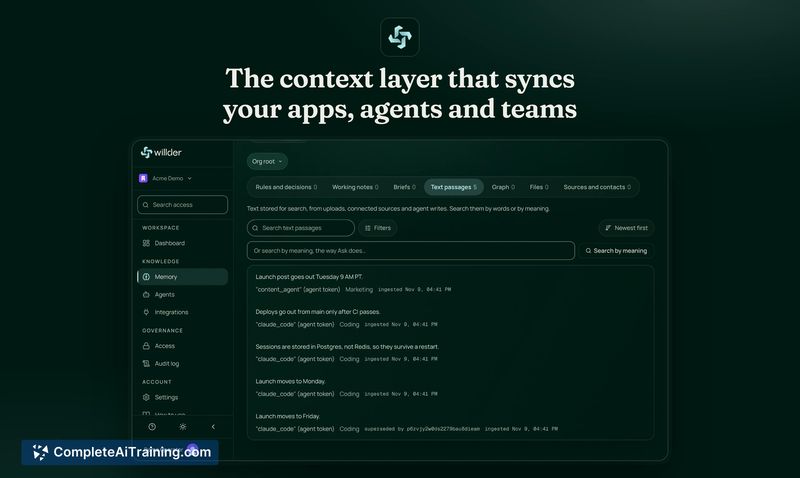
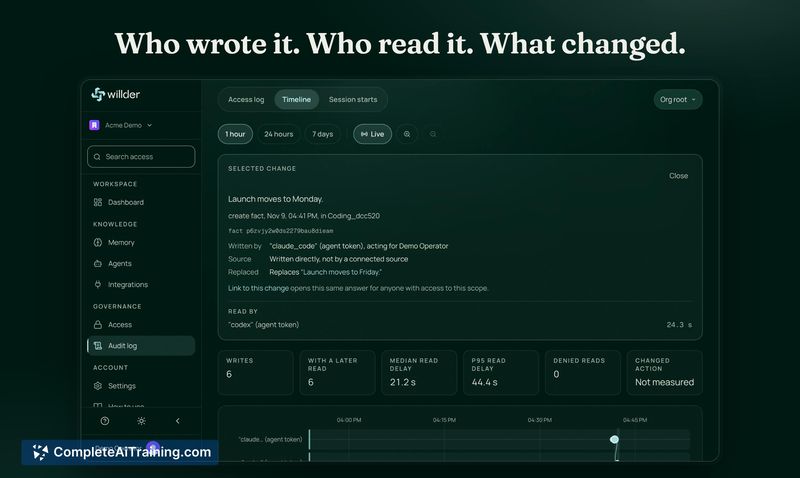
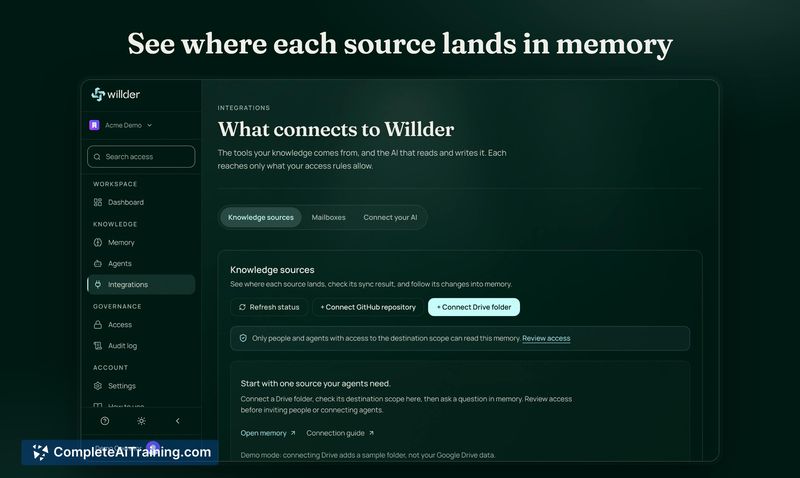
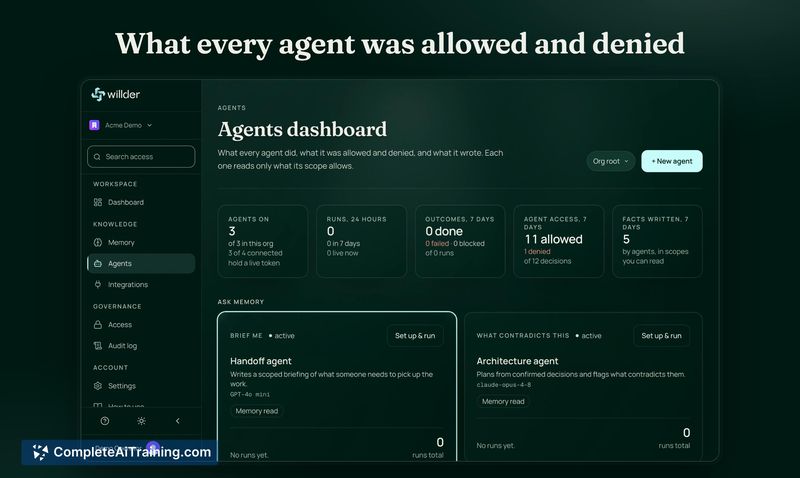
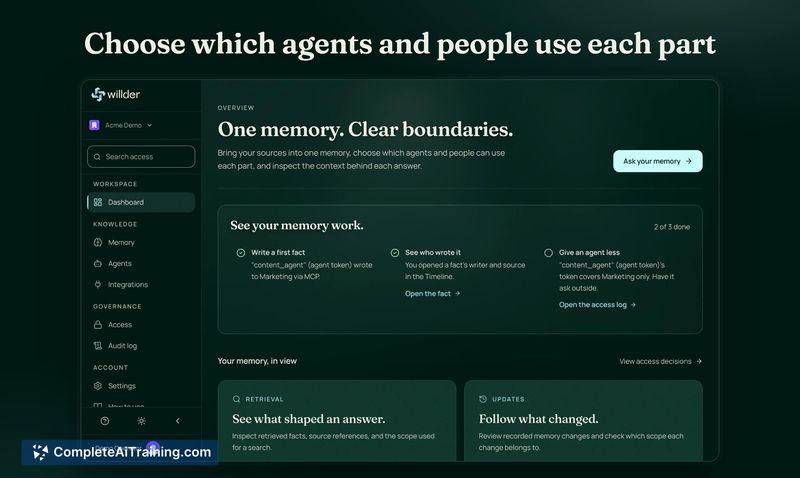
Running multiple AI agents often leads to conflicting outputs, stale data, and access that's hard to audit. Willder tackles this by giving agents a common memory graph where one agent's writes become available to others on their next call-but only if their token permits it. It's built by a solo founder who uses 20 agents himself, and the architecture reflects that firsthand experience with coordination problems.
Key Features
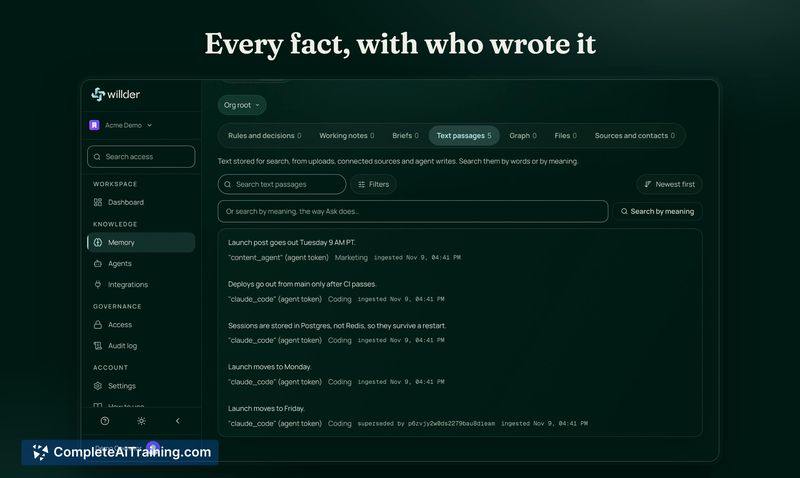
- A shared memory graph where agents read what others have saved, with attribution showing who wrote each fact, where it originated, what it replaced, and which agents have read it.
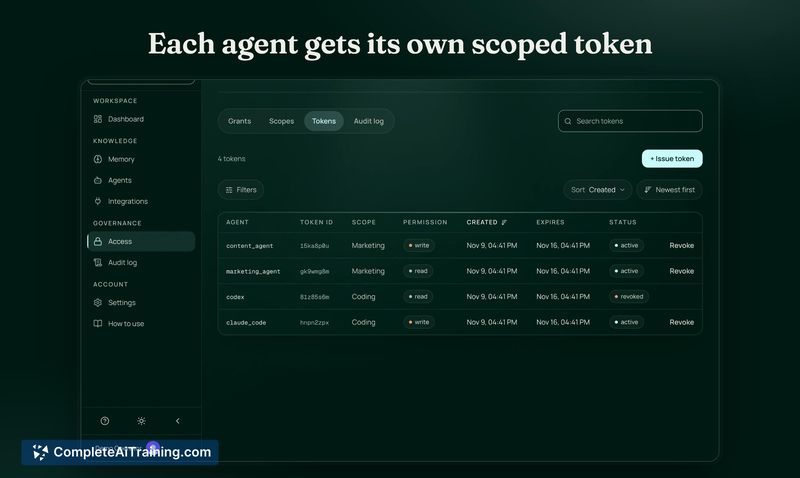
- Scoped, expiring tokens per agent that enforce read/write boundaries; a revoked token gets refused on the next call.
- Connectors for GitHub, Drive, Slack, and Figma that pull external data into the same access-control model (GitHub integration is currently measured, with others listed on the roadmap).
- MCP support for Claude Code and Codex, letting agents interact with the context layer through a standard protocol.
- MIT-licensed engine that teams can self-host, with the hosted version handling the infrastructure.
Pricing and Value
The hosted version at willder.ai is listed as free at launch. The self-hosted engine is open source under MIT, so there are no licensing fees to run it on your own infrastructure. Pricing for the hosted version beyond the current free tier hasn't been defined publicly yet.
Pros
- Access control is granular-each agent token has its own scope and expiration, and revocation takes effect on the next call rather than mid-session.
- Every fact in the graph carries provenance data: who wrote it, its source, what it replaced, and which agents read it.
- Self-hosting is possible with the MIT-licensed engine, which matters for teams with strict data residency or compliance requirements.
- Connectors bring external app data under the same permission rules, so agents don't bypass the access model when pulling from GitHub or Drive.
- The solo-founder build means the tool directly reflects the problems it solves-the maker runs 20 agents on it daily.
Cons
- The connector for GitHub is described as "measured so far," and Slack, Drive, and Figma connectors don't yet have the same level of integration maturity.
- Self-hosting requires operational knowledge; teams without infrastructure expertise will need to rely on the hosted version, which is still early-stage.
- Willder isn't well suited for teams running a single agent or simple workflows-the coordination features add complexity that solo-agent setups won't benefit from.
Willder fits teams that are already running multiple AI agents and hitting the limits of session-scoped memory-where agents overwrite each other or work from stale data. The access-control model also makes it relevant for organizations that need audit trails and permission boundaries across agents. If you're just experimenting with a single agent, the coordination layer adds overhead you probably don't need yet.