
AI news ·
1,200 Lawyers Gather in Ilorin to Debate AI, Law, and Religion in Nigeria
Over 1,200 lawyers will meet in Ilorin, Kwara State, to discuss AI's influence on law and religion. The event features top legal and religious experts, including a keynote by Prof. Isa Ali Pantami.
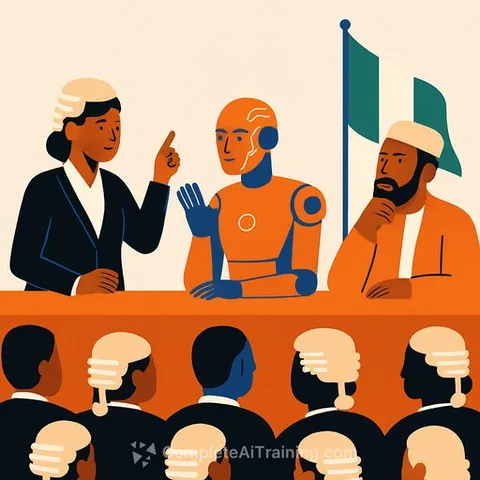
1,200 Lawyers to Discuss AI, Law, and Religion in Kwara
Over 1,200 legal professionals will gather in Ilorin, Kwara State, this Friday for an important three-day conference focused on the intersection of artificial intelligence (AI), law, and religion. The 16th Annual Conference is hosted by the Muslim Lawyers’ Association of Nigeria (MULAN) and runs from Friday through Sunday.
Key figures expected to attend include the governor of Kwara State, AbdulRahman AbdulRazaq; the Chief Justice of Nigeria, Justice Kudirat Kekere-Ekun; and the Attorney General of the Federation and Minister of Justice, Lateef Fagbemi SAN.
Conference Theme and Purpose
The conference theme, “Artificial Intelligence, Law and Religion in Nigeria”, highlights the urgent need to address emerging technologies through the lenses of legal ethics, constitutional rights, and religious values. The discussion aims to provide clarity on how AI impacts legal practice and religious considerations within Nigeria’s legal framework.
At a press briefing in Ilorin, MULAN’s national president Saidu Tudun-Wada, represented by the association’s second vice president Tijajni Sanda, described the event as a significant platform for legal professionals to critically examine these evolving issues.
Distinguished Attendees and Keynote
- Chief Judge of Kwara State, Justice Abiodun Adebara
- Grand Khadi of Kwara State Shariah Court of Appeal, Justice AbdulLateef Kamaldeen
- Director General of the Nigerian Institute of Advanced Legal Studies (NIALS), Professor Ibrahim Abikan
- Professor Yusuf Ali SAN
- Vice Chancellor of the University of Ilorin, Professor Wahab Egbewole SAN
The keynote address will be delivered by Professor Isa Ali Pantami, former Minister of Communications and Digital Economy. He will cover the ethical and religious implications of emerging digital technologies in law and governance.
Strategic Location and Event Significance
The choice of Ilorin as the venue is strategic. Known for its rich Islamic scholarship and established legal traditions, the city offers a fitting environment for this national dialogue that merges faith and law.
MULAN’s president emphasized that the conference is more than an annual meeting; it serves as a vital forum for raising legal awareness among Muslim lawyers and setting high standards for ethical and intellectual engagement in the context of new technologies.
Support from Kehinde Eleja SAN, chairman of the conference planning committee, is credited for ensuring the event will proceed smoothly and with impact.
For legal practitioners interested in understanding how AI intersects with law and ethics, this conference represents a critical opportunity to engage with leading experts and policymakers on these pressing matters.