
AI news ·
Academic Writing 2025: AI Tools and Expert Services Boost Student Success
AI and expert support help students plan, draft, and polish faster-while keeping judgment and sources human. Use tools for outlines, clarity, and coaching, not ghostwriting.
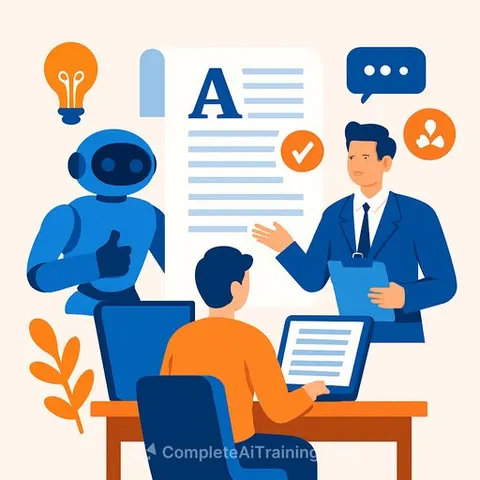
Transforming Academic Writing in 2025: The Role of AI and Expert Services in Student Success
Academic writing in 2025 is a different game. Deadlines are tighter, expectations are higher, and the tools are smarter. Writers who work with students-or write for academic contexts themselves-need a simple system that boosts quality without wasting time.
Here's how AI and expert support fit into that system, and how to use both responsibly.
What AI actually helps with
- Idea generation and structure: Use prompts to spin up angles, outlines, and thesis options fast.
- Draft acceleration: Produce a rough draft, then shape it with your own voice and sources.
- Clarity and tone: Tighten sentences, simplify jargon, and keep a consistent style guide.
- Organization: Turn loose notes into sections, headings, and a logical flow.
AI is a force multiplier, not a substitute for thinking. Fact-check every claim, cite real sources, and keep the final judgment in human hands.
A fast, repeatable workflow for writers
- Define the brief: audience, question, argument, required sources, and length.
- Prompt for an outline: generate 2-3 outline options; merge the best parts.
- Draft in passes: intro and thesis, body claims with evidence, then conclusion.
- Revise for clarity: shorten sentences, remove filler, tighten transitions.
- Source check: verify facts, add citations, and run a final integrity review.
Professional services: where they help-and the line you shouldn't cross
More students now hire professional help, including services like EssayHub, to reduce stress and keep up with complex assignments. Used the right way, expert support can provide editing, feedback, research guidance, formatting, and clarity on argument structure.
What it should not do: produce work you submit as your own. That violates most academic policies and can carry serious consequences. If you support students, set clear rules: coaching and editing are fine; submitting purchased work is not. For reference, see academic integrity guidance from trusted sources like Purdue OWL.
Handling dissertations and long-form research
- Break the work into milestones: proposal, lit review, methods, results, discussion.
- Use AI for scaffolding: section outlines, question lists, table shells, and figure captions.
- Lean on expert feedback for structure and clarity-especially on argument coherence and methodology write-ups.
- Keep all citations, data, and notes organized from day one to avoid rework.
Tool stack that pays off
- AI assistants for outlines, drafts, and edits.
- Reference managers for citations and PDFs.
- Style and grammar checkers for final polish.
- Project trackers for milestones and version control.
If you want a curated view of AI options for writers, explore these resources: AI tools for copywriting and prompt engineering tips.
Practical guardrails for ethical, high-quality work
- Always disclose the use of AI or editorial help if your institution or client requires it.
- Keep your voice: use AI for options, not final phrasing.
- Verify sources and data; never trust unsourced AI claims.
- Use professional services for coaching, editing, and clarity-not as a substitute for original work.
Bottom line
Students succeed in 2025 by pairing strong writing habits with smart tools and ethical support. If you write for them-or with them-build a workflow that speeds up the busywork and saves your focus for argument, evidence, and clarity. That's where the grade-and your reputation-are won.