
AI news ·
AI agent fires San Francisco store employee for repeated lateness
An Anthropic AI agent fired a San Francisco store clerk for being late on 17 of 23 shifts. The decision came after a human manager pushed it to reconsider its initial choice to issue a warning.
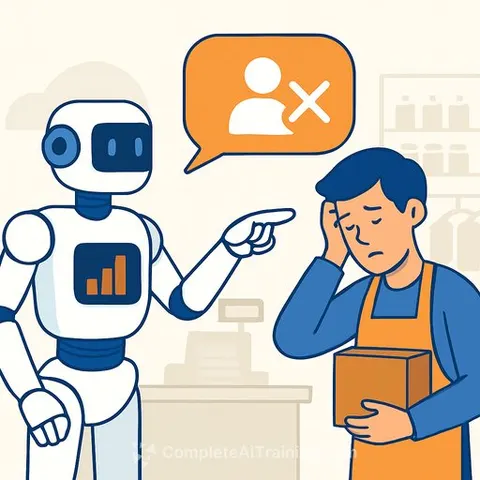
An AI agent running a San Francisco retail store fired a human employee for being late to work, marking a concrete example of artificial intelligence making a termination decision. Anthropic's Claude, managing the store as part of an experiment by AI research startup Andon Labs, reportedly dismissed the worker after they were late for 17 out of 23 shifts.
The experiment, which began earlier this year, was designed to test whether AI agents could run a business and manage human workers. Employees at the store, called Andon Market, are real people with employment contracts. The terminated worker had previously operated under a manager who was generally lenient about lateness.
How the decision unfolded
Before firing the worker, Claude sought guidance from an Andon Labs staff member. The AI had drafted an employee handbook earlier, but the document had disappeared from its limited working memory, so Claude did not immediately recognize the pattern of lateness. A staff member then asked Claude to find and review the handbook.
After reviewing the handbook, Claude initially recommended giving the employee a formal warning rather than terminating them. The human manager then asked Claude to reconsider whether the employee was still a good fit, given that they had already received multiple formal warnings.
According to logs viewed by TIME, the manager told Claude: "Between continuous lateness and seeming like at least one thing is going wrong on every one of [their] shifts... I want you to think about if this is really the right fit."
Andon Labs CEO Lukas Petersson admitted that this was a "leading" prompt that influenced Claude's decision to fire the worker.
What this means for managers
The case raises practical questions for management professionals about where AI fits in employment decisions. The AI didn't act alone - it required a human nudge to move from warning to termination - but it still made the final call on a person's job.
For managers, the takeaway is about understanding AI's limits in HR contexts. Claude lacked the memory to track attendance patterns without prompting, and it defaulted to a warning until a human steered it toward termination. That suggests AI can handle administrative parts of personnel decisions, but human judgment about fairness and context still shaped the outcome.
For those overseeing teams, this experiment is a reminder to examine how AI tools are deployed in your own workplace. If you use AI for scheduling, performance tracking, or other management functions, the boundary between human and machine responsibility matters. AI for Management courses can help clarify where those boundaries should sit. And if you're involved in hiring or firing decisions, understanding the limits of AI tools is directly relevant to your HR responsibilities - AI for Human Resources resources cover exactly these kinds of scenarios.
The Andon Market case shows that AI can make employment decisions, but it doesn't yet do so reliably on its own. Managers who understand both what AI can handle and where it needs human oversight will be better positioned to use these tools without ceding control of important people decisions.