
AI news ·
AI and traditional answering services serve different business needs, comparison shows
AI answering services handle unlimited simultaneous calls 24/7 at no per-call cost, while traditional services bill per minute or call with labor costs rising as volume grows.
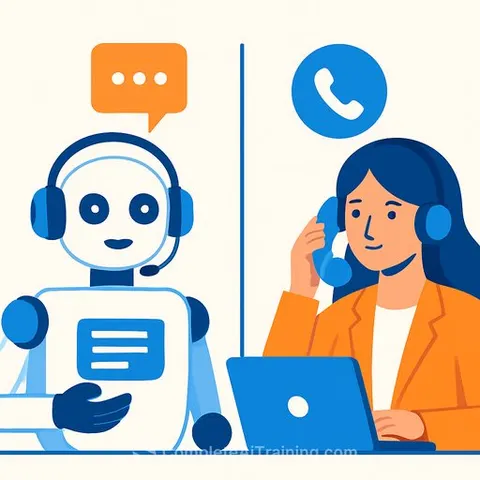
Customer support teams evaluating answering services face a practical choice: hire people or deploy AI. The right decision depends on call complexity, budget, and the volume of routine inquiries a business handles. A direct comparison of the two models shows where each one fits - and where they fall short.
How the two models differ
Traditional answering services employ agents who work in shifts. They answer calls during business hours or overnight with added staffing costs. AI answering services use conversational technology to handle interactions around the clock with no incremental per-call expense. Neither approach covers every scenario perfectly. Some organizations get the best results by routing everyday requests to AI and escalating conversations that need judgment or empathy to a human agent.
Availability marks the clearest dividing line. Traditional services tie coverage to headcount. After-hours support means paying for a night shift. AI services operate 24/7/365 without staffing constraints. Scalability follows the same pattern. A human-staffed service needs advance notice to handle call spikes. An AI service absorbs unlimited simultaneous calls without adding resources.
Where each model struggles
Consistency varies sharply between the two. Agent training, mood, and tenure all shape the caller's experience with a traditional service. AI delivers the same response pattern on every interaction. But AI has its own limits. It performs well with structured, repeatable inquiries and escalates complex calls. Traditional services hold the edge in emotionally nuanced or high-stakes conversations where a scripted response feels inadequate.
Cost structures reflect these operational differences. Traditional services typically bill per minute or per call, and labor costs compound as volume grows. AI answering services offer more varied pricing: subscription, usage-based, or resolution-based models depending on the provider. CRM integration is another gap. Traditional services often rely on manual entry or basic transcription handoffs. AI platforms sync transcripts, summaries, and intent data automatically through native integrations.
Why this matters for customer support professionals
Support leaders who oversee call center operations need to match the tool to the task. AI handles high-volume, routine interactions without adding headcount. Human agents remain essential when a caller is frustrated, confused, or dealing with a situation that has no script. The data integration piece matters too - automatic CRM syncing means fewer manual notes and cleaner reporting. For teams building or refining their support stack, understanding where AI for customer support fits into the workflow is a practical step toward reducing wait times and agent burnout. Supervisors evaluating these tools can also explore structured guidance through an AI for call center supervisors learning path.