
AI news ·
AI call-routing system aims to cut police 101 wait times
The UK is rolling out an AI triage system for its 101 non-emergency police line, backed by £1.4 million, to redirect non-police calls and cut wait times. The Home Office projects the software could save up to £8.5 million annually by offloading roughly four million misdirected calls a year.
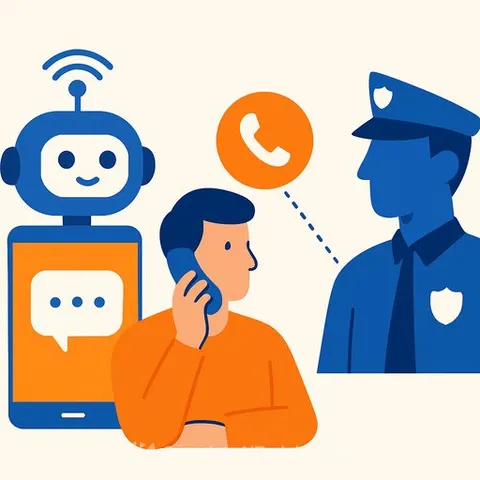
The UK government is rolling out an AI call-routing system across the non-emergency 101 police line, backed by £1.4 million in funding, to cut wait times and redirect non-police inquiries before they enter police queues. The Home Office estimates the software could save policing up to £8.5 million annually by reducing unnecessary call-handling workloads.
The 101 service receives roughly 20 million calls a year. Home Office data shows around 20 per cent of those-about four million calls-involve matters better suited to local councils, NHS 111, or energy providers. Handlers also deal with inappropriate or misdirected reports, taking time away from genuine crime reports and safeguarding concerns.
How the system works
Developed by the Home Office, the National Police Chiefs' Council (NPCC), and delivery partner Vodafone Business, the software matches a caller's stated reason for contacting 101 with likely categories. It then diverts non-police issues to the correct organisation before the caller joins a police queue. During pilot testing across 15 police forces, the system diverted cases such as fly-tipping, noise complaints, and damage-only traffic incidents.
The system includes explicit safeguards to address potential inaccuracies. The AI verbally confirms its understanding of the call reason and requires the caller to accept or reject the classification. Targeted screening questions are triggered for broad or ambiguous categories. If the system detects any uncertainty or potential emergency, the call bypasses automated routing and transfers directly to a police call handler. Callers can also choose to speak with a human operator.
Part of a wider modernisation push
The 101 triage system sits within a broader £16.5 million government investment to modernise public-police interactions. Additional planned technology includes AI tools for transcribing 999 and 101 calls, and automated analytics to link crime reports and identify regional demand patterns. Existing 999 emergency call protocols remain unchanged.
For public sector teams, the system offers a working example of how AI for Government can handle high-volume citizen interactions without removing human oversight. The design choices-caller verification, targeted screening, and direct escalation-show what a practical AI triage process looks like when accuracy matters.
The approach also mirrors broader AI for Customer Support patterns: route simple cases away from human agents, keep complex ones with people, and give users a clear path back to a human operator. The police rollout suggests these principles are transferable to public services where the stakes are higher than average call centres.
Why this matters for government professionals
This rollout gives civil servants a concrete benchmark for AI call-handling projects. The £1.4 million investment is modest by public sector standards, but the projected £8.5 million annual saving shows how quickly triage automation can pay for itself. The safeguard structure-explicit caller confirmation, escalation triggers, and optional human handoff-offers a template for other agencies planning similar systems. If you work on citizen-facing services, the 101 pilot is worth watching as a reference point for what works and what doesn't in public sector AI deployment.