
AI news ·
AI dependence weakens students' critical thinking and problem-solving skills, educators warn
Students using AI to write essays and generate code are passing courses but failing exams, professors warn. Berkeley data links rising AI tool use to higher failure rates when students must work independently.
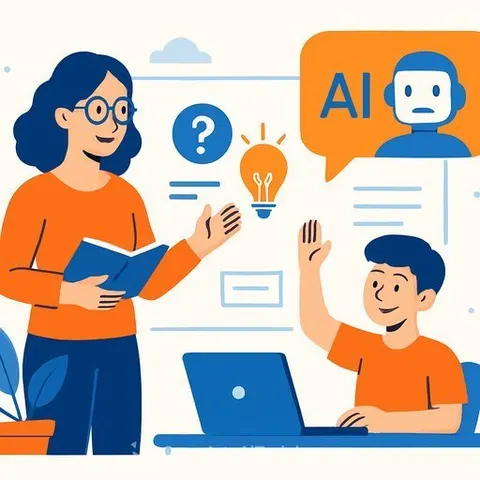
AI Tools Are Undermining Student Learning, Educators Warn
Students are using ChatGPT, Claude, and Google Gemini to generate essays and reports in seconds without understanding the underlying concepts. Professors report that this practice is weakening critical thinking skills and creating dangerous gaps between what students can produce and what they can actually do.
At the University of California, Berkeley, professors have documented rising failure rates in computer science courses as AI tool usage among students has increased. Students generate code and complete assignments using AI, then struggle when asked to solve problems independently during exams or technical interviews.
The Problem With Outsourcing Thinking
When AI provides instant answers to complex questions, students skip the struggle that builds understanding. They become passive consumers rather than active learners.
Creative thinking requires brainstorming and overcoming obstacles. When students rely on AI to generate ideas or solve problems, they miss the cognitive work that develops originality and problem-solving ability.
The pattern extends beyond computer science. Students who use AI to bypass difficult work develop weaker work ethics and less motivation to persist through challenging material.
Broader Consequences for Development
Excessive reliance on digital tools also reduces human interaction in classrooms. Discussions with teachers and peers build communication skills, emotional intelligence, and teamwork-capabilities that AI cannot replace.
When students submit AI-generated work as their own, they forfeit valuable learning opportunities. They may pass courses but lack the independent thinking skills required in real-world situations.
A Balanced Approach
AI offers genuine benefits in education-personalized tutoring, efficient research tools, and greater accessibility. The problem lies in misuse and overdependence.
Educators should position AI as a supporting tool, not a replacement for genuine learning. Students who maintain a balanced approach can benefit from technological advances while developing the critical thinking, creativity, and resilience that define genuine education.