
AI news ·
AI Detects Hidden Signs of Memory Loss During Sleep Years Before Symptoms Appear
Researchers developed an AI that analyzes sleep brainwaves via EEG to predict memory loss years before symptoms appear. Early detection offers a chance for timely intervention and treatment.
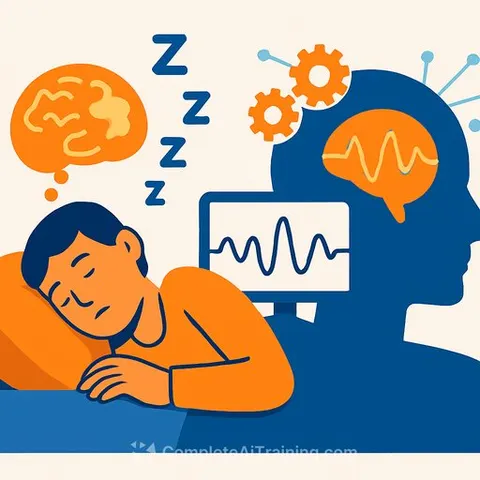
Breakthrough AI System Detects Early Signs of Memory Loss During Sleep
During sleep, the brain generates tiny electrical signals that ripple through neural networks. These subtle brainwaves hold clues about future cognitive health.
Researchers at Mass General Brigham have developed an AI tool that analyzes brainwaves recorded during sleep to predict memory decline years before symptoms emerge. Using electroencephalography (EEG), which captures brain activity via scalp sensors, this AI can detect early warning signs of memory loss long before cognitive issues become noticeable.
Tiny Waves, Big Clues
The study examined data from women over 65 who initially showed normal cognitive function. These participants underwent EEG monitoring during sleep and completed mental tests. Five years later, 96 out of 281 women had developed cognitive impairments. The researchers applied AI and information theory methods to analyze the original EEG data, discovering subtle differences—especially in gamma waves—among those who later showed memory decline.
According to Shahab Haghayegh, a lead scientist on the project, “The brain leaves little signs of trouble long before any symptoms appear. With advanced analysis and AI, we can find these signals in EEG recordings from just one night.” The AI predicted future memory problems with about 85% accuracy in identifying individuals at risk and an overall accuracy of 77%.
Why Early Detection Matters
Cognitive decline often begins years before symptoms appear, during what is called the "preclinical" phase. Intervening early is crucial since treatments for conditions like Alzheimer’s are most effective in early stages.
Dr. Kun Hu, another lead researcher, notes, “FDA-approved treatments for Alzheimer’s work best in early dementia. Intervening before cognitive decline signs appear could be even more effective.” Early detection provides a window for lifestyle adjustments such as diet, exercise, and sleep improvements, as well as timely medical treatments that may slow or prevent further deterioration.
A Simple Test With Big Potential
EEG is a non-invasive, painless procedure widely available in clinical settings. This study’s test relied on data from just one night of sleep, but future research could use multiple nights for enhanced prediction accuracy.
Dr. Hu explains, “EEG data from multiple nights could be even more predictive.” The concept is similar to having multiple photos that tell a fuller story rather than a single snapshot.
Looking ahead, wearable EEG headbands used at home could collect brainwave data over several nights without hospital visits, making early cognitive screening more accessible and affordable.
Looking Toward the Future
The researchers plan a clinical trial to explore whether applying small electrical pulses during sleep can modify brainwave patterns linked to cognitive decline. If successful, this could slow or prevent memory loss.
Some limitations exist: the initial study focused only on older women and used EEG data from a single night. Broader testing involving men, younger people, and diverse populations is necessary to validate these findings. Confirming whether gamma wave changes consistently predict future memory problems will strengthen the link between these brain signals and cognitive decline.
Despite these early constraints, this research stands out because it uses a simple overnight EEG recording to identify those at risk, potentially changing approaches to dementia prevention.
A New Way to See the Brain
Traditional methods like MRI scans reveal brain damage after it occurs, and blood tests provide indirect markers. This AI-powered EEG tool offers real-time insight into brain function during natural sleep, capturing early changes before damage appears.
Its non-invasive nature and ease of use could provide clinicians and patients with a crucial head start in maintaining cognitive health over time.
For professionals interested in AI applications in healthcare and neuroscience, exploring advanced AI courses can provide deeper insights into these emerging technologies. Resources such as Complete AI Training’s latest courses offer valuable knowledge for staying current in this evolving field.