
AI news ·
AI doesn't kill sales, it exposes what great salespeople actually do
AI now handles sales production work in minutes, collapsing the entry fee for being "good at sales." The real differentiator becomes human judgment-knowing when to push, wait, or walk away when the answer isn't obvious.
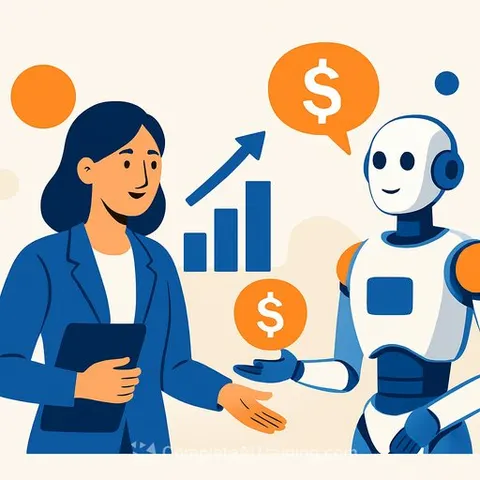
The best salespeople used to win deals with the sharpest deck, the most polished pitch, and the fastest turnaround on a customized proposal. AI now handles that production work in minutes. The uncomfortable question facing every revenue professional is what happens when those skills stop being scarce.
AI can build the presentation, pull the numbers, research the account, and personalize the pitch to the prospect. The entry fee for being "good at sales" has collapsed. When anyone can produce a sharp proposal in twenty minutes, the real differentiator becomes easier to see: how well you make decisions when the answer isn't obvious.
What AI can't read
AI can flag that a deal is slowing down. It can see that emails aren't being answered and engagement has dropped. It can spot that a champion who was highly active three weeks ago has suddenly gone quiet. But it cannot reliably tell you why.
Has the champion lost internal support? Has a competitor reached the CFO? Has the project been deprioritized? Or are they simply buried in work - and reading too much into the silence could damage the relationship? That distinction is a judgment call, not a data problem. Good salespeople make hundreds of these calls during a deal: when to push, when to wait, when to challenge the client, when to bring someone senior into the conversation, and sometimes when to walk away.
AI hasn't reduced the number of decisions required to close serious business. It has removed much of the production work that used to sit around them. That means organizations are about to get a much clearer view of who is actually good at sales.
Trust isn't a data point
AI can assist with trust, but it cannot manufacture it. A client believing you will tell them the truth even when the truth is inconvenient isn't built in one meeting. It comes from the salesperson who says, "I don't think our product is the right fit for this particular requirement." Or the one who tells the client about a delivery problem before the client discovers it themselves.
AI can optimize the sales process and suggest what to say next. It cannot build the accumulated trust that comes from hundreds of human interactions. It cannot sit across the table from an angry client and figure out whether they need an apology, a solution, or simply five minutes to vent. As AI gets better, that human territory becomes more valuable.
Sometimes the best decision is to slow down
Every signal on a deal can look green on paper: budget approved, timelines agreed, champion enthusiastic in every meeting. But something in the room can feel off during a final review. A hesitation before certain answers. A slight over-eagerness to move past questions about implementation. Nothing dramatic enough to trigger an alert, but enough to make an experienced salesperson uncomfortable.
Slowing down instead of pushing for a signature - going back and asking harder questions directly - can uncover a competing internal priority nobody disclosed. It costs two weeks. It saves the relationship. The deal closes properly a month later, on terms that hold. That instinct to slow down at exactly the moment every commercial incentive says speed up is difficult to put into a dashboard. It is even harder to turn into a prompt. And it can be the difference between a deal that closes and one that unwinds three months later.
Experience matters more when execution becomes cheap
Production skills have a ceiling. Once everyone has access to AI that creates a good presentation, being 10% better at creating presentations doesn't create much competitive advantage. The gap closes quickly.
Experience works differently. Every difficult negotiation adds another pattern. Every lost customer teaches something about what was missed. Every boardroom, every culture, every difficult stakeholder, and every uncomfortable conversation adds to a mental library that becomes increasingly valuable over time. The best salespeople tend to become more valuable as their careers progress - not because they built better decks, but because of everything they learned from being in the room.
What companies should train for
Many sales organizations still spend enormous amounts of time training people on product knowledge, pitch mechanics, presentation skills, and sales methodologies. All important. But increasingly, these are areas where AI provides significant assistance. Far less time is spent deliberately developing the skills AI struggles with: reading a room, handling conflict, understanding organizational politics, knowing when a customer isn't telling you the real objection.
These aren't soft skills. They are commercial skills. They are likely to become some of the most valuable skills in the AI-enabled sales organization. For sales professionals looking to build these capabilities alongside AI literacy, structured AI Learning Path for Sales Representatives programs can help bridge the gap between tool proficiency and the judgment that distinguishes great salespeople. The broader field of AI for Sales continues to evolve around this same principle: technology accelerates execution, but human judgment decides what to execute.
Why this matters for sales professionals
AI hasn't made salespeople obsolete. It has made mediocrity easier to spot. When everyone has access to the same production tools, the gap between a good salesperson and a great one becomes harder to hide. The great salesperson isn't necessarily the one with the best AI prompts. They are the one who knows what to ask, what to ignore, what to challenge, and when to act. They use AI to prepare better but use human judgment to decide what to do next. AI can make you faster, better prepared, and more productive. It cannot make the judgment call when the room goes quiet - and that is precisely what makes the human more valuable.