
AI news ·
AI-Driven Claims Transformation: Building Smarter, Customer-Centric Insurance Ecosystems
AI transforms insurance claims by speeding up processing and improving accuracy through machine learning and NLP. It enhances customer experience with real-time updates and personalized support.
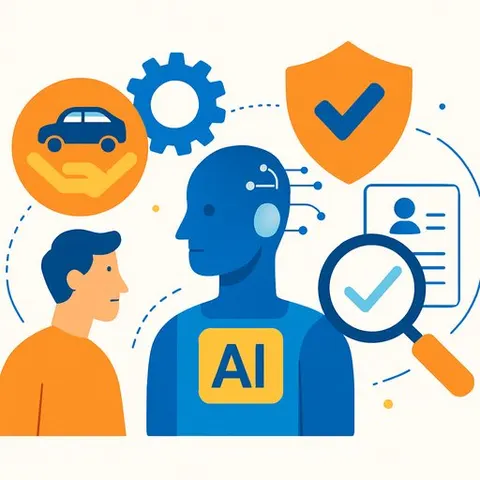
AI-Powered Claims Transformation: Orchestrating the Modern Claims Ecosystem
16 May 2025
The insurance claims process is at a pivotal point, driven by customer expectations and advances in technology. Artificial intelligence is reshaping how claims are handled—from the moment of reporting to final settlement. By embedding AI tools like machine learning, natural language processing, and predictive analytics into claims workflows, insurers are speeding up resolution, improving accuracy, and changing how they connect with customers.
This shift goes beyond efficiency. It rebuilds trust through transparency, delivers faster results, and creates a more intuitive and responsive claims experience for policyholders.
From Paperwork to Personalization: Putting People First with AI
Claims processing has long been bogged down by paperwork, back-and-forth emails, and missing documents—making it a frustrating experience for many policyholders. Today, Agentic AI and Generative AI are transforming this process from top to bottom. These systems understand context, learn from interactions, and respond in real time. Tasks that once took days or weeks can now be completed in minutes.
Across the claims lifecycle, AI enhances efficiency through targeted, context-aware automation. Advanced NLP and computer vision extract and verify key data like loss reports, invoices, and damage photos, reducing manual workload. Intelligent orchestration engines use policy details, past claim severity, and legal rules to route claims effectively, optimizing adjuster workloads.
Risk-scoring models incorporate geospatial, behavioral, and third-party data to refine exposure assessments. Fraud detection systems flag suspicious activity by analyzing claim clusters, provider patterns, and billing anomalies. Predictive reserving adjusts loss estimates in real time using updated development factors.
These AI capabilities are delivered through secure, scalable APIs, enabling seamless processing across insurers, third-party administrators, garages, and care providers.
Most importantly, AI adds empathy to claims handling. Agentic AI guides customers step-by-step, remembers their history, adapts to their preferences, and keeps them informed—eliminating repetitive questions and uncertainty about paperwork status.
One U.S. insurer partnered to replace legacy systems with a cloud-native, API-first platform infused with AI. The results included a 20% reduction in operational costs, a 30% boost in processing efficiency, and measurable gains in customer satisfaction. Customers received proactive updates and could file claims easily through mobile-first interfaces.
Smarter Claims Ecosystems Built on Smarter Data
AI’s effectiveness depends on data quality—not just quantity. Fragmented systems and inconsistent data formats slow down claims processing where speed and accuracy are vital. The real change is treating data as a dynamic asset that powers real-time decisions.
Insurers are moving from isolated AI projects to building AI-driven data ecosystems. These systems maintain ongoing data cleanliness, enrichment, and integration. Self-learning models fill gaps in incomplete claims data on the fly. AI-driven data lineage tracks every step for audit and transparency. APIs connect internal systems with third-party sources to create a single source of truth for claims, policies, and risk.
Where Automation Ends, Human Insight Begins
AI is improving at interpreting situations, but some decisions require human judgment. For claims adjusters, AI acts as an intelligent copilot—suggesting next steps, highlighting anomalies, and surfacing insights. It doesn’t replace the human touch but frees adjusters to focus on complex, sensitive cases such as disputed claims or ambiguous policies.
As AI learns from these human decisions, it becomes more aware of context. The future is not about AI-run claims but about AI-assisted, human-led systems that know when to lead and when to step back.
Measuring Impact with Clear KPIs
Transformation is only meaningful when it can be measured. Key performance indicators provide insight into business value:
- Claim cycle time: AI automation reduces processing from days to hours.
- Claim accuracy rate: Measures how well the system minimizes errors.
- Leakage rate: Identifies losses due to inefficiencies or overpayments, which AI can help reduce.
- Customer satisfaction (CSAT): Reflects the human impact and improved experience.
- Average cost per claim and adjuster productivity: Show if AI is driving operational improvements.
Claims are no longer just back-office tasks. They are a key indicator of an insurer’s ability to modernize at scale. Success requires cloud-native, data-connected systems designed for flexibility. Clean data flows and intelligent orchestration across platforms help insurers handle claims faster, operate smarter, respond more effectively, and grow confidently.
```