
AI news ·
AI exposure highest among legal clerks, reporters in South Korea
South Korea's government study finds 2.92 million insured workers-19.1%-hold jobs highly exposed to AI, with legal clerks, patent professionals, and journalists topping the list.
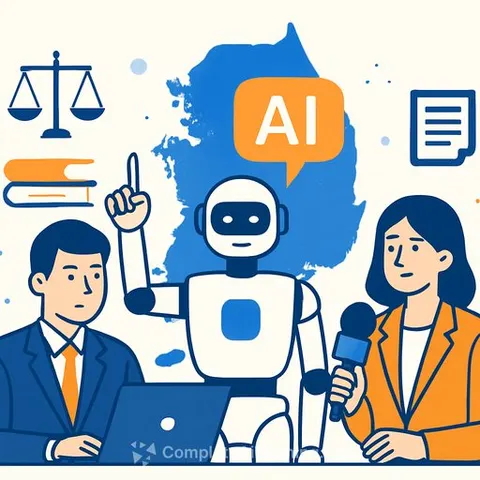
Legal clerks, lawyers and journalists rank among the South Korean occupations most exposed to artificial intelligence, according to a government study published Monday. The research, which combined a 2025 survey of Korean workers, employment insurance records and overseas studies, found that roughly 2.92 million of the 15.28 million people enrolled in employment insurance - about 19.1 percent - work in highly exposed roles built around reading, writing and analyzing information.
The report by Yoon Jeong-hye, head of the employment trends analysis team at the Korea Employment Information Service, appeared in the institute's quarterly journal. Legal support clerks topped the exposure ranking, followed by patent and legal professionals. Reporters and press professionals placed third.
Who is most exposed
Government administration specialists, telemarketers, accountants and tax appraisers rounded out the high-exposure tier, a group dominated by desk-bound roles centered on interpreting text or crunching quantitative data. Accountants and bookkeeping clerks in that tier have already seen their ranks shrink steadily in recent months, the report found.
At the other end, jobs demanding physical presence - platers, butchers, and other hands-on production, construction and face-to-face service workers - clustered in the low- or no-exposure bands, largely insulated from the technology's reach.
Younger workers face the brunt
The exposure skews young. The average age in the high-exposure group was 40.2, below the overall average of 45.7. More than half of insured workers in their 30s - 53.1 percent - held jobs in the medium- or high-exposure categories.
"We need to keep a close watch on the employment structure of young people, where the impact of AI's spread is likely to be concentrated, and of customer-guidance and counseling roles where generative AI and large language models are being rapidly adopted," Yoon said.
For writers, the findings underscore a shift already visible in newsrooms and corporate communications departments: the tasks that define the profession - reading, summarizing, drafting and editing - are precisely the ones language models handle most competently. The study doesn't predict mass unemployment, but it does suggest that writing-intensive roles will face sustained pressure to adapt. Resources like AI for Writers and the AI Learning Path for Technical Writers offer practical starting points for those looking to build skills around the technology rather than compete against it.
Why this matters for writers
The report's clearest signal for writers is demographic: the workers most exposed to AI are younger, and the roles most affected are those that involve turning information into prose. That doesn't mean writing jobs disappear - it means the value of purely mechanical writing drops while the value of judgment, subject expertise and editorial oversight rises. Writers who treat AI as a drafting tool and focus their energy on verification, context and voice are positioning themselves on the safer side of this divide.