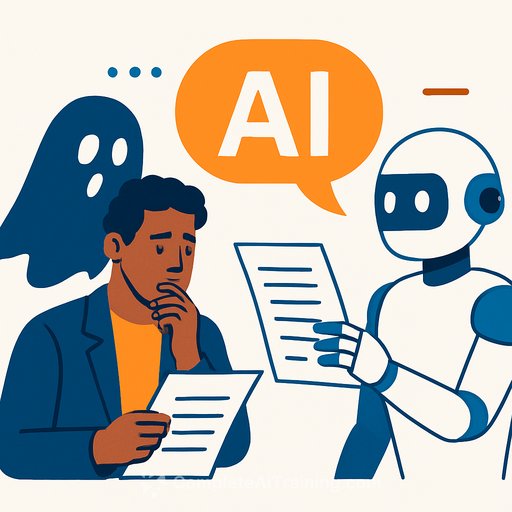
More than 40,000 Kenyans who made a living writing academic papers for university students abroad have lost that income as artificial intelligence tools take over the work. The collapse of this ghostwriting industry, concentrated in Nairobi, has left many highly educated young people scrambling for new digital work at a time when Kenya's formal job market already fails to absorb its growing number of graduates.
Theresios Bundi, 34, spent 12 years in the trade. He moved to Nairobi in 2011 and turned ghostwriting into a full-time job after earning a public health degree in 2015. He wrote more than 2,500 essays, earning between Ksh5,200 and Ksh9,100 per assignment. At its peak, the work paid at least five times what a typical public health job would.
Then ChatGPT arrived. Order volumes dropped. Rates fell. "I never imagined AI could do this kind of work," Bundi said.
The scale of the disruption
The ghostwriting sector once employed up to 40,000 people in Nairobi alone, according to The New York Times. Some operators built larger businesses with dozens of writers under them. Those mini-enterprises have largely dissolved. Former operators have moved into photo editing or other fields. Others have not found work that pays comparably.
Some writers shifted to adjacent digital work such as data labelling and social media content moderation. But those roles are also under pressure as AI capabilities expand. The squeeze comes against a harsh economic backdrop: Kenya produces more than 100,000 university graduates each year, while roughly 80 per cent of jobs remain in the informal sector.
What former ghostwriters are doing now
Bundi said he considered himself partly a tutor despite knowing the work helped students cheat. That rationalization was common among writers who used their English skills to serve customers in Western countries. The ethical tension did not slow the industry's growth - only the technology did.
For writers watching AI erode one income stream after another, understanding how to work with tools like ChatGPT rather than compete against them has become urgent. The same technology that disrupted Nairobi's essay mills is now a baseline skill across content roles. Writers exploring AI for Writers training report using it to handle research, drafting, and editing tasks that once required outsourcing to junior team members.
The transition is uneven. Some former ghostwriters have found stable freelance niches. Others cycle through short-term contracts on platforms where pay fluctuates and AI continues to claim portions of the workflow.
Why this matters for writers
The Nairobi ghostwriting collapse is a concentrated version of a broader shift. When 40,000 skilled English-language writers lose work to a single category of AI tool in under two years, the signal is clear: tasks built on producing standard academic or business prose at volume are no longer safely human-only. Writers who treat AI as a competitor rather than a tool risk the same displacement. Those who learn to direct it - shaping outputs, verifying facts, layering in original insight - are defining the next version of the profession.
Your membership also unlocks: