
AI news ·
AI scrutiny leaves young writers struggling to find their footing
20% of fiction writers and 25% of nonfiction writers use AI, but 65% and 57% respectively fear it will hurt their income. Young journalists face a credibility crisis as false AI accusations threaten careers and silence original voices.
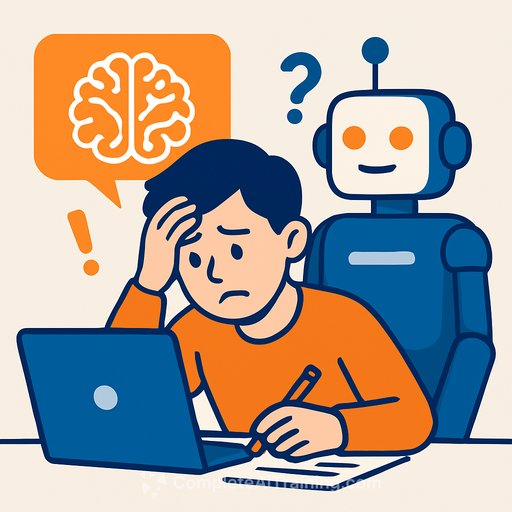
Writers are facing a credibility crisis they didn't create. As AI detection tools multiply and audiences grow suspicious of anything that reads as machine-generated, young journalists and authors find themselves caught between adopting the technology to stay competitive and avoiding it to protect their reputations.
The pressure is measurable. According to the Society of Authors, 20% of fiction writers and 25% of nonfiction writers say they use AI. But 65% of fiction writers and 57% of nonfiction writers believe AI will hurt their future income from creative work. That gap between adoption and anxiety defines the current moment for working writers.
The trust problem
Distrust has been building on multiple fronts. Chatbot prompts have appeared in published books. AI-generated quotes have surfaced in articles. Readers now have reason to question who - or what - actually wrote what they're reading.
In this environment, anything can trip an audience's alarm: an unusual word, an unexpected punctuation choice, even the subject matter itself. People increasingly use "that's AI" as an insult rather than a legitimate accusation, and the label can stick to work that was entirely human-made.
What young writers are facing
Alex Del Cueto, a recent college graduate who works as an arts journalist at Broadway World, a theatre news website, said he's concerned about entering the workforce during the rise of AI. "I feel like the rise of AI and its effects [have] made being a young journalist almost impossible," he said.
The technology has made an already competitive field harder to break into. Young writers are left in limbo, trying to determine whether they need AI tools to keep pace in the industry - or whether using them at all will destroy the trust they need to build careers.
False accusations carry real consequences. Creators face harassment over AI claims, and the fear of being mislabeled can push writers toward self-censorship or abandoning distinctive stylistic choices. The result is a chilling effect on the very voice and originality that makes writing worth reading.
Why this matters for writers
The core tension isn't going away. Writers need to understand what AI tools can legitimately do for their workflow - research, drafting, editing - while also recognizing that audience trust is their most valuable professional asset. That means developing clear judgment about when AI assistance is appropriate and when it crosses into territory that could damage credibility.
For writers looking to build that judgment, resources like AI for Writers and AI for Technical Writers offer practical guidance on using these tools responsibly. The goal isn't to reject AI outright or adopt it blindly, but to make deliberate choices that protect both your work and your reputation.
The writers who will thrive are the ones who can navigate this tension with intention - using AI where it genuinely helps, disclosing it where honesty demands, and never letting the fear of false accusations silence their own voice.