
AI news ·
AI transforms functional foods development as industry giants scale personalization and sustainability tools
BCC Research reports major food makers like Nestlé, Danone, and PepsiCo are moving AI from pilots to core R&D, using it to personalize nutrition and cut formulation timelines.
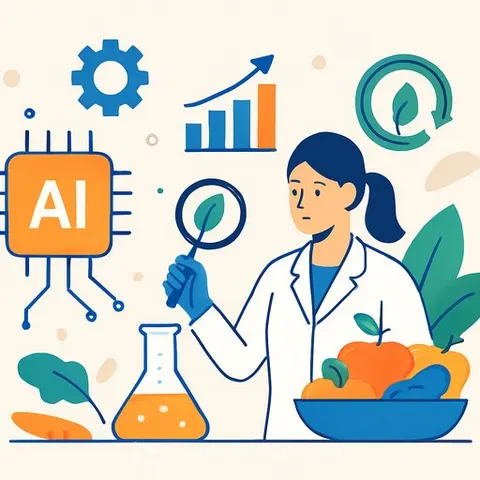
Artificial intelligence is moving from pilot projects to core infrastructure in the functional foods and beverages sector, with major manufacturers using machine learning to compress product development timelines, personalize nutrition, and validate health claims before submission. A new BCC Research pulse report, AI Impact on Functional Foods and Beverages, examines how Nestlé, Danone, PepsiCo, Unilever, General Mills, and Archer Daniels Midland are integrating AI across their R&D and consumer intelligence operations.
Where AI is changing product development
Personalized nutrition and microbiome analytics are drawing the heaviest investment, according to the report. Because individual variation in gut microbiome composition limits the effectiveness of standardized formulations, AI-driven platforms are helping manufacturers tailor probiotic and bioactive formulations to individual genetic, lifestyle, and dietary profiles - a shift that also enables subscription-based revenue models.
AI is also compressing formulation cycles by improving first-pass success rates for bioactive ingredients like probiotics, polyphenols, and omega-3 fatty acids, which degrade under heat, oxygen, and pH exposure. Machine learning models are replacing iterative laboratory testing, reducing launch risk and shortening the path from concept to shelf.
On the consumer intelligence side, natural language processing and AI-powered digital personas let companies detect early-stage demand signals in real time and simulate consumer feedback before physical product development begins. The report cites General Mills' use of digital personas to launch Honey Nut Cheerios Protein and Ghost Performance nutrition bars as an example of AI de-risking innovation at scale.
Market drivers behind the shift
Consumer demand for transparent, science-backed nutrition is pushing manufacturers toward formulations tailored to individual health profiles - a requirement traditional R&D methods cannot meet efficiently at scale. Meanwhile, e-commerce infrastructure generates real-time behavioral data that feeds AI models for demand forecasting, product placement, and trend identification, creating a data flywheel that rewards early adopters.
Government funding is accelerating the transition. The U.S., EU member states, China, Japan, and South Korea are investing in AI-enabled nutrition research and personalized nutrition platforms, lowering the cost of early-stage development. Corporate sustainability commitments add another layer: clean-label demand and ESG expectations are driving manufacturers toward AI-powered lifecycle assessment tools that can reformulate products while preserving functional performance.
North America and Europe lead AI adoption, supported by mature e-commerce infrastructure and stringent regulatory environments. In Europe, manufacturers are using AI for compliance simulation and health claims validation ahead of submission to EFSA.
Investment activity and signals
The report points to specific corporate moves as evidence that AI is becoming operational infrastructure rather than experimental. Nestlé's enterprise-wide digital core upgrade, beginning in Zone AOA, and Archer Daniels Midland's "Byte-Sized Revolution" strategy are cited as indicators of this transition. PepsiCo's AI-driven consumer insights supported the 2026 launch of Doritos Protein, and Unilever deployed its "Recipe Intelligence" tool across its Food Solutions division.
For professionals working in AI for Product Development, the pattern is clear: speed-to-market and margin management are the measurable outcomes companies expect from AI investment. The report notes that adoption remains uneven - digital infrastructure constraints in the Middle East and Africa limit near-term upside in those markets - and macroeconomic input cost volatility continues to challenge procurement planning.
Why this matters for product development professionals
For product developers in food and beverage, the practical takeaway is that formulation expertise alone is no longer the full job description. Companies are hiring and training people who can work alongside machine learning models that predict ingredient stability, simulate consumer response, and model regulatory outcomes. The AI Learning Path for Product Managers covers the strategic side of this shift, but the underlying message is operational: development cycles are shrinking, and the professionals who adapt to AI-assisted workflows will be the ones leading launches in the next cycle.