
AI news ·
AI will outperform doctors on some tasks by 2030, experts predict
Healthcare and VC experts predict AI will outperform physicians at certain diagnostic tasks by 2030, shifting doctors toward complex cases and patient communication.
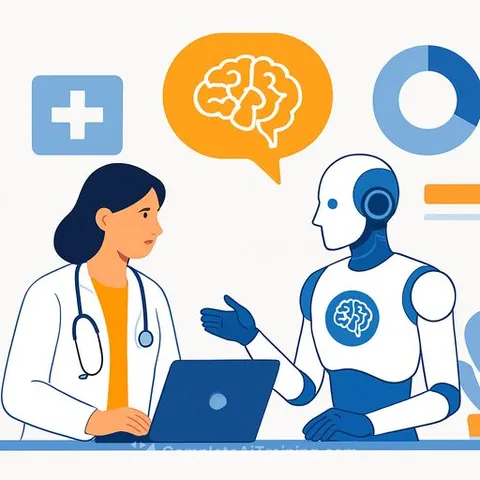
Clinical AI tools are currently designed to work under doctor supervision, but healthcare and venture capital experts predict that by 2030, AI will outperform physicians at certain medical tasks. The shift would fundamentally change how care is delivered and where doctors focus their attention.
Most of the AI tools in development today function as decision-support systems, flagging patterns in scans or suggesting diagnoses that a clinician reviews. That oversight model is a starting point, not the final destination, according to experts in healthcare and VC firms who are funding the next wave of clinical technology.
What changes by 2030
The experts' projection centers on narrow, well-defined tasks - reading imaging studies, identifying anomalies in lab results, and matching patient histories to likely conditions. In those areas, AI's speed and consistency could exceed human performance. The role of the doctor would shift toward handling complex cases and communicating with patients, while AI handles the pattern-recognition work it does best.
The timeline matters. Five years gives developers time to clear regulatory hurdles, prove accuracy in real-world settings, and build trust with clinical staff.
What is being built now
Most current AI tools are designed with a human in the loop. That means the technology is measured against a standard that includes doctor oversight, and the products are sold as workflow improvements, not replacements. The experts' outlook suggests that will change as the tools accumulate evidence and hospitals grow more comfortable with autonomous clinical functions.
For healthcare professionals now, the practical issue is preparation. Understanding where AI is heading in clinical work and what it can already do is becoming part of the job. Resources like AI for Healthcare courses break down how these tools are being deployed in real medical settings. For those working in the administrative side of care, training such as AI for Medical Billers covers how the technology is changing billing and revenue-cycle operations.
Why this matters for healthcare professionals
The doctors who will feel the most pressure are those in diagnostic specialties like radiology and pathology. The ones who adapt will treat AI as a working tool rather than a threat. The practical takeaway: start using AI tools in your workflow now, and learn what they handle well and where they still miss. That experience is what will separate clinicians who lead these changes from those who react to them.