
AI news ·
Alexandria writer Jeffrey James Higgins warns authors against relying on AI for creative ideas
Novelist Jeffrey James Higgins warns writers that using AI as a creative partner can atrophy imagination, with over 4 million books published in 2025 making authentically human work harder to spot.
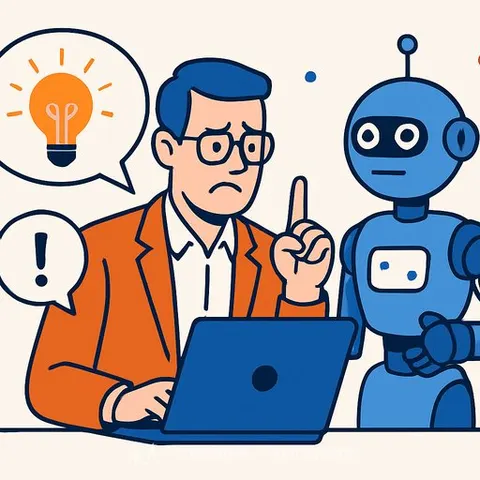
Alexandria-based novelist and writing coach Jeffrey James Higgins is urging fellow authors to resist using artificial intelligence as a creative partner, warning that leaning on AI for story ideas can atrophy a writer's own imagination and produce work that is no longer "authentically human." Higgins, a retired federal agent and #1 Amazon bestselling author, operates Elaine's Literary Salon from his restaurant in Old Town and has watched writers begin to surrender autonomy over plotting and character development.
"What AI is doing today and what AI will be doing in a couple of years defies our imagination," Higgins said. "The fact is it is going to change everything." He added that the technology industry itself faces a philosophical divide over how AI should be created, guided, and monitored.
The kindergarten stage of a larger threat
Higgins has written 15 books across thrillers, short stories, scripts, and essays. Seven were traditionally published, including four titles in his Nathan Burke international thriller series through Severn River Publishing. The Havana Syndrome was selected by Library Journal as one of the best books of 2025. His ideas, he said, are his own from start to finish.
"This is the kindergarten AI that we're dealing with right now," he said. His earlier novel The Forever Game explores the possibility of another life form and how something like AI could become a problem. He cautions writers at all levels to resist consulting AI for originality, noting that some become incrementally more dependent on it once they start.
"If you don't use that gift of human creativity and imagination, you're shutting down your creativity," Higgins warned. He pointed to the rapidly increasing volume of published books-more than 3 million in 2024, 4 million in 2025, and 2026 numbers running higher-as a landscape where distinctively human work becomes harder to distinguish.
Where routine tasks end and creative surrender begins
Higgins acknowledges that professional writers he knows use AI for routine work: posters, promotion, editing, data collection, fact-checking, and manuscript evaluation. The concern arises when AI crosses from tool to creative partner. He predicts AI will soon "hit that inflection point and AI will move beyond human understanding," citing chess engines as an everyday example of technology already surpassing human capabilities in specific domains.
For writers navigating this shift, resources on AI for Writers explore where the boundary between assistance and creative replacement sits. The challenge Higgins identifies is not whether AI can generate plot points-it can-but whether writers who accept those ideas are quietly shutting down their own capacity for original thought.
Goals that are not our goals
"The problem will be, where do humans find satisfaction and happiness?" Higgins said. "Its goals are not our goals." He noted that humans approach objectives from "a logical, moral, or ethical framework," while AI does not, warning of a "sociopathic outcome-that is a threat."
As an Author's Guild ambassador for the D.C. area, Higgins routinely reminds writers that AI is not unbiased. The deeper issue, he argues, is ensuring that as AI becomes embedded in daily life, humans do not surrender the creativity and imagination that make their work distinctly their own.
Why this matters for writers
Higgins' warning is not about rejecting AI outright. It is about recognizing the difference between delegating a routine task and outsourcing an idea. For novelists, screenwriters, and anyone building narrative from scratch, the moment an algorithm supplies the concept is the moment the work stops being fully theirs. Writers exploring how to use these tools without crossing that line can look at structured guidance such as AI for Scriptwriters to understand where automation helps and where it replaces. The core skill-generating original thought under pressure-atrophies if it is never exercised. Higgins' position is that protecting that skill is not nostalgia. It is survival.