
AI news ·
Anthropic goes public at $1.5 trillion as AI cyberattack hits European Commission
Anthropic raised $81.3 billion in the largest IPO ever, hitting a $1.5 trillion valuation and creating thousands of millionaires.
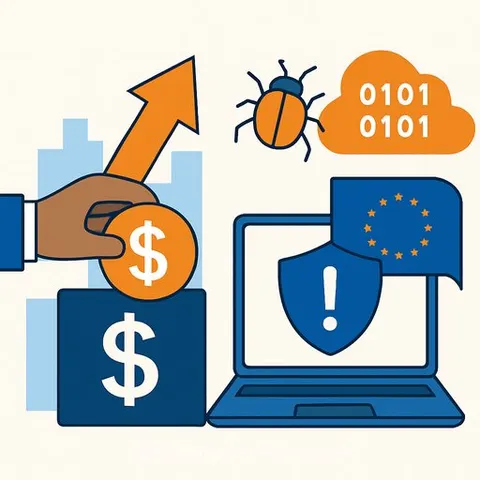
Anthropic completed the largest IPO in history Friday, raising $81.3 billion through a public offering that valued the company at roughly $1.5 trillion before shares began trading. Another $26 billion in private financing brought total proceeds to $107.3 billion, creating thousands of new millionaires and several billionaires - though one early backer, Facebook co-founder Dustin Moskovitz, reportedly feels uneasy about the windfall.
The financial milestone arrives as AI systems gain more independence over users' computers, raising fresh questions about privacy and security. Google launched a Gemini agent for Mac that can operate applications and organize files, Meta's Muse faced internal complaints about personal information surfacing in wrong conversations, and Apple is reportedly developing its own computer-controlling agent.
Anthropic's record debut and the pressure that follows
The public offering sold 980 million shares and drew renewed attention to Anthropic's stated mission of developing safe superintelligence. A New York Times opinion piece explored employees' belief that the company carries a special responsibility. Now public shareholders hold an enormous financial stake in growth, and the next test is whether revenue can justify both the valuation and mounting infrastructure costs.
In Washington, four senators introduced bipartisan legislation that would require publicly traded companies to disclose more information about AI. The bill arrived directly after Anthropic's IPO.
Agents move onto desktops - and into private conversations
Google's Gemini for Mac can organize local files, complete forms, and operate Mac apps while users continue working. The feature is initially available in English to U.S. subscribers of Google AI Plus, Pro, and Ultra plans. Meanwhile, Meta employees testing Muse encountered unfamiliar childcare messages, personal reminders, and bank balances in conversations. Meta said those test versions include features unavailable to the public.
Apple's project remains in early development. The company is also preparing additional permission warnings for competing agents, signaling caution as computer-control tools spread. Professionals in hospitality and events - where shared devices, client data, and fast-paced scheduling are the norm - should watch how these permission systems evolve before granting agents access to calendars, booking platforms, or guest information.
Cyberattack, policy, and the energy debate
An AI-assisted cyberattack disrupted European Commission systems, temporarily affecting staff payroll and medical reimbursement. Investigators identified ARTEX, an AI-assisted security testing tool, and officials examined whether personal information was compromised.
U.S. data centers now consume nearly 2% of the country's electricity, much of it from fossil fuels. The figure adds pressure to the debate over AI infrastructure emissions. Google selected Blue Origin to launch AI server satellites in early 2029 under Project Suncatcher, which aims to test solar-powered computing in orbit.
Tools and models shipping this week
Several releases target practical workflows. ChatGPT Live Dictation transcribes speech as users talk, shows editable text before submission, and removes the previous 10-minute recording limit. Canva added an AI off switch that disables generative tools like Magic Write and Magic Expand. Microsoft released seven new MAI models covering coding, cybersecurity, image generation, and real-time speech, claiming competitive benchmark performance at lower costs than frontier rivals.
For developers, Tencent's Hy4 Flash model is now downloadable for local deployment and supports up to one million tokens of context. Orange released five Wolof language models built on Alibaba's Qwen3, available free for noncommercial use through Hugging Face. OpenAI's GPT-Live-1.1 reached API availability with improved accent consistency and a lower-cost standby mode for voice applications.
Why this matters for hospitality and events professionals
Computer-controlling agents like Gemini for Mac and Apple's in-development tool will soon handle scheduling, form-filling, and file organization across the applications you use daily. The Meta Muse incident is a reminder that agents with broad access can surface private data in the wrong context. Before adopting these tools for guest management, booking coordination, or team scheduling, verify what permissions the agent requests and whether your organization's data stays properly segmented. The productivity gains are real, but so are the risks when one agent can see everything your device can.