Apple Confirms Google and Nvidia Partnership for Advanced AI Model
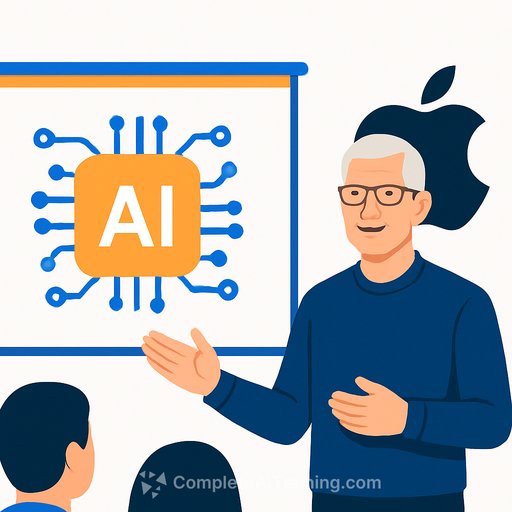
Apple revealed its AI strategy at its annual Worldwide Developers Conference on Monday, showing off a redesigned Siri and confirming that its most advanced model runs on Nvidia chips in Google's cloud infrastructure.
The company demonstrated Siri handling multi-turn conversations-checking concert dates, setting reminders, and providing directions in a single exchange. This marks a significant upgrade from previous versions of the assistant.
The announcement underscores a strategic divergence from other Silicon Valley companies. Rather than investing heavily in building its own infrastructure and largest models, Apple is emphasizing privacy and device-level personalization to differentiate itself.
The Partnership Details
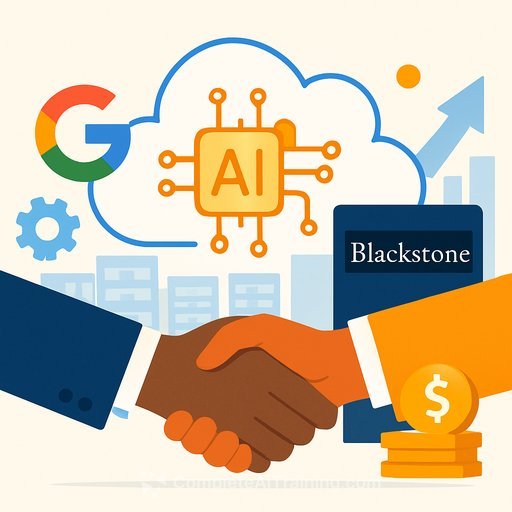
Apple's most advanced model, called Apple Foundation Model Cloud Pro, is comparable to Google's Gemini frontier models, according to Apple executives. It runs on Nvidia GPUs within Apple's Private Cloud Compute infrastructure.
While Apple and Google announced their partnership in January, this is the first official confirmation that Nvidia chips power some Apple Intelligence features. The setup uses Nvidia's "ambiguous confidential compute" technology to ensure the chips cannot read data on the servers.
Apple VP of Software Sebastian Marineau-Mes said the company wanted access to Nvidia's latest technology while maintaining strict privacy standards. "We wanted to avail ourselves of the latest technology from Nvidia, and so we set out to extend private cloud compute to third-party cloud," he said.
How Apple's AI Architecture Works
Apple uses a "system orchestrator" to route AI queries to the appropriate model-either on-device or in the cloud-based on computing requirements and data sensitivity. Software SVP Craig Federighi called this routing system "key to the privacy architecture of our entire system."
The company built four custom models for its AI layer: AFM Core, Core Advanced, Cloud, and Cloud Image. All were trained using proprietary data and refined using outputs from Google's Gemini frontier models, but they are not the same Gemini available to the public.
A Different Competitive Angle
Apple executives positioned the company's approach against competitors pursuing AI scale without clear user benefits. "Some appear to be racing forward, seemingly pursuing AI for the sake of AI, without clear regard for the people - all of us - that it's ultimately meant to serve," Federighi said.
The strategy relies on Apple's access to locally-stored user information like calendars and messages to personalize features without collecting data the way web-based AI services do.
For executives evaluating AI strategy, Apple's approach illustrates a viable alternative to the infrastructure-heavy model: partnering with specialists while maintaining control over the user experience and privacy guarantees. Learn more about AI for Executives & Strategy and Generative AI and LLM systems.
Your membership also unlocks: