
AI news ·
Radiologists in Rochester see 20% increase in breast cancer detection after adopting AI
Breast cancer detection at a Rochester imaging firm rose about 20% after integrating AI. Radiologists using the technology become more efficient, helping offset workforce shortages.
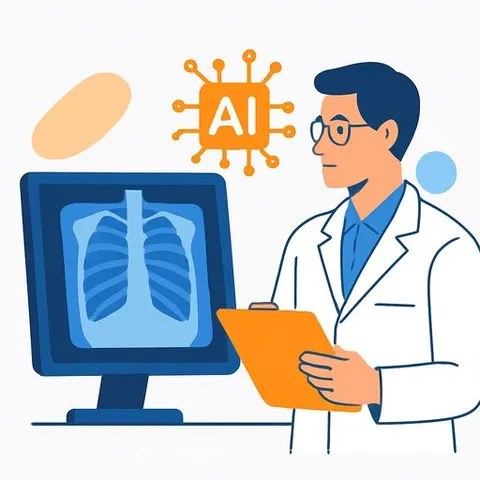
Radiologists in the Rochester area have spent the past five years integrating artificial intelligence into their daily workflow, and the results are shifting both practice and opinion. Dr. Jane Bennett, president and CEO of Borg & Ide Imaging, said breast cancer detection at her firm has increased by about 20% since adopting the technology. "Not only am I looking at your mammogram as I always did, but I have another source to find even more cancers and save more lives," Bennett said. "That's a huge deal."
Bennett acknowledged that many physicians remain cautious. "Physicians tend to be skeptical about everything, and certainly anything new," she said. "But I want to treat patients, and I want patients to get the best we can offer, and this is it."
AI as a second set of eyes
The American College of Radiology reported that radiologists are roughly 35% more likely than other physicians to leave the workforce. Dr. Jennifer Harvey, chair of imaging sciences at the University of Rochester, said AI can help offset those shortages by making doctors more efficient. "The radiologists who use AI will replace the radiologists who don't," Harvey said.
Harvey sees the technology as a practical tool under growing pressure to handle an aging population. "There's a lot more pressure to work faster, smarter, more efficient, and I see it as kind of like a wellness tool," she said. "AI is really going to transform healthcare into being more proactive."
For development and IT professionals, these real-world implementations signal a steady demand for systems that integrate AI into existing medical workflows, from image analysis to decision support. As more hospitals and imaging centers adopt such tools, the need for professionals who understand both healthcare requirements and AI for Healthcare is growing. Similarly, the underlying infrastructure requires skills in building, deploying, and maintaining these models - areas covered in AI for IT & Development training.
Efficiency gains and workforce pressures
Bennett said that using AI has made her team more confident in their detections and diagnoses, making them "better at what they do." The technology acts as a second set of eyes, reducing the chance of missed findings. Harvey added that the shift toward proactive care will only accelerate as more data becomes available and algorithms improve.
The radiology field faces a specific challenge: an aging workforce and rising demand for imaging as the population gets older. Harvey said AI is one of the few realistic solutions to handle that volume without burning out staff.
Why this matters for healthcare IT and development professionals
The Rochester experience shows that AI in medical imaging is no longer experimental - it's a production tool that improves detection rates and clinician efficiency. For professionals working in healthcare IT or development, this means there is a concrete need for systems that can handle image data, integrate with electronic health records, and maintain regulatory compliance. The skills to build and support such systems are becoming a baseline requirement, not a niche specialty. Organizations like Borg & Ide and the University of Rochester are already demonstrating that AI can deliver measurable outcomes, and similar deployments are likely to spread as hospitals look to replicate those results.