
AI news ·
Atropos Health partners with Health Universe on AI clinical decision support
Atropos Health is integrating clinical decision-support tools into Health Universe's AI platform, giving clinicians patient-specific evidence without switching systems. Health Universe raised $6 million in seed funding this year.
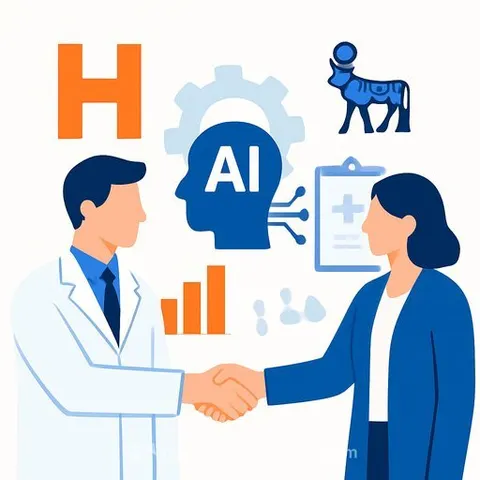
Atropos Health has partnered with Health Universe to embed clinical decision-support tools into the latter's AI workflow platform, giving clinicians access to patient-specific evidence without switching between systems. The integration connects Atropos' real-world data analysis to Health Universe's AI agents, which consolidate records from electronic health records and national health information networks into longitudinal patient profiles. Health Universe, which raised $6 million in seed funding from Kleiner Perkins this year, will use the partnership to offer its clients real-time, evidence-based answers to clinical questions directly within existing workflows.
What the integration does
Health Universe's AI agents already summarize patient records, match patients to clinical trials, and prepare clinicians for visits. By embedding Atropos' analytics, those agents will now also return population-level evidence tailored to a specific patient's history, pulling from Atropos' database of real-world outcomes.
Dr. Doug Fridsma, chief medical and science officer at Health Universe and former chief science officer at the Office of the National Coordinator for Health IT, said the system is designed so clinicians can trust the outputs - and see how the AI reached its conclusions.
"Clinicians need infrastructure that can provide trusted, evidence-based insights while making it possible to understand how AI agents operate within clinical workflows," Fridsman said.
Company trajectory
Atropos raised $33 million in Series B funding in 2024, after a $14 million Series A in 2022. The company has partnerships with Novartis, Emory Healthcare, Merck, and Databricks. It also recently expanded its integration with Microsoft Teams to deliver real-time insights during care-team meetings.
Health Universe plans to use its seed funding to expand its sales operation, deepen work in oncology and clinical research, and broaden deployment of its AI agent infrastructure in healthcare.
Why this matters for Healthcare professionals
Clinicians often toggle between multiple systems to find relevant data, then must interpret general population studies or single-site research. This integration tries to collapse that by surfacing Atropos' analysis directly into Health Universe's view - data from tens of millions of patients, filtered to the patient in front of them. For anyone involved in clinical decision-making, this shift from static reports to live, context-specific analysis could reduce time spent searching and increase confidence in recommendations. The partnership also signals that AI adoption in healthcare is moving from pilot projects into embedded tools that modify existing clinical workflow - which means clinicians and system leaders should start evaluating how much governance (and which kind) their own infrastructure needs before deploying AI agents at scale.
AI for Healthcare professionals can follow developments in clinical decision support at CompleteAI Training. For those focused on organizational strategy, our AI for Executives & Strategy coverage addresses the planning considerations for deploying AI in clinical settings.