
AI news ·
Audible Introduces AI Voices to Narrate Audiobooks Amid Industry Backlash
Audible now offers 100+ AI voices for audiobook narration, with options for publishers to self-produce or use Audible's service. Upcoming AI translation aims to broaden global access.
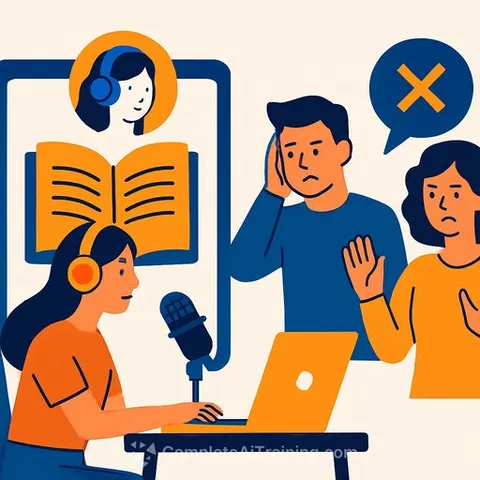
Audible Introduces AI Voices for Audiobook Narration
Audible, the Amazon-owned audiobook platform, is set to offer more than 100 AI-generated voices across English, Spanish, French, and Italian for audiobook narration. This move opens up two production options for publishers: an Audible-managed service or a self-service model where publishers produce audiobooks using Audible's AI technology.
Later this year, Audible plans to expand its AI capabilities to include audiobook translation, aiming to make books accessible in multiple languages. The company envisions this technology as a way to increase audiobook availability and help authors reach new, global audiences.
What This Means for Writers
For writers, this development could mean faster and broader distribution of audiobooks, especially for works that may not have been financially viable to produce with human narrators. The ability to select from a variety of AI voices offers flexibility, and the upcoming translation feature could bring your work to international listeners without the usual barriers.
However, it’s crucial for authors to remain informed and involved in how their works are narrated. Audible emphasizes transparency and insists authors should have the choice between human and synthetic narration, with clear labeling for consumers.
Concerns from the Creative Community
- Loss of Human Nuance: Experienced narrators point out that AI voices lack the emotional subtlety and character differentiation that make audiobooks engaging. The "crack in the voice" during emotional moments and the timing of humor are difficult to replicate.
- Impact on Voice Actors: The shift towards AI narration raises concerns about marginalizing voice actors, especially voices from underrepresented backgrounds.
- Quality of AI Translation: Literary translators warn that AI-generated translations often result in mediocre output, lacking the creativity and nuance that human translators bring to the text.
- Ethical and Environmental Costs: Some critics highlight that AI is often chosen primarily for cost savings, ignoring the significant computing resources AI requires and the potential impact on creative industries.
Balancing Innovation with Artistic Integrity
While AI narration offers efficiency and wider reach, writers and publishers should weigh these benefits against the artistic value and emotional connection that human narrators provide. Ensuring authors maintain control over how their work is presented is essential.
For writers seeking to understand how AI tools might affect their craft or looking to integrate AI responsibly, exploring educational resources on AI training courses can provide practical insights.
Background
Audible has allowed self-publishing authors in the US to convert ebooks into audiobooks using AI-generated voices since last year. Currently, there are over 60,000 AI-produced audiobooks on the platform. Audible remains the global leader in audiobooks, with membership numbers reportedly at an all-time high despite new competitors like Spotify entering the audiobook market.
As this technology develops, writers should stay informed and advocate for transparency and choice in audiobook narration to protect the quality of storytelling and their creative rights.