
AI news ·
BigLaw firms adjust junior associate training as generative AI automates foundational legal work.
Generative AI is compressing BigLaw staffing, letting one fifth-year associate do the work of two or three junior lawyers. Firms are reducing entry-level headcount growth.
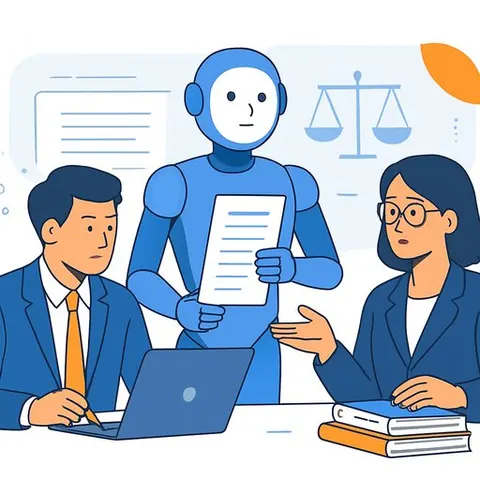
Generative AI is compressing the traditional BigLaw model by automating the repetitive research, due diligence, and drafting work historically performed by junior associates. This shift forces the legal profession to confront a fundamental question about the purpose and future of entry-level legal roles.
shifting economics in legal staffing
Major law firms are integrating AI platforms from providers like Harvey AI, OpenAI, Thomson Reuters, and LexisNexis across transactional and litigation practices. This reflects a broader industry push for AI for Legal Professionals to deliver faster output and lower costs to clients. Internally, the impact on staffing is already visible. A fifth-year associate equipped with AI-assisted drafting tools can now produce work that previously required two or three junior lawyers working over several days. As staffing dynamics change, firm models will follow, creating unease among the associate class.
the training gap no one has solved
The repetitive tasks junior lawyers often dislike are the same ones that build core legal ability. Research memos teach issue spotting, while due diligence builds pattern recognition. First drafts teach how arguments are structured and where they break down.
If firms hand these tasks to AI before junior lawyers engage with the underlying substance, they risk producing lawyers who can supervise technology before fully understanding the work itself. The American Bar Association places competence obligations squarely on the supervising lawyer, not on the tool. Because paralegals and entry-level lawyers share foundational tasks like document review, resources like an AI Learning Path for Paralegals highlight the exact automation shifts affecting early-career legal workers.
quiet structural changes at firms
Managing partners publicly maintain that AI will "augment rather than replace" lawyers, and mass associate redundancy is not expected in the near term. However, the profession is already seeing structural adjustments.
Firms are experiencing reduced headcount growth at the junior level alongside increasing scrutiny of associate productivity metrics. Early experimentation with value-based pricing and fixed-fee AI-assisted work is growing. Firms are also setting a higher expectation that first- and second-year associates will demonstrate immediate AI literacy. The billable hour remains, but its relationship to headcount is becoming less linear than it has been for the past fifty years.
why this matters for legal professionals
Lawyers who thrive in this environment will not treat AI as a substitute for legal judgment. They will use these tools to accelerate research while rigorously interrogating the outputs for confident-sounding errors. Success requires building the client-facing, judgment-heavy skills that partners value and that current platforms cannot replicate. The profession is changing faster than most associate training programs are designed to accommodate. The question of how to teach the next generation of lawyers cannot be outsourced to a language model.