
AI news ·
Cambridge Dictionary names 'human' word of the year amid AI anxiety
Cambridge Dictionary named "human" its 2026 word of the year, pointing to a term from the 1450s to capture anxiety over AI mimicking people. The selection underscores how audiences now treat human-made work as a sharper differentiator in creative fields.
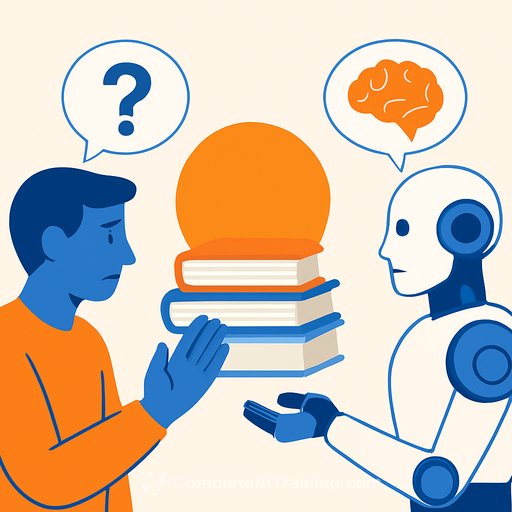
The Cambridge Dictionary has named "human" as its 2026 word of the year, reaching back to a term in use since the 1450s to capture contemporary unease about artificial intelligence. The selection reflects how AI's growing ability to mimic and replace human tasks is reshaping the conversation about what separates people from machines.
"AI is changing how we talk about being human," said Colin McIntosh, the dictionary's lexicographer. "Fears about what humans may lose when we outsource our thinking have made us reconsider the extent to which we rely on AI: from top mathematicians to teachers of young children."
Cambridge defines the adjective - derived from the Latin "humanus" - as "having the qualities, faults and feelings that people have, as opposed to gods, animals or machines." The choice marks a departure from how dictionaries typically select words of the year. Most opt for novel terms, slang that has crossed into the mainstream, or existing words that have taken on new meaning.
A string of AI-related selections
Artificial intelligence has factored heavily in word of the year distinctions across several dictionaries in recent years. Collins Dictionary chose "AI" itself in 2023, the same year Cambridge picked "hallucinate" to describe the tendency of AI systems to fabricate information. Merriam-Webster named "slop" its 2024 word for low-quality AI-generated content, while Collins selected "vibe coding" for the AI-assisted software development method.
Microsoft co-founder Bill Gates, who has promoted the smart use of AI, commented on the Cambridge selection: "AI is making us think harder about what it means to be human. The measure of AI's success should be how much it improves human lives."
Words that didn't make the cut
Other contenders for 2026 included "agent," referring to an AI system that can make decisions and operate without human control, and "analogue," for experiences or objects not involving the internet or digital technology. Both terms reflect parallel cultural currents - one pushing deeper into automation, the other pulling back toward tangible, offline experiences.
Why this matters for creatives, writers, and communicators
The dictionary's choice signals a market truth that professionals in creative fields already feel: audiences are growing more attuned to the distinction between human-made and machine-generated work. For writers, marketers, and PR specialists, the word "human" carrying this weight means claims of authenticity, craft, and emotional intelligence are becoming sharper differentiators. The brands and voices that can articulate what human judgment brings to a project - the faults, the feelings, the editorial instinct - will have an edge that AI-generated content cannot replicate. In hospitality, events, and HR, where personal connection is the product, the pressure to define and defend human roles will only intensify.