
AI news ·
Cancer specialist warns diagnostic radiology faces AI takeover, urges trainees to pursue interventional work instead
Singapore cancer specialist Dr. Ang Peng Tiam warns aspiring radiologists to avoid diagnostic imaging, saying AI will take over scan reading. An AI tool found 20 lung nodules in a patient after a human radiologist saw only 3, forcing the care team to reconsider surgery.
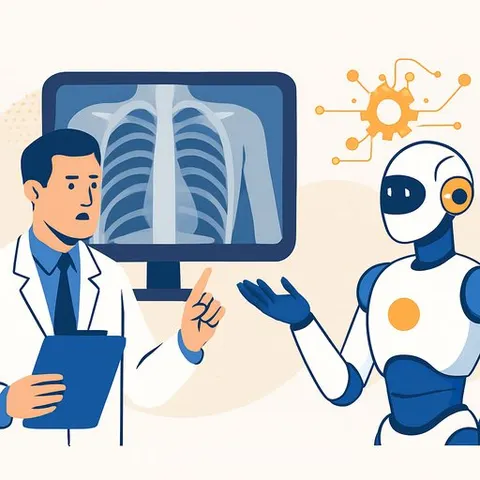
A prominent cancer specialist in Singapore is steering aspiring radiologists away from diagnostic imaging and toward interventional radiology, warning that artificial intelligence will eventually take over the reading of X-rays and scans. Dr. Ang Peng Tiam, medical director at Parkway Cancer Center, made the comments during the center's 20th anniversary event on September 4, framing the shift as a necessary adaptation for long-term career stability in the field.
"If anyone wants to do radiology, you should not do diagnostic radiology. You must be an interventional radiologist," Ang told attendees, according to a recap published by BusinessWorld. "(This means) that you must be the person who does the angiogram, to block off the vessels, the one who does the biopsy, and not the one who just reads the X-rays."
He added a blunt prediction: "Because that reading in the future will all be done by computer and AI. So, this is a whole learning process."
A real-world case that changed a treatment plan
Ang backed his argument with a specific patient example from Parkway. A radiologist examining a lung cancer patient initially identified three nodules in the lungs. When an AI-supported analysis was applied to the same images, it detected 20 nodules total. The discrepancy forced the care team to reconsider whether surgery remained the best course of action, given that the AI's findings suggested lower survival odds.
Despite the stark warning, Ang did not predict a complete replacement of diagnostic radiologists. He emphasized that healthcare depends on "the element of trust, care and hope," qualities he believes only human clinicians can deliver. His broader message to young physicians centered on Parkway's philosophy of treating every patient like family and earning trust through the best possible care.
A divided conversation across the industry
Ang's remarks land in the middle of an ongoing debate among healthcare leaders about AI for Healthcare. In March, the CEO of America's largest public hospital system said he would be ready to replace radiologists with AI in certain scenarios once regulations permit, drawing sharp criticism from specialists in the field. The comments suggested a willingness to move faster than many practicing radiologists consider safe or realistic.
Billionaire businessman Mark Cuban took the opposite position in August. The co-owner of Cost Plus Drugs said there is "no chance" radiologists will be replaced by AI, pointing to the high cost of AI models and their tendency to become outdated quickly. The split in opinion underscores how unsettled the question remains, even as tools for Generative AI and LLM applications in imaging continue to advance.
Ang's credentials and Parkway's growth
Ang earned his medical degree from the National University of Singapore and served as the founding head of the Department of Medical Oncology at Singapore General Hospital from 1991 to 1997. He completed a medical oncology fellowship at MD Anderson in Houston and has been in private practice since 1997, now leading a team of more than 15 consultants across oncology, hematology, and palliative medicine at Parkway.
In a video excerpt from the anniversary event, Ang noted that Parkway started with just four physicians and has since expanded to include a large team of specialists trained at top global institutions. The center marked two decades of operation with the gathering, using the milestone to reflect on both its growth and the forces reshaping cancer care.
Why this matters for healthcare professionals
Ang's advice to trainees cuts through the noise with a concrete career directive: build skills in procedures, not just interpretation. For radiologists in practice, the Parkway case illustrates how AI is already surfacing findings that alter treatment decisions - not in theory, but in real patient encounters. The technology is not waiting for perfect consensus. Healthcare professionals who understand where AI augments and where it threatens will be better positioned to make career moves before market pressure forces the issue.