
AI news ·
Career Academy Network teaches AI literacy from kindergarten through high school
An Indiana school network is teaching AI literacy from kindergarten through 12th grade, launching a high school pathway to prepare students for a workforce where AI skills are expected.
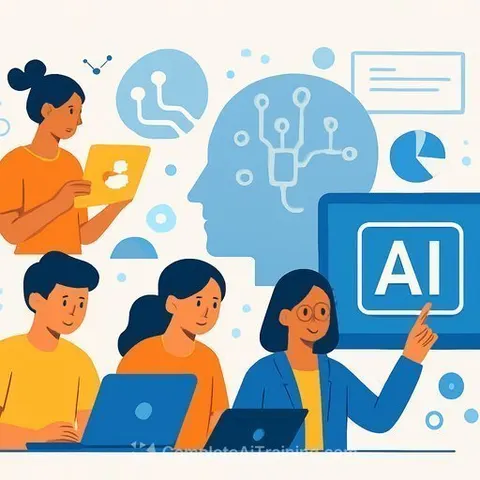
Schools are racing to integrate artificial intelligence into classrooms even as research on its educational impact lags behind the technology's rapid evolution. Career Academy Network of Public Schools in South Bend, Indiana, is addressing that gap by teaching students from kindergarten through 12th grade how to use AI responsibly - and preparing high schoolers for a workforce where AI skills will be expected.
The network is using AI both in the classroom and behind the scenes. Teachers are employing AI tools to create lesson plans, communicate with families, analyze student data, and engage learners. At the same time, instructors are teaching students how AI can expand their knowledge - and where its limits and risks lie.
Students are already using AI, with or without guidance
David Ebersol, Director of Career and Technical Education for the network, said students are not waiting for permission to experiment with AI tools. "They're finding it with or without us," he said.
Ebersol, who is also the parent of an elementary school student who has used AI platforms in class, compared unguided AI use to a child picking up a dangerous tool without training.
"It's just like if they found a reciprocating saw in the shop and they just assumed they know how to use it because they've used a hand saw," Ebersol said. "It's not the same tool and we need the proper training for them to use that advanced dangerous tool. I would rather my daughter have the experiences in a controlled environment versus just the Wild West of finding things on the internet or from her friends."
The network has created ethical and responsible use guidance for students by grade level, giving younger learners clear boundaries while allowing older students more autonomy as they build skills.
High school pathway targets workforce readiness
Career Academy Network has launched an AI/Machine Learning Pathway designed to prepare high school students for real-world workforce applications. The program is built on the premise that AI will touch nearly every career field, regardless of a student's chosen path.
Spencer Noah, the lead AI and mathematics instructor at Career Academy High School, said the curriculum goes beyond technical skills. "I'm trying to teach these students that how can we take this and make the world a better place, and more ways than one," he said.
That mission includes teaching ethical and responsible AI use. Students learn not just how to operate AI systems, but when to question their outputs and how to apply them in ways that serve people rather than replace judgment.
For educators looking to build similar skills, training resources like AI for Teachers offer structured guidance on bringing AI into lesson planning and classroom management. Broader coverage of how schools are adopting these tools is available through AI for Education resources.
Why this matters for educators
The approach at Career Academy Network reflects a growing reality: students will encounter AI whether schools teach it or not. The choice facing districts is not whether to engage with the technology, but how deliberately to do so.
Educators who establish clear ethical guidelines, train teachers on classroom applications, and build career-focused AI pathways will give students a meaningful advantage. Those who wait for research to catch up risk leaving students to figure out AI on their own - with all the hazards that unsupervised experimentation can bring.