
AI news ·
China accelerates establishment of World Artificial Intelligence Cooperation Organization
China is forming a World Artificial Intelligence Cooperation Organization to shape global standards. It will host the 2026 World AI Conference in Shanghai in July.
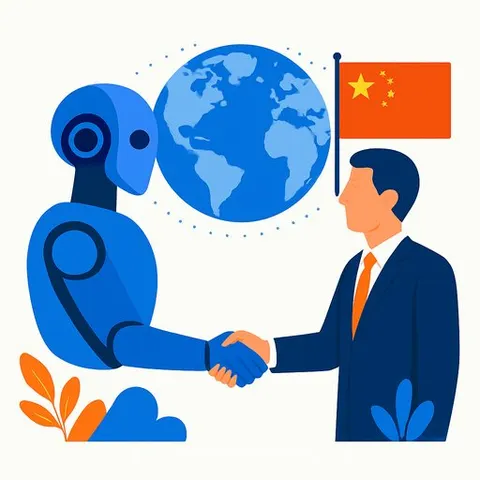
China is accelerating preparations to establish the World Artificial Intelligence Cooperation Organization, Foreign Minister Wang Yi said Wednesday, a move that could influence international standards for AI development and deployment. "China welcomes all parties to join in promoting AI for good," Wang said at a news conference in Beijing, where the State Council Information Office released a white paper on global governance.
The white paper, titled "More Just and Equitable Global Governance: China's Principles, Proposals and Actions," outlines China's approach to multilateral cooperation. Zhou Haibing, deputy head of the National Development and Reform Commission, said China has actively promoted global AI governance while upholding multilateralism and openness.
China put forward the Global AI Governance Initiative and supports the United Nations as the main channel for global AI governance. The effort underscores a broader shift toward AI for Government frameworks and cross-border policy alignment.
Shanghai conference set for July
Zhou said China will host the 2026 World Artificial Intelligence Conference and High-Level Meeting on Global AI Governance in Shanghai in July. He added that the country looks forward to working with others to strengthen international cooperation on AI.
Open-source ecosystem against monopolies
"China has vigorously developed an open-source and open ecosystem, promoted global sharing of technological achievements and application experience, and firmly rejected closed and exclusive development models, as well as technological monopolies," Zhou said. He added that China has carried out regular international exchanges and training programs to help developing countries address gaps in technology, talent, and governance capacity, aiming to narrow the global AI divide through multilateral platforms such as the Shanghai Cooperation Organization and BRICS.
Why this matters for IT and Development
For developers and IT professionals, the creation of a global AI organization could lead to new open-source tools, shared technical standards, and cross-border collaboration opportunities. China's emphasis on open ecosystems and rejection of tech monopolies may influence how AI platforms and APIs are governed, potentially affecting access to models and datasets. The Shanghai conference this July will be a key venue for technical discussions and policy announcements that could affect future development workflows.