
AI news ·
China expands AI surveillance in classrooms to monitor student and teacher behaviour
China tracks student behavior with AI in 68% of its secondary schools. The system monitors real-time attendance and engagement, raising privacy concerns.
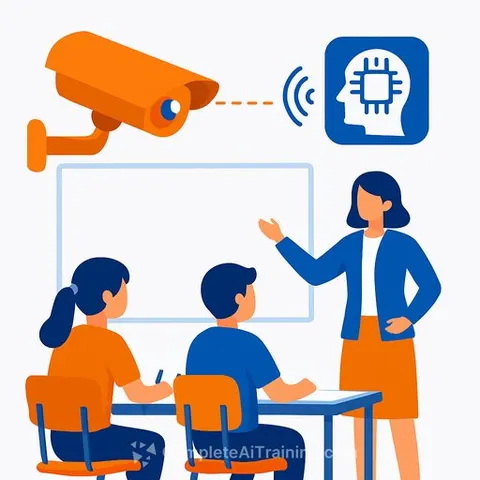
China is deploying artificial intelligence and big data across its school system to monitor classroom behavior and teaching patterns in real time. The initiative, which began in 2018, now tracks student attendance, concentration levels, and classroom participation, raising global questions about the balance between educational analytics and student privacy.
From access control to classroom monitoring
The smart school initiative started under the Chinese Ministry of Education's "Education Informatisation 2.0" policy. Initially, the technology focused on facial recognition for school and dormitory access. It has since progressed into full-scale AI monitoring within classrooms. According to a report by HKEPC, a Chinese tech review site, this evolution represents a significant shift in how student data is captured.
Real-time tracking and backend reporting
Since October 2025, 469 smart classrooms have been established across the country. School administrators can monitor classroom dynamics through a backend known as the "Daily Routine Logging System." This system records attendance rates, how often students look up, front-row occupancy, and overall interaction levels. Administrators exploring these tools might find resources on an AI Learning Path for School Principals useful for understanding how such backend reporting systems are structured and evaluated. Currently, 68 percent of secondary schools in China have begun installing these smart cameras to analyze student behavior.
Expansion to national exams and unconfirmed claims
The use of AI monitoring has also extended to the national university entrance examination, or gaokao. Intelligent systems are now paired with security scanners and biometric verification gates to detect abnormal behavior and prevent cheating. However, not all information circulating about the program is verified. Figures shared on social media, such as claims of a nationwide rollout across the entire education sector by 2030, lack official confirmation from government documents.
Why this matters for educators
The deployment of AI for Education in China demonstrates how quickly behavioral analytics can move from optional administrative tools to standard classroom infrastructure. Education professionals watching this trend must weigh the operational benefits of attendance and engagement tracking against the ethical implications of mass student surveillance. Understanding these mechanics helps school leaders evaluate similar vendor proposals in their own districts before adopting new monitoring technologies.