
AI news ·
China's AI Education Boom Fuels Gaotu's Big Bet
AI moves from pilots to standard practice across China's campuses, opening doors for ed-tech. Gaotu and Renmin target lab-to-class tools in deep reasoning, RAG, and agents.
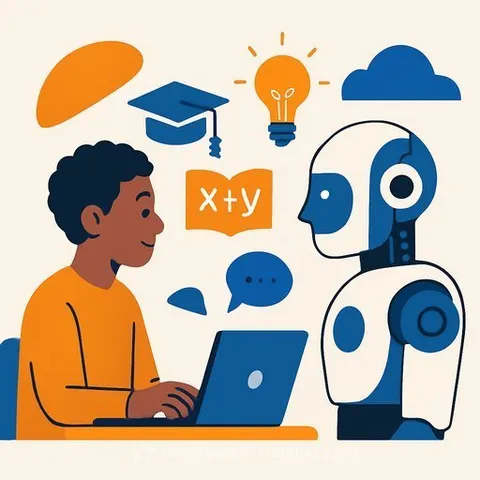
Ed-tech bets big on AI learning: what educators need to know now
AI is moving from pilot projects to standard practice across China's universities and schools. That shift is creating clear openings for domestic ed-tech firms, with Gaotu Group among those scaling up AI-first learning tools and research partnerships.
Gaotu and Renmin University launched a joint lab focused on deep reasoning, retrieval-augmented large models, and intelligent agents. The goal: turn AI research into classroom-ready applications that serve both institutions and students.
Why this matters for your institution
- Campus usage is already mainstream. Surveys show near-universal exposure to generative AI among university students, with a large share using tools weekly or daily.
- Top universities are rolling out AI literacy courses open to all majors, plus cross-disciplinary AI programs.
- Policy momentum is strong. National "AI+ education" guidance and city-level mandates are pushing AI from optional to expected across grade levels.
- Big tech is active on campus. ByteDance, Alibaba, Tencent, and global peers are courting students early to build product habits.
What ed-tech firms are building
- AI-integrated curriculum and tutoring assistants for large-enrollment courses.
- Assessment support: AI feedback for drafts, code, and problem sets with transparent rubrics.
- Retrieval-augmented study tools grounded in institution-specific content.
- Agent-based research helpers for literature review, data wrangling, and experiment planning.
The execution gap: AI literacy and standards
High usage does not equal high proficiency. University leaders point to uneven student and faculty skills, fast-changing tools, and a lack of unified competency frameworks. Expect fundamentals to sit with universities, while hands-on tool training skews market-driven.
Practical steps for education leaders
- Define tiered competencies: AI awareness for all, practical skills for most, advanced agent workflows for research tracks.
- Pick 2-3 high-impact use cases first (e.g., writing feedback at scale, coding support in CS courses, data analysis in STEM).
- Create an academic integrity policy that clarifies permitted, restricted, and prohibited AI use by assignment type.
- Stand up data governance: content sources, model selection, PII handling, logging, and human-in-the-loop reviews.
- Invest in faculty enablement: micro-credentials, model-agnostic prompts, and course redesign templates.
- Pilot, measure, expand: track learning outcomes, time saved, and equity impacts before scaling.
- Balance vendors: test multiple models, avoid lock-in, and keep an open standard for content and prompts.
Signals to watch in 2025
- AI literacy frameworks becoming standard in general education requirements.
- Agentic systems moving from demos to labs, libraries, and student services.
- GPU and inference costs shaping what can run on-prem, on edge, or in the cloud.
- Quality and provenance features (citations, audit trails) becoming procurement must-haves.
- Deeper industry-university labs translating research into deployable classroom tools.
For context and further action
- Global attitudes and adoption trends: Stanford HAI - AI Index
- Upskill your team by role with practical courses: Complete AI Training: Courses by Job
Bottom line
AI in education is no longer a side project. Build clear competencies, start with a few high-yield use cases, protect data and integrity, and keep your stack flexible. The institutions that move with intent will set the benchmark for student outcomes and operational efficiency.