
AI news ·
China's military researchers propose AI course redesign centered on educating for war
China's military is redesigning its graduate AI course to center on combat readiness, embedding warfare scenarios into every module. The National University of Defence Technology published the proposal in July, arguing existing case studies lacked "military flavour" and must serve "educating for...
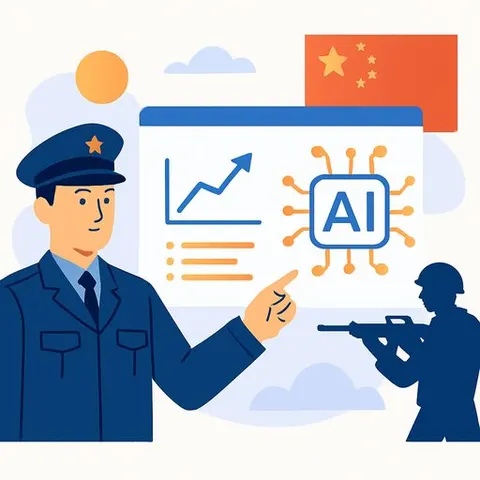
China's military is redesigning an artificial intelligence course for graduate students to center on combat readiness. Researchers at the National University of Defence Technology's College of Intelligence Science and Technology published their proposal in the July issue of the journal Defence Industry Conversion in China, arguing that existing case studies lack sufficient "military flavour" and must be rebuilt around "educating for war."
The university first offered "Principles and Practice of Artificial Intelligence" in its 2022 autumn semester as a tailored course for non-AI science and engineering graduate students. The new proposal embeds combat scenarios directly into the curriculum, reflecting a broader push by China to develop officers who can apply emerging technologies to armed operations as global militaries test AI in planning, training, and combat.
Why the existing course fell short
The researchers said the original course materials did not meet the practical demands of modern military education. Case studies, while technically sound, were drawn from civilian contexts and failed to connect AI principles to battlefield decision-making. The redesign places warfare scenarios at the core of every module.
This shift mirrors a wider trend in AI for Education, where instructional design is moving from theory-heavy formats toward applied, domain-specific training. For the military, that domain is intelligent warfare - and the stakes are operational readiness, not academic exercise.
What the new course structure looks like
The proposal outlines a curriculum that integrates combat simulation, tactical data analysis, and real-time decision exercises. Students would work through scenarios where AI systems support mission planning, threat assessment, and resource allocation under time pressure. The goal is to produce graduates who can evaluate AI outputs critically and deploy them in contested environments.
The researchers emphasized that the redesign serves "the practical needs of educating for war," a phrase that signals how seriously China's defense establishment views the intersection of technical training and battlefield competence. The course remains targeted at graduate students outside AI specialties, ensuring a broader pool of officers gains functional AI literacy.
Why this matters for government and education professionals
Military training programs often preview skills that later become standard in civilian government and education sectors. The emphasis on applied AI - moving from abstract concepts to scenario-based practice - is a model that public-sector training leaders should watch. Agencies investing in AI for Government face a similar challenge: how to equip professionals with enough technical depth to make sound decisions without turning them into data scientists.
The Chinese military's approach also underscores a hard truth about AI adoption: generic coursework rarely translates into operational value. For government educators and workforce planners, the lesson is clear. If AI training does not mirror the specific pressures and constraints of the job, it will not change how people perform under real conditions.