
AI news ·
Claimable uses artificial intelligence to help patients appeal denied health insurance claims
Claimable charges $50 to write AI appeal letters for denied health insurance claims. The startup reports a 75% success rate in overturning these medical denials.
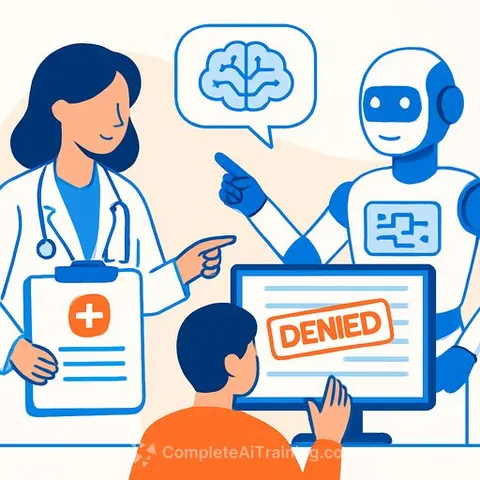
U.S. health insurers deny 850 million claims each year, but fewer than 1% of patients appeal. Claimable, a new AI-powered tool, charges $50 to generate a professional appeal letter, and its founders report a 75% success rate in overturning denials.
Dr. Warris Bokhari, CEO and co-founder of Claimable, knows the frustration firsthand. "I'm asthmatic myself. I was actually at the pharmacy yesterday and got denied for my inhaler, which is incredible," he said on "Closer Look with Rose Scott." Bokhari says chronic disease patients are the most likely to face restrictions, and the low appeal rate reflects a system that is hard to navigate.
The scale of denials
Claimable estimates that 850 million claims are denied annually in the U.S. Legal challenges have targeted major insurers for using AI to reject claims quickly. The Clarkson Law Firm accuses Cigna of denying claims in under two seconds. A lawsuit against UnitedHealth alleged that the accuracy of its Medicare Advantage denial algorithms was low. Bokhari calls such AI-driven denials "highly error-prone."
"Out of the 850 million denials, less than a million appeals a year are filed, which is incredibly hard and arduous for a patient to actually go about appealing their own denial," Bokhari said. "This is intentional, and it is entirely designed to make people feel hopeless and give up and progressively isolated."
How Claimable works
After three years of development, Claimable launched in 2024. For $50, the service produces a letter that uses medical and legal arguments tailored to the specific denial. The company covers many chronic illnesses and common medications, and plans to expand to cancer patients soon. Bokhari says the tool puts AI on the patient's side, helping them write appeals faster and with the correct information.
AI on both sides of the appeals process
Insurers are not the only ones deploying AI. The federal government's WISeR program, highlighted by CMS Administrator Dr. Mehmet Oz, aims to find waste in Original Medicare, but Bokhari warns it will give AI prior-authorization power before a Medicare patient receives treatment. Jennifer Oliva, a law professor at Indiana University, told PBS that tools like Claimable could lead to an "AI arms race where, as consumers become more savvy and are more empowered by these tools to fight back, the insurers will just up the ante on their side."
Bokhari disputes that framing. "I think insurers were using AI to assail patients to begin with," he said. "So if the response to that is that we should do nothing to actually put any tools on the side of a patient, then I would dispute it." The growing use of AI in claims processing has drawn attention from both insurers and patient advocates, as AI for Insurance tools become more common on both sides. Bokhari noted that insurers are still required to have a specialty-matched human review appeals. "What we're trying to say is that it's AI on the side of the patients, a human on the side of the insurers. And we're actually inverting the leverage because these denials are distributed by AI to begin with, but the appeals critically have to be reviewed by a human."
Why this matters for insurance professionals
As patient-side AI tools gain traction, claims departments should expect a rise in the number and sophistication of appeals. A 75% success rate on AI-generated appeals signals that many initial denials may not hold up under scrutiny. That could increase regulatory pressure on insurers to audit their automated denial systems and ensure that human reviewers are consistently involved in appeals. For professionals managing claims, underwriting, or compliance, the emergence of tools like Claimable means the appeals process will become more adversarial and data-driven, demanding closer attention to denial accuracy and documentation.