
AI news ·
Collibra acquires trail ML to automate AI governance enforcement
Collibra acquired AI governance startup trail ML, adding runtime enforcement to block non-compliant agent actions before they execute. The startup's tech enables 70% faster compliance execution and 4x faster AI deployment, based on customer outcomes.
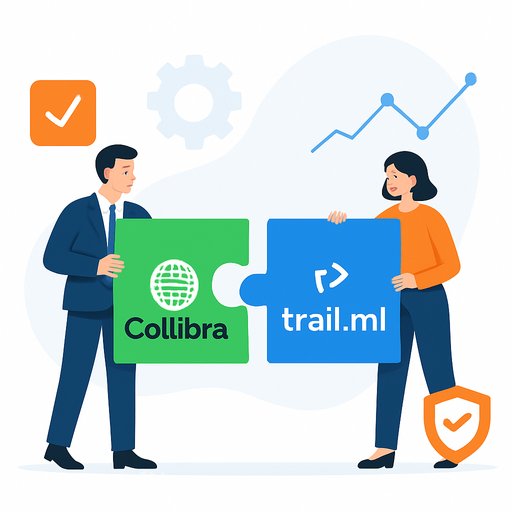
Collibra acquired Munich-based AI governance startup trail ML on October 5, 2026, adding agent-powered automation to its data intelligence platform. The deal targets the operational gap that opens when autonomous AI agents deploy faster than compliance teams can manually assess them, shifting governance from periodic reviews to continuous runtime enforcement.
What trail ML brings to the platform
Trail ML, founded in 2023, built technology that lets AI agents review evidence, identify relevant regulatory frameworks, and assess controls automatically. The system maps requirements against standards including the EU AI Act, ISO 42001, and NIST AI RMF. A "Copy-on-Write" mechanism ensures agents can propose actions but cannot write to customer systems without human approval.
The startup claims its platform enables 4x faster deployment of AI solutions and 70% faster compliance execution. Those figures come from customer outcomes, the company said, not lab benchmarks. The integration gives Collibra the ability to block non-compliant agent actions before they execute, enforcing policies directly at the point of operation.
From point-in-time checks to continuous control
Felix Van de Maele, CEO of Collibra, said the combination makes governance continuous, reducing manual work for risk and compliance teams while tracking rapidly changing AI environments. The shift addresses a structural tension: autonomous agents operate in milliseconds, but traditional governance reviews happen in days or weeks.
Runtime enforcement represents a departure from the standard model of assessing AI systems before deployment and hoping nothing changes afterward. As agents gain more autonomy across enterprise workflows, the ability to intercept violations in real time becomes a control requirement rather than a feature enhancement.
Why this matters for operations and compliance leaders
For executives in regulated industries-finance, insurance, healthcare-the acquisition signals that AI governance tooling is maturing beyond documentation checklists. Runtime enforcement means compliance teams can set policies once and have them applied automatically, rather than chasing agent behavior after the fact. The 70% faster compliance figure, if it holds across new deployments, translates directly to reduced bottleneck costs in AI rollout pipelines.
Legal and risk management teams should watch how the Copy-on-Write mechanism evolves inside Collibra's platform. It preserves human sign-off while removing the manual evidence-gathering that bogs down audits. For organizations building AI regulatory compliance capabilities, the tooling shift from periodic assessment to continuous enforcement changes what skills teams need-less checklist administration, more policy design and exception handling.