
AI news ·
Commons Backlash as MPs Turn to ChatGPT for Speeches
UK MPs face scrutiny for AI-drafted speeches, with "I rise to speak" surging this year. Lesson for writers: speed is fine, but voice, specifics, and stance build trust.
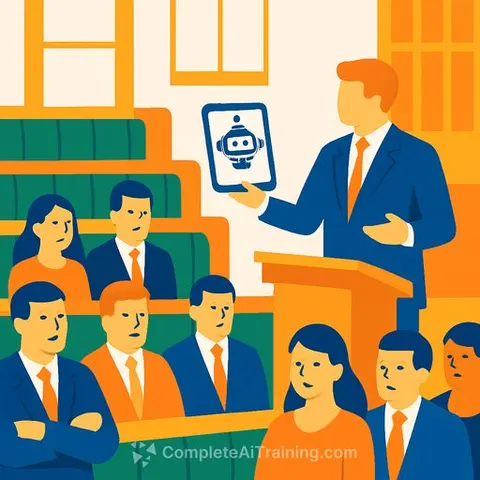
British MPs, AI, and the cost of outsourced voice
Reports suggest a growing number of MPs are leaning on AI to draft speeches. An analysis highlighted a spike in AI-like phrasing in Parliament, with "I rise to speak" appearing 635 times this year, up from 231 in 2024.
Tom Tugendhat, Conservative MP for Tonbridge, called out the trend, arguing the phrasing is an Americanism and a clear tell of AI dependence. His point is simple: if your words represent people, they should sound like you. Those named in the investigation hadn't commented at the time of reporting.
Why this matters to writers
Voice is the product. If your audience can tell a machine wrote it, trust drops. That's true on the House floor and on a client blog.
AI can draft fast, but patterned language makes you sound generic. Readers don't pay for generic. They pay for perspective, specificity, and a consistent tone.
Common AI tells to avoid
- Stock openers: "I rise to speak…," "As we all know…," "In conclusion…"
- Mismatched idioms or regional tone shifts (e.g., Americanisms in UK contexts)
- Vague claims with no concrete nouns, numbers, or sources
- Repetitive sentence rhythms and filler transitions ("moreover," "furthermore," "additionally")
- Over-polished neutrality where a clear stance is expected
A responsible AI workflow that keeps your voice
- Outline first. Decide the angle, audience, and one core point.
- Use AI for idea expansion, examples, or structure-not final copy.
- Write the opener and closer yourself. That's where voice signals strongest.
- Inject specifics: names, dates, numbers, citations.
- Edit for tone and region. Remove generic transitions and stock phrases.
- Read it aloud. If it sounds like a press release, rewrite.
- Fact-check anything the model suggests. Keep source links.
What public rhetoric teaches working writers
Delegation is efficient. Representation is personal. Speeches, like thought leadership and bylined content, demand authorship.
Use AI to reduce admin and research time. Don't outsource the stance, the story, or the sentence that sets the tone.
Want to check the data yourself?
Browse historical phrasing in the UK Parliament Hansard. Patterns are obvious once you look for them.
Sharpen your prompts, keep your voice
If you rely on AI for drafting, tighten your process and prompts so the output sounds like you-and passes a read-aloud test. Useful starting points are here: Prompt Engineering resources.
Bottom line: Tools can help you think. They can't replace your point of view. That's the asset clients and audiences keep coming back for.