
AI news ·
CommonSpirit Health CMIO says AI scales cancer screening and reduces administrative burden while preserving human oversight
CommonSpirit Health used AI to lift lung cancer screening compliance from 20% to over 90%. The system automates chart review to flag screening gaps and incidental findings.
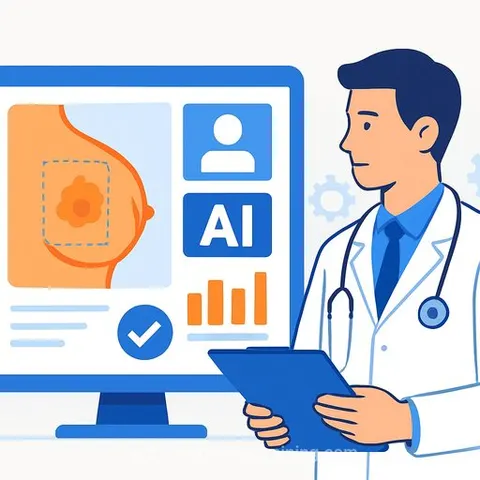
CommonSpirit Health, one of the largest nonprofit health systems in the U.S., is using AI to dramatically improve cancer screening compliance - from 20% to over 90% for lung cancer in pilot regions - while helping clinicians catch incidental findings that might otherwise go unnoticed. The approach prioritizes workflow automation over clinical decision-making, keeping physicians firmly in control.
"We don't see AI taking people's jobs," said Dr. John Chelico, CommonSpirit's chief medical information officer. "We definitely see AI as an opportunity for us to help with our physician and nurse shortage."
As health systems adopt AI for Healthcare, the central question, according to Chelico, is not whether AI will enter care delivery but how organizations integrate it into existing workflows. CommonSpirit's experience offers an early blueprint for doing that without sidelining human judgment.
Cancer screening at scale
The health system deploys AI to review patient charts and flag opportunities for breast, colon, and lung cancer screening before a patient visit. Instead of requiring staff to manually comb through records, the system prepares recommended actions in advance. The program began in the Pacific Northwest and is now expanding across CommonSpirit's 2,200 care sites in 24 states.
"We've gone from almost 20% compliance for lung cancer screening in those areas to 90% compliance or better with these screenings," Chelico said.
The technology handles preparatory work that often gets squeezed out of time-pressured appointments. "There's not enough time in every appointment to capture or do all these things," Chelico said. By surfacing screening opportunities ahead of time, the system prompts conversations that lead to earlier detection and intervention.
Finding what humans can miss
In radiology, an AI-enabled system reviews reports for incidental findings. Chelico described a patient who came to a California hospital after a car accident. Imaging revealed an incidental lung nodule. The system flagged the finding and alerted the care team. Subsequent evaluation confirmed cancer, and treatment began.
"The bot identified the finding and brought it up to the team," Chelico said. "This person is now living their life, now living for another birthday, living for another anniversary, and more time with their family."
For Chelico, the example illustrates how AI extends clinical reach. "These are amazing things we want to do as humans, as physicians, as clinicians, but we can't do it at scale," he said. Systems as large as CommonSpirit must find ways to amplify their teams without sacrificing safety.
Keep humans in the loop
Chelico drew a bright line between assistive AI and autonomous decision-making. "You have to have the human touch in this," he said. "You cannot leave things entirely up to AI." He supports ambient documentation and workflow tools that cut administrative burdens but opposes algorithms deciding treatment paths. "I do not want the bots deciding how my cancer is going to be treated. But if the bot can help identify my cancer early and get me into treatment earlier, so be it."
He also warned about the "black box" risk in AI training data and stressed the need for transparency. The most successful implementations, he predicted, will be those that free clinicians to focus on patients while technology handles repetitive tasks.
Why this matters for healthcare professionals
CommonSpirit's results show that targeted AI applied to pre-visit chart review and incidental finding follow-up can lift screening compliance from deeply suboptimal to near-universal levels. For clinicians and care teams, this means less manual hunting through records, fewer missed cancers, and workflows designed to surface what matters - without ceding clinical authority to algorithms.