New technologies arrive faster than teams can adapt, entire roles dissolve overnight, and employees face uncertainty. Artificial intelligence now gives leaders a sharper lens into these workforce transitions, allowing companies to predict disruption, guide people through it, and emerge stronger instead of reacting after the damage is done.
Why traditional change management falls short
Work used to evolve in measured steps. A new tool arrived, employees received training, and the company settled into a new routine. That rhythm has broken. Markets shift weekly, automation rewrites skill requirements, and remote work redraws collaboration. Change no longer drips in - it pours.
Conventional change models rely on surveys, long planning cycles, and leadership intuition. They stumble when multiple waves of transformation hit at once. Leaders struggle to spot where resistance will flare, which teams are vulnerable, and how to support employees who fear becoming obsolete. Without sharper insights, change becomes reactionary.
AI fills this gap by surfacing patterns and risks that human eyes often miss. It does not replace leadership vision, but it provides clarity - the ability to see transitions unfolding before they fully arrive.
How AI predicts and guides transitions
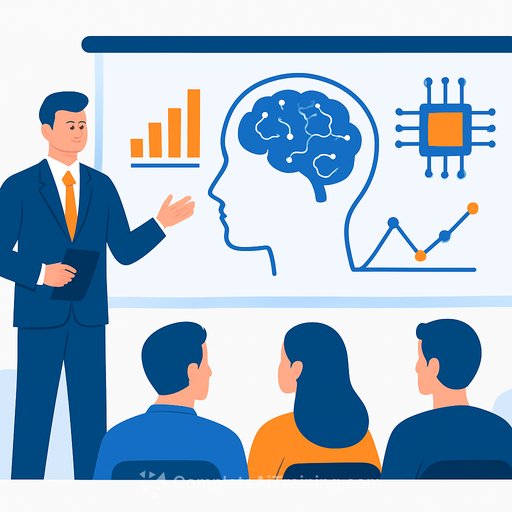
AI analyzes performance metrics, digital communication trends, and subtle shifts in engagement data to forecast workforce changes. It creates a predictive map of where roles will shift, where turnover risk is highest, and where retraining could prevent disruption. Predictive analytics can flag emerging skill shortages months before project bottlenecks appear. Natural language processing scans internal communications to spot hesitation or resistance forming around a new initiative.
These insights reshape scenario planning. Leaders can run simulations fueled by live data, testing how different reboarding strategies play out across the workforce. This predictive capacity turns guesswork into foresight, giving organizations steadier hands during transitions.
AI-driven dashboards provide real-time views of adoption rates, engagement levels, and productivity dips. At the individual level, adaptive systems deliver learning paths that adjust as each person progresses. Employees receive timely prompts and resources tailored to their role and pace, keeping transitions personal. Clear communication becomes critical here - AI tools can analyze leadership drafts, flag vague language, and suggest phrasing that builds trust. This helps managers evaluate business text for clarity and authenticity, ensuring employees hear guidance rather than noise.
The human-AI partnership in leadership
AI sharpens foresight but does not carry the emotional weight of leadership. People rally around a leader who reads the room, speaks with empathy, and sets a clear path. Effective change managers treat AI as a co-pilot, not a replacement. Algorithms can predict who may resist a shift, but only a manager sitting across the table can ask why. Data shows a looming skills gap, yet it takes a leader's judgment to decide whether reskilling, redeployment, or recruitment is the humane choice.
Leaders who use AI-generated insights must translate them into stories employees can relate to. A predicted dip in engagement should spark an open dialogue, not appear as a statistic in a slide deck. This blend of computational insight and human presence creates a culture where employees see technology as a support system for growth. For executives shaping strategy, AI for Executives & Strategy resources can help build the skills to lead these blended approaches.
Data science expert Martin Buckley said, "Data points can predict where transitions will be rough, but leaders need to humanize the message. AI may identify the storm, but only people can carry the umbrella." His perspective highlights that technology raises the bar for leadership, it does not diminish it.
Risks and practical lessons
AI brings its own shadows. Algorithmic bias can distort forecasts if training data is skewed, misidentifying who needs support or unfairly targeting groups for retraining. Trust depends on transparency - if AI becomes a black box dictating change without explanation, it sparks fear. Over-reliance on dashboards tempts managers to chase numbers instead of having real conversations. And mishandling sensitive employee data risks eroding trust permanently.
Organizations that succeed with AI approach it with discipline. They clarify its role as a decision-support tool, communicate with radical transparency, and balance insights with human presence. They establish clear policies on data collection and use, and invest in training managers to interpret AI outputs responsibly. In human resources, AI for Human Resources applications can support talent analytics while keeping ethical safeguards front and center.
Benefits are tangible: sharper foresight into workforce dynamics, personalized transition experiences, quicker responses to disengagement, better allocation of training resources, and smoother alignment between strategy and daily realities. Employees feel supported because challenges are anticipated. Leaders gain confidence from live insights. Companies move faster because uncertainty - the greatest barrier to change - has been reduced.
Why this matters for executives and strategy
Workforce transitions will always test leadership. What's changing is the toolkit. With AI, executives can see disruptions before they strike, guide employees with tailored support, and steady the culture through constant change. The core of transition still beats in human connection. When data and empathy move together, change management stops feeling like survival and starts feeling like progress. Leaders who integrate AI responsibly now will orchestrate evolution rather than simply react to the next wave.
Your membership also unlocks: