
AI news ·
Cramer on Klarna: 3,400 AI Job Cuts, 6.7% Post-IPO Slide, and Uncertain Tech Hiring
Klarna fell 6.7% after listing as its CEO said AI enabled 3,400 job cuts. With 700k U.S. cardholders and a 5M waitlist, track conversion, credit, and margins to test the thesis.
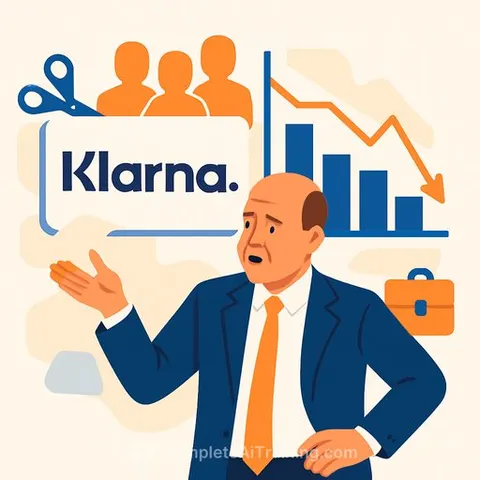
Jim Cramer on Klarna (NYSE: KLAR): AI Cuts, Early Trading, and What Finance Teams Should Track
Klarna listed on Wednesday and traded down 6.7% over its first two sessions. The Swedish BNPL and payments firm lets customers choose how to pay, including paying later. The CEO told CNBC the company has 700,000 US card customers and a 5 million-person waitlist.
Jim Cramer didn't break down Klarna's business on air, but he did react to the CEO's claim that AI enabled a 3,400-person headcount reduction. "Wow. Yeah, I heard that… you've got two groups of people that are in a worrisome position… companies don't know if they should be hiring."
Why this matters for valuation
- Operating leverage: An AI-driven 3,400 reduction suggests lower run-rate opex. Watch adjusted operating margin, unit costs per transaction, and customer service KPIs to see if savings hold without degrading experience or compliance.
- Growth signals: 700k US card customers plus a 5M waitlist implies latent demand. Track activation and conversion from the waitlist, interchange and fee income per active, and incremental loss rates as cohorts scale.
- Price discovery: A 6.7% slide in two days is common around a new listing. Monitor liquidity, implied volatility, lock-up timelines, and any early research coverage that could reset expectations.
- Credit quality: BNPL economics are sensitive to charge-offs and funding costs. Focus on delinquency buckets, provisioning methodology, and warehouse/ABS pricing versus yield on receivables.
- Regulatory overhang: Policy moves could affect disclosures, dispute handling, and credit reporting. See the CFPB's BNPL work for context here.
Key questions for management
- AI savings durability: What portion of the 3,400 roles were eliminated vs. redeployed? What are the net savings after AI tooling costs, and how are service levels trending (NPS, first-contact resolution)?
- Card unit economics: CAC, activation rate, payback period, cohort ROA, and churn. What is the roadmap for cross-sell into BNPL and merchant-funded rewards?
- Underwriting and risk: What alternative data feeds are in production, and how do models perform under rate and unemployment shocks? How are loss caps and merchant subsidies structured?
- Funding mix: Current capacity and covenants on warehouses, ABS cadence, and expected cost of funds. Any plans to term out more of the book post-IPO?
- Profitability path: Timeline to sustained GAAP profitability and free cash flow, and how stock-based comp and marketing intensity trend as the waitlist converts.
Talent and operating implications
Cramer's comment points to a clear trend: mid-level coders and new grads feel the pressure as AI absorbs repetitive work. For finance leaders, this is a resourcing and governance issue as much as a cost line.
- Run a quarterly automation audit across FP&A, risk ops, and collections; redeploy saved hours into scenario design and model monitoring.
- Strengthen model risk management and AI governance to keep regulators and auditors comfortable as automation expands.
- Upskill teams on AI-assisted analysis and workflow automation. A curated starting point for finance use cases is here.
Bottom line
Klarna's early trading reflects price discovery while investors weigh AI-driven efficiency against credit and regulatory risk. Track conversion of the US card waitlist, loss trends, and evidence that AI savings stick without service or compliance slippage. That mix will set the slope of margin expansion-and the stock's next leg.