
AI news ·
Cua launches free teleport feature that moves full app sessions between macs and agent desktops
Cua Spaces is a free macOS app that lets AI agents run virtual desktops without getting stuck on permission dialogs or sign-in screens. The free tier supports self-hosted machines, while Pro and Teams plans with shared machines and admin controls are coming soon.
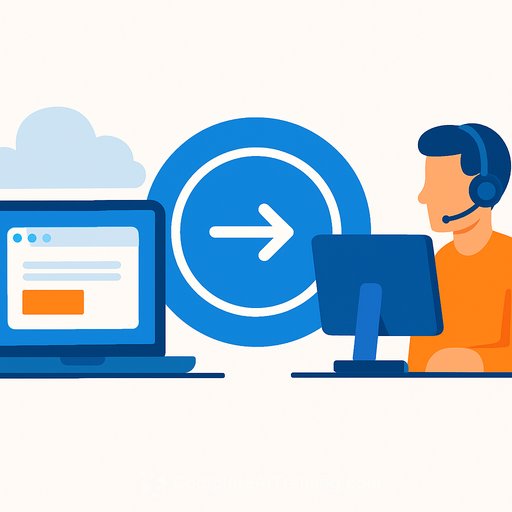
Cua has released Cua Spaces, a free macOS application that lets professionals run virtual desktops where AI agents can operate applications, browse the web, and complete tasks while the user watches and can step in at any time. The tool addresses a core friction in enterprise AI adoption: agents that stop at permission dialogs, sign-in screens, or cookie consent forms, requiring constant human intervention.
How Teleport moves your apps into a Space
Teleport packs an app's entire session - open tabs, profile data, and sign-in state - into a single bundle and moves it from your Mac into a Space. Nothing is read until you approve it on a consent screen, and macOS requires Touch ID or a password before cookies and sign-ins are accessed. The Space verifies the bundle's SHA-256 hash before opening the app. On Space images, each bundle is sealed end-to-end with that Space's own key, so not even Cua's relay can read the contents.
RCDP, Cua's remote desktop protocol, streams each Space to the user and handles input separately from the display. This means you and every connected agent each get an independent cursor on the same desktop. You can take control at any moment - to choose a seat on a booking site, for instance - then hand the session back to the agent.
Where Spaces can run
Spaces can run in three environments: locally on your Mac as a virtual machine built with Lume, on hardware you own such as a Mac mini or Linux box, or in your own cloud account. All connected machines appear in a single list, streaming live desktops with low latency over QUIC when machines share a network or can reach each other directly. macOS Spaces require Apple silicon and macOS 26 or later. Linux Spaces run as containers through Docker or Podman.
Each Space starts with permissions already granted and tools pre-installed, so agents do not encounter permission dialogs mid-task. Claude Code, Codex, Cursor, Gemini CLI, Cline, Kiro, and OpenClaw all connect through the Cua MCP server, and the installer can configure them automatically. Inside a Space, the agent works desktop applications through Cua Driver.
Pricing, privacy, and licensing
Spaces on your Mac and on machines you own are free. The hosted relay, which lets devices reach machines without port forwarding, is free during early access. Spaces in your own cloud are billed by your cloud provider. Pro and Teams tiers are coming soon, with shared team machines, session handoff, keyvault sync, and admin controls. No account is required for local use or machines added by address.
Anonymous usage telemetry is on by default and covers features used, Space types, durations, error categories, app and OS version, and a random install ID not linked to any account. Cua said the telemetry "never includes screen content, file names, URLs, cookies, sign-ins, Teleport bundle contents or prompts." Location lookup from IP addresses is turned off. Users can disable telemetry in Settings, with the command cua telemetry off, or by setting DO_NOT_TRACK=1.
Cua Spaces is source-available under FSL-1.1-MIT, which permits use and modification for anything except a competing product, with each release becoming MIT two years after shipping. Cua Driver and Lume are MIT-licensed. All code is available in the trycua/cua repository on GitHub.
Why this matters for operations and IT teams
For IT and development leaders managing agent rollouts, Cua Spaces removes the session-management overhead that makes agent workflows brittle. Instead of scripting around authentication states or maintaining separate credential stores for each agent, teams can Teleport a known-good app session into a sandboxed desktop where the agent operates with full context. The end-to-end sealed bundles and SHA-256 verification provide an auditable chain for compliance teams, while the multi-cursor streaming means support staff and managers can observe or intervene in agent sessions without disrupting them. The free tier for self-hosted machines lowers the cost of piloting agent workflows across customer support, HR onboarding, and internal tool automation before committing to a paid plan.