
AI news ·
Dayton Children's Hospital Adopts AI to Streamline Pediatric Care and Documentation
Dayton Children’s Hospital partners with Abridge to use AI in exam rooms, automating documentation and letting clinicians focus more on patient care. The AI integrates with EPIC and supports 28+ languages.
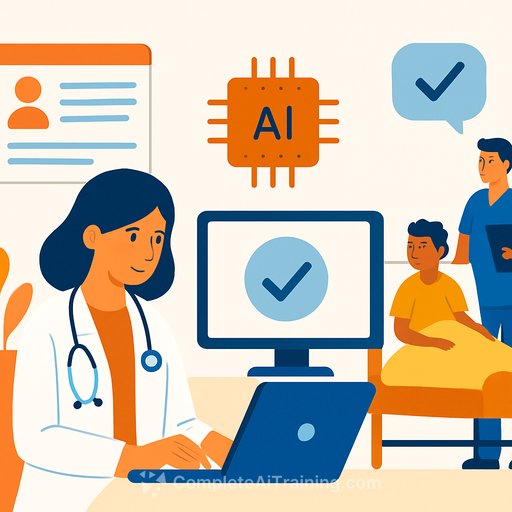
Dayton Children's Hospital Adopts AI to Streamline Pediatric Care
Dayton Children’s Hospital in Ohio has partnered with Abridge to introduce artificial intelligence technology directly into their exam rooms. This initiative aims to reduce the administrative burden on healthcare staff by automating the documentation of doctor-patient conversations.
Key Points
- Collaboration with Abridge brings AI-assisted documentation into pediatric exam rooms.
- The AI system integrates with the hospital’s electronic health records (EHR), specifically EPIC.
- Dayton Children’s is among the first pediatric hospitals in the U.S. to implement this AI platform.
According to the hospital, this technology will allow clinicians to spend less time on paperwork and more time focusing on patient care. The AI listens during appointments and generates detailed notes automatically, reducing manual entry and improving accuracy.
J.D. Whitlock, Chief Information Officer at Dayton Children’s, emphasized that ambient AI will soon become a standard feature in healthcare. The critical factor is selecting the right partner. They chose Abridge for its high-quality AI-generated notes, deep EPIC integration, and a forward-thinking product roadmap.
The platform supports over 28 languages and caters to more than 50 medical specialties. Given the sensitive nature of medical data, Dayton Children’s highlighted Abridge’s strong commitment to patient privacy and data security.
Dr. Shiv Rao, CEO and Founder of Abridge and a practicing cardiologist, noted the unique challenges pediatric clinicians face, such as managing fidgety or crying patients. The AI is designed to understand these pediatric nuances, helping healthcare providers concentrate on delivering care rather than note-taking.
Recent surveys reflect growing acceptance of AI in healthcare. A 2024 American Medical Association survey found that 66% of physicians use AI in their practice, up from 38% the previous year. Additionally, research from Ohio State Wexner Medical Center shows that most Americans support AI use by doctors for documentation tasks, citing benefits like fewer errors, shorter wait times, and better work-life balance for physicians.
Healthcare professionals interested in AI applications in clinical settings may find valuable resources and training at Complete AI Training.