
AI news ·
Doctors urge caution over AI self-diagnosis as tool gains popularity
Doctors warn patients against using AI for self-diagnosis, citing unknown accuracy in the new technology. An orthopedic surgeon advises using AI only as a supplement to professional medical advice.
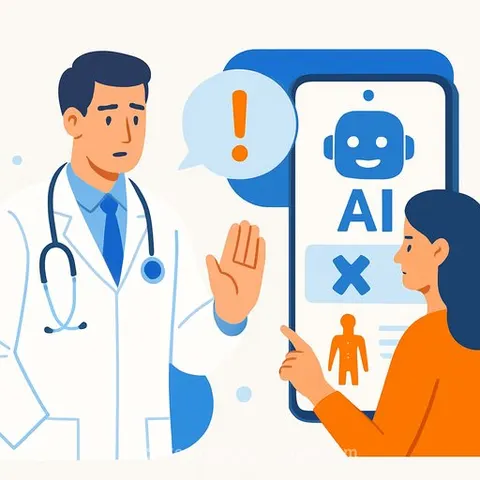
As artificial intelligence becomes more common in health care settings, doctors are cautioning patients against using the technology to diagnose themselves.
Dr. Amit Momaya, an orthopedic surgeon at UAB Hospital, said the accuracy of AI for self-diagnosis remains unknown because the technology is so new. He told WBRC that patients should treat AI as a supplement, not a replacement, for professional medical advice.
AI as an aid for patients
Momaya said AI can help patients prepare for appointments or better understand their situation. "It can be great to figure out a list of questions to ask your healthcare provider or provide a second opinion or upload a report, say, perhaps, 'Who should I seek out to help me treat this?'" he said.
"I think patients should not use it as a primary source, but maybe to augment their health care."
For health care workers interested in applying these tools responsibly, AI for Healthcare Courses & Certifications offers guidance on using AI safely in clinical settings.
How doctors are using AI now
Momaya said his practice already uses AI for transcription, which gives doctors more face-to-face time with patients. "We're not replacing the diagnoses with AI or anything like that, but I think in the future it will help augment us."
The technology may also help doctors identify issues they might otherwise miss. "When a radiologist, for example, looks at a scan, can AI help us alert a unique case where there may be cancer that could be missed otherwise?" he said. "It helps augment and support us and make sure we don't miss anything."
Momaya emphasized that safeguards and appropriate use will determine how much AI is integrated into medicine going forward.
Why this matters for health care professionals
For clinicians, AI is moving from an administrative aid toward a clinical support tool. Those who understand both its limits and its capabilities will be better positioned to use it for transcription, imaging review, and care planning without relying on it blindly. The underlying question is a practical one: how to keep AI as a second opinion, not the final word, in patient care.