
AI news ·
Emergency physician says AI should inform, not own, consequential clinical decisions
Emergency physician and Vituity CEO Imamu Tomlinson says AI should inform clinical decisions but never make them independently. He draws the line at life-altering treatments and care withdrawal, arguing human judgment and accountability must stay with physicians.
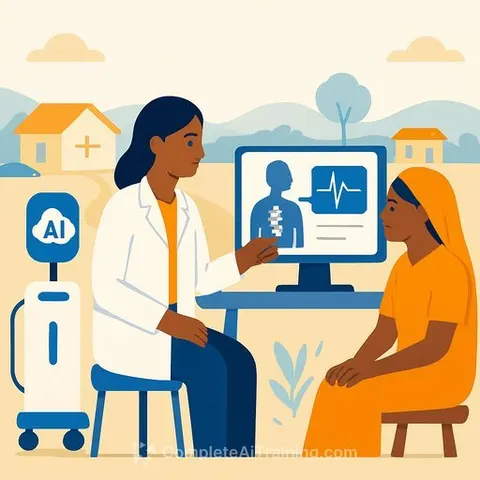
Emergency physician Imamu "Mu" Tomlinson, MD, sees AI as a powerful tool for modern medicine - but he draws a hard line at letting it make consequential clinical decisions on its own. In an interview about AI's role in healthcare, Tomlinson, who also serves as CEO of national healthcare organization Vituity, said AI should inform decisions but never own them.
"I would draw the line at consequential clinical decisions where human judgment, context, and values matter," Tomlinson said. "AI shouldn't independently decide whether someone receives a life-altering treatment, whether care should be withdrawn, or make another important decision about a patient's health."
What AI should and shouldn't do in clinical care
Tomlinson is comfortable with AI handling what machines do well: analyzing large datasets, recognizing patterns, reducing administrative work, and flagging things clinicians might miss. He is not comfortable with AI replacing the clinician's role in patient care.
That distinction matters for healthcare professionals who are increasingly asked to work alongside AI tools. For those exploring how to integrate AI into their practice, AI for Healthcare training can help clinicians understand where automation fits - and where it doesn't.
On transparency, Tomlinson said patients must be told when AI meaningfully influences a diagnosis or treatment recommendation. But he cautioned against overwhelming patients with every background technology at work in their care.
"Trust is one of the most important currencies we have in healthcare, and adopting new technology can't come at its expense," he said.
Shared accountability and the human element
When asked who should be held accountable if an AI system harms a patient, Tomlinson said responsibility is shared across physicians, healthcare organizations, and technology companies. Physicians must not blindly accept AI recommendations. Organizations must ensure deployed technologies are safe and monitored. And tech companies must be transparent about product limitations and performance across patient populations.
Tomlinson sees one of AI's greatest opportunities in something simple: giving physicians more time. Much of a doctor's day goes to documentation, administrative tasks, and system navigation. If AI reduces that burden, it frees physicians to focus on patients - which is why most went into medicine in the first place.
"There is tremendous fulfillment in sitting across from a patient, listening to them, and knowing you helped someone on what may be one of the hardest days of their life," he said.
Human judgment will always remain essential in understanding the person behind the data, he added. Patients don't arrive as perfect textbook cases. There are competing risks, incomplete information, and personal circumstances. AI can inform those decisions, but judgment, empathy, and human connection are what allow a physician to determine what's right for the individual patient.
The future of AI in medicine
Tomlinson said AI will become highly capable at helping diagnose certain conditions, and there may be narrow tasks where it recognizes patterns faster than individual physicians. But he doesn't think the goal should be determining whether AI is "better" than a doctor.
"AI is a tool, and like any tool in medicine, its value comes from how we use it," he said. "Physicians can't outsource their judgment to it."
He advises patients to use AI to become more informed participants in their healthcare - to understand medical terminology, organize questions before appointments, and make sense of information - but not to replace their healthcare professional. For healthcare workers looking to reduce administrative burdens, AI for Medical Billers offers practical training on automating documentation and billing workflows.
Tomlinson envisions a hospital of the future where AI is almost invisible - handling documentation, synthesizing information, and removing friction from daily tasks. That would mean nurses and physicians spend less time serving the machinery of healthcare and more time with patients.
"The paradox is that the best version of an AI-enabled healthcare system may actually feel more human, not less," he said. "Used ethically and intentionally, AI will give clinicians back the time and capacity to listen, think, connect, and care."
Why this matters for healthcare professionals
For clinicians and healthcare administrators, Tomlinson's position offers a practical framework: use AI to reduce workload and surface patterns, but keep final decisions with trained professionals. The distinction between "informing" and "owning" a decision should guide how your organization deploys AI tools - and how you document their use. That approach protects patients, preserves trust, and keeps physicians accountable for the judgment they're trained to exercise.