
AI news ·
Engineering managers are left to improvise as companies push AI strategies without support or guidance
Engineering managers are quietly writing AI usage policies, redesigning code review, and coaching teams through the transition-work their companies never formally assigned them. Without clear guidelines, AI adoption varies wildly across teams.
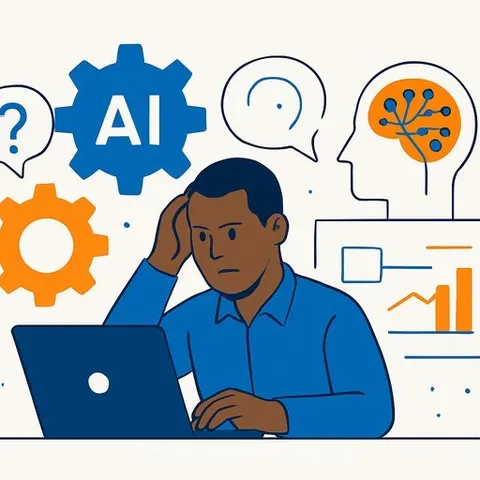
The AI Strategy Gap: Why Engineering Managers Are Left to Improvise
Engineering managers across industries are fielding the same question from their teams every Monday morning: what does it mean that we're an AI-first company now? Their executives have announced AI strategies. Their engineers want to use new tools. But no one has given the managers the policies, resources, or authority to make it work.
This pattern is not confined to one company or sector. It spans enterprise engineering-from healthcare to financial services to mid-size SaaS firms. The gap between strategy and execution is real, and it's being filled by people who were never asked to fill it.
Where Strategy Meets Daily Work
An executive team identifies AI as a priority. Tools get purchased. Pilots launch. Then the strategy reaches the engineering floor, where managers face questions the strategy document never addressed.
Can engineers use AI-generated code in production, or only for prototyping? Who reviews that code-and to what standard? How do you estimate work when a model drafts the implementation in minutes but the review takes three times longer?
These are not abstract questions. They come up every week. The person answering them is the engineering manager-not because the role was designed for it, but because no one else stands between strategy and code.
The translation work falls to managers informally: writing AI usage guidelines that don't exist officially, redesigning code review processes for machine-generated pull requests, coaching engineers through the emotional side of the transition. They do all this while still being measured on shipping velocity, team retention, and sprint predictability.
The Risks of an Unsupported Middle Layer
When the translation layer is unsupported, AI adoption becomes inconsistent. One team adopts tools thoughtfully because their manager invested personal time in designing a process. The team next door adopts haphazardly because their manager was overloaded. Leadership sees both teams report AI adoption. The outcomes are wildly different.
There is a retention risk. The best managers quietly start looking for organizations that recognize what they are actually doing.
There is also a quality risk. When something goes wrong with AI-generated code in production, the question will be: who approved this? The answer is often a manager who was never formally given that authority.
Three Changes That Work Now
Closing this gap requires clarity more than budget.
- Close the policy gap before the tool gap. If you're buying AI tools for engineering teams, publish use guidelines. Identify what code is acceptable for production, what data can be shared with external models, and which decisions need organizational ownership.
- Make the translation work visible. Name, resource, and measure the expectations for engineering managers to frame how they evaluate tools, design AI-augmented workflows, and guide their teams through the transition. Performance conversations should reflect the new job scope.
- Create a peer network for managers navigating AI adoption. A lightweight community of practice-internal or cross-company-where managers share what is working and what is failing is more valuable than most top-down training programs.
Where Transformation Actually Happens
Strategy without translation is a slide deck. The bridge between AI ambition and engineering reality is built in daily decisions made by people who turn strategy into working software.
The question is not whether your organization has an AI strategy. The question is whether the people responsible for making it real have what they need to succeed.
Learn more about AI for Executives & Strategy and AI for Management.