
AI news ·
Epic integration brings patient records into ChatGPT for Healthcare
Epic EHRs and nine public healthcare datasets now plug directly into ChatGPT for Healthcare. Physician reviewers rated 99.1% of 4,363 AI responses across 27 clinical use cases as safe.
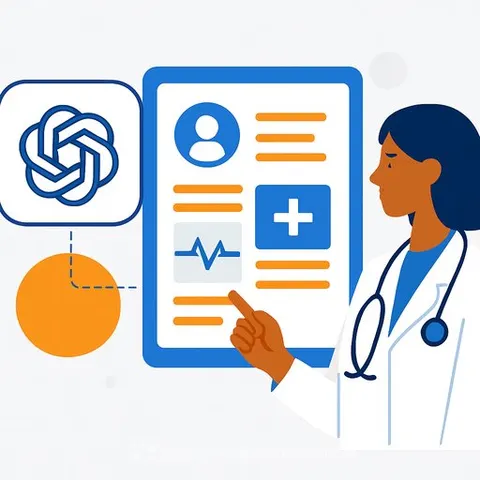
Healthcare organizations can now connect Epic electronic health records and nine official public healthcare datasets directly to ChatGPT for Healthcare. The integration, announced September 1, 2026, lets clinical teams pull authorized patient context and structured industry data into a governed AI workspace - reducing the time spent hunting across disconnected systems for information that shapes patient care.
EHR integration brings patient context into the conversation
Organizations running Epic can connect their environments to ChatGPT for Healthcare, allowing clinicians to ask questions against authorized patient records. Instead of manually searching appointment notes, lab results, medications, and specialist documentation, a clinician can ask what changed since a patient's last visit or which recent lab results need review before an appointment. ChatGPT surfaces relevant developments from the record, summarizes them, and points back to the supporting chart information.
The integration supports two workflows. The first brings EHR context directly into ChatGPT, where teams review patient history and identify changes. The second embeds ChatGPT into the EHR layout itself, keeping AI-assisted workflows inside the patient chart. Both experiences are designed to complement existing EHR systems, not replace them.
Suresh Gunasekaran, President and CEO of UCSF Health, said the organization is "exploring how the new EHR integration with ChatGPT for Healthcare can help clinical teams understand what has changed and what matters most across a complex patient record." He added that "by bringing relevant information together more quickly and comprehensively, the technology has the potential to reduce time spent synthesizing data and give clinicians more time with patients." UCSF Health is also engaging frontline teams to validate the capabilities and help shape where they add the most value.
One plugin connects nine official healthcare data sources
Patient records are one piece of the puzzle. Clinical teams also rely on current research, medication labels, coverage policies, trial registries, and provider databases. The new Healthcare Public Data plugin brings dedicated connectors to nine official sources into one interface, including PubMed, ClinicalTrials.gov, DailyMed, CMS Coverage, and RxNorm. Teams can query specific records, fields, identifiers, and versions while keeping the task scoped to these authoritative sources.
A research team could use ClinicalTrials.gov to find actively recruiting studies and compare eligibility criteria. A pharmacy team could pull the latest label and warnings for a medication from DailyMed. A population health group planning a diabetes-prevention program could bring together relevant research, active trials, and Medicare coverage information in a single source-backed view. The plugin eliminates the need to search each database separately and manually reconcile results.
Physician-led evaluation across hundreds of thousands of responses
OpenAI works with hundreds of physicians across 60 countries, 49 languages, and 26 medical specialties to define, measure, and improve ChatGPT's health responses. These physicians have reviewed more than 700,000 model responses to real-world healthcare questions. Their feedback shapes model behavior and strengthens healthcare-specific tools.
To evaluate performance with connected EHR context, physicians assessed responses across 27 clinical use cases - including pre-visit review, clinical timelines, medication review, and handoff summaries. Across 4,363 ratings, physicians rated 99.1% of responses safe. In a separate evaluation using large U.S. healthcare datasets, more than 93% of responses across five connected data sources were rated as having "good" or better accuracy. The evaluations measure how ChatGPT surfaces relevant information, cites supporting evidence, and prepares work that clinicians and staff can review.
Governed workspace spans clinical and business operations
The same workspace that handles healthcare context can also connect to enterprise systems like Microsoft SharePoint, Google Drive, Salesforce, and Slack - preserving existing permissions while expanding the approved business context available in ChatGPT. Clinical and business teams can use ChatGPT Work to turn information into reports, analyses, and presentations. Technical teams can use Codex to build and improve software supporting care delivery and operations.
Robert Purinton, Chief AI Officer at AdventHealth, said the organization's approach starts with its people. "By putting tools like ChatGPT Work, Codex, and connected business data in the hands of our team members, AI can reduce routine work and help practical innovations move more quickly into action," he said. "The goal is simple: give caregivers and teams more time for the human connection that enables our connected, whole-person care."
Why this matters for healthcare professionals
These integrations tackle a specific, daily friction point: the minutes clinicians spend synthesizing information scattered across EHRs, research databases, and policy sites before they can make a decision or prepare for a patient visit. By bringing authorized patient context and nine official data sources into one workspace, ChatGPT for Healthcare reduces that assembly time. For professionals evaluating whether to adopt these tools, the physician-reviewed safety data - 99.1% safe responses across 27 clinical use cases - provides a concrete benchmark, not a vague assurance. Organizations interested in building competency with these tools can explore AI for Healthcare Courses or ChatGPT Courses to develop practical skills for governed clinical AI workflows.