
AI news ·
Experts say AI can improve healthcare but must not replace doctors
AI experts at AI Manthan 2.0 in Kanpur said AI cannot replace physician judgment and accountability, even as it widens early disease detection. Prof Malay Kishore Dutta presented a low-cost breast cancer screening model using blood biomarkers for rural areas that lack mammography infrastructure.
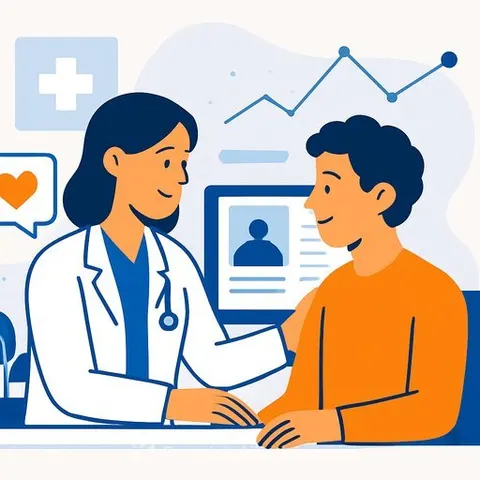
Artificial intelligence can widen access to early disease detection and support clinical decisions, but it cannot replace the judgment and accountability of trained physicians, experts said Saturday during the healthcare session of AI Manthan 2.0 at Chhatrapati Shahu Ji Maharaj University in Kanpur.
The session drew researchers and clinicians who outlined both the promise and the hard limits of AI in medicine. Their consensus: tools that improve diagnosis are advancing quickly, yet the doctor must remain at the center of care.
A low-cost screening model for rural India
Prof Malay Kishore Dutta from Amity University, Noida, presented an AI-based breast cancer screening model that uses blood biomarkers instead of expensive imaging. The model is designed for rural and underserved areas where mammography infrastructure is scarce. By lowering the cost barrier, the approach could help catch cases earlier in populations that currently have limited access to preventive screening.
Dutta's work illustrates a pattern emerging across AI for Healthcare: the most practical gains often come not from replacing specialists but from extending basic screening to places that have none.
Training the next generation of doctors
Suptendra Nath Sarbadhikari, former professor at the Indian Institute of Health Management Research, called for AI and digital health training to be woven into medical education. "AI should support, not replace, clinicians," he said. Future doctors, he argued, need to understand both what these systems can do and where they break down.
That knowledge gap is real. A physician who trusts an AI output without understanding its failure modes risks acting on flawed information. Sarbadhikari's point was that literacy in these tools is becoming as essential as reading a lab report.
The risk of automated overconfidence
Prof Krithika Rangarajan from AIIMS, New Delhi, warned that AI can reinforce incorrect assumptions when deployed without proper supervision. Even tools that appear empathetic in their outputs can mislead, because the appearance of confidence does not equal accuracy. Her caution was direct: efficiency gains are real, but they do not excuse clinicians from verifying what the machine produces.
Dr Vasantha Kumar Venugopal from Rajiv Gandhi Cancer Institute, New Delhi, pointed to radiology as a field where responsible adoption is already working. AI assists with image interpretation while the radiologist retains oversight. The model is assistance, not autonomy.
Why this matters for healthcare professionals
For clinicians, hospital administrators, and AI for Medical Billers, the takeaway is practical: AI tools are entering clinical workflows now, and the professionals who understand their limits will use them safely. The speakers at AI Manthan did not describe a future where machines take over. They described a present where knowing when to override an algorithm is a core clinical skill. That skill requires training, and the institutions that provide it early will shape how safely these tools spread.