
AI news ·
Experts Urge AI Skills Development to Boost Africa’s Education and Digital Economy
Experts urge Africa to boost AI skills in education to drive growth and innovation. Closing internet gaps and setting ethical AI policies are key for the continent's future.
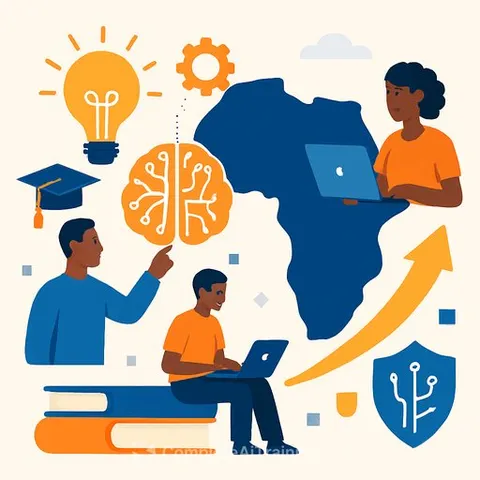
Experts Urge AI Skills Development in Africa’s Education Sector
Experts in emerging technologies emphasize the need for upskilling and reskilling in artificial intelligence (AI) within Africa’s academic institutions. As AI becomes increasingly integrated into global economies, its role in transforming digital landscapes, especially in the Global South, is significant.
At the Deep Tech Summit in Benguerir, Morocco, Khalid Badou, Chief of Staff and Director of Institutional Affairs at Mohammed VI Polytechnic University (UM6P), highlighted the importance of adopting AI thoughtfully in education. He stressed the need for policies and regulations to ensure AI’s ethical use while adapting it to meet educational demands.
UM6P stands out as the first African university to integrate OpenAI’s ChatGPT, experiencing firsthand how this tool can impact academia. Despite initial concerns about AI disrupting education, Badou sees a major opportunity for the entire African education sector to benefit.
"Everyone is starting from the same point globally, discovering what AI can do and how to manage its impact in industry, universities, and beyond," Badou said.
AI Innovation as a Catalyst for Africa
The summit, themed “Redefining Progress: How AI is Transforming Innovation in Deep Tech,” fostered collaboration through brainstorming and testing new ideas. AI’s benefits span critical sectors such as healthcare, fintech, and agriculture, positioning it as a driver of socio-economic growth on the continent.
“Africa should develop its own AI code of conduct instead of waiting for others to set the standards,” Badou urged. The continent’s young, digitally savvy population could see AI’s impact rival that of major infrastructure investments, particularly in food security and healthcare.
According to the United Nations Development Programme (UNDP), AI is projected to add $15.7 trillion to the global economy by 2030. However, only about 10% of this growth is expected in the Global South. Jalal Charaf, UM6P’s Chief Digital and AI Officer, believes this could increase substantially if infrastructure gaps are addressed.
“Improving internet access is key. With broader connectivity, many already have the technology needed to test and use AI,” Charaf explained.
Addressing Internet Access and Intellectual Infrastructure
GSMA’s 2024 data shows only 30% of Africans used mobile internet in 2023, despite 59% coverage of mobile broadband networks. This leaves Africa with the largest usage and coverage gaps globally—15%. Experts agree these gaps must be closed to fully embrace AI solutions.
“Beyond physical infrastructure, there’s a need for intellectual infrastructure. African leaders must educate themselves on AI to lead effectively,” Charaf added.
The African Union (AU) is actively working to set standards for data sovereignty and unify national approaches to AI. Their continental AI strategy encourages member states to collaborate on managing AI-driven change responsibly.
Lavina Ramkissoon, AU Ambassador for AI, Ethics, and Digital Transformation, emphasized that stronger commitment and political will are necessary at national levels to implement AI policies effectively.
“Africa must define AI’s role for the continent, similar to efforts seen in China, the US, and the EU,” Ramkissoon stated.
Funding and Future Steps
The AU’s AI Plan (July 2024) proposes creating a regional fund to support responsible AI development by pooling regional, international, private, and philanthropic resources.
In April, 52 nations signed a declaration to establish a $60 billion AI fund at the Global Summit on Artificial Intelligence for Africa in Kigali, Rwanda. Details on the fund’s governance and deployment remain pending.
For IT and development professionals looking to contribute to or benefit from Africa’s AI growth, staying informed on these developments and investing in AI skills is critical. Resources like Complete AI Training’s latest courses can provide practical learning paths for applying AI technologies effectively within diverse sectors.