
AI news ·
Experts warn AI reliance in schools may undermine learning
64% of U.S. teens have used AI chatbots, and 59% say AI cheating happens regularly at their school, per a Pew study. Educators warn that relying on AI for quick answers risks weakening students' independent thinking and test performance.
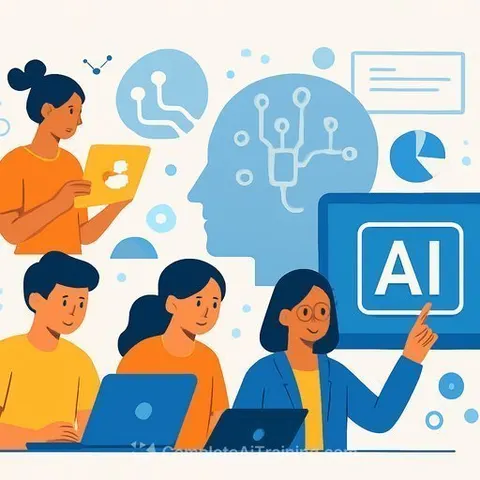
More than half of U.S. teens have used AI chatbots for schoolwork, and 59% say AI cheating happens regularly at their school, according to a Pew Research Center study from February. As the technology spreads through classrooms, researchers and educators are wrestling with a central question: how students can use AI without losing the ability to think for themselves.
Researchers at the USC Center for Generative AI and Society found that many college students turn to AI for quick answers rather than deeper learning. That pattern worries Kendall Hartley, a professor of educational technology at UNLV, who said the biggest risk is students becoming too dependent on AI to do their thinking for them.
AI as a support tool, not a substitute
Hartley said AI is not changing the way people learn, but it is changing the tools available to complete educational tasks. He argues the key is understanding why students use AI in the first place.
AI can help critique writing, make suggestions, and clarify difficult concepts. But Hartley encourages students to start with their own words and ideas before turning to AI for support.
"They need to think about if it's there to support their learning, then there's certainly a way to use it and even to prompt the AI tool in a way that will encourage learning and understanding as opposed to just getting answers," Hartley said.
The stakes go beyond daily assignments. While students may see better grades on AI-assisted work, Hartley said some research suggests that success does not always carry over when students are tested on their own.
"The goal should be to use the technology as a tool to support learning, not as a substitute for it," he said.
For educators looking to integrate AI thoughtfully, training resources like the AI Learning Path for Teachers offer practical guidance on using AI tools in classrooms. Broader AI for Education courses cover how to apply the technology while preserving academic integrity.
What students say about AI use
The Pew study found that 64% of teens have used AI chatbots. More than half said they use them to find information and help with schoolwork, while 59% said AI cheating happens regularly at their school.
Those numbers suggest AI use is already widespread, even as schools and universities develop policies around it. Many educators still believe AI can improve student outcomes when used deliberately.
Why this matters for educators
For teachers and administrators, the practical challenge is designing assignments that let students benefit from AI without outsourcing their thinking. That means being explicit about when AI use is appropriate, how to cite it, and what counts as original work in an AI-assisted classroom.
The students who will succeed are those who treat AI as a tutor or editor, not an answer key. Educators who model that distinction - and build it into their assignments - give students a better shot at developing the critical thinking and problem-solving skills they will need after graduation.