
AI news ·
FCC bans new Chinese humanoid robots and power inverters to protect U.S. AI supply chain
The FCC banned new Chinese humanoid and quadruped robots over security risks. The move targets Unitree, which holds nearly 20% of the global robot market.
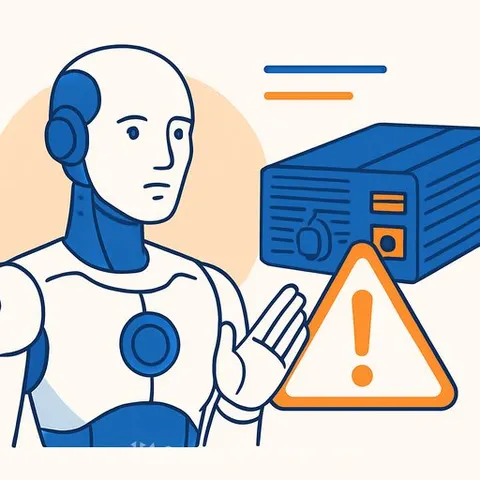
WASHINGTON - The Trump administration on Tuesday banned imports of new Chinese humanoid and quadruped robots and connected power inverters, aiming to protect the U.S. artificial intelligence buildout from national security threats and drive manufacturing back to American soil. The Federal Communications Commission released the measures, which took effect immediately, citing supply chain vulnerabilities and the risk of cyberattacks on critical infrastructure.
"These devices could create supply chain vulnerabilities that could disrupt U.S. economic and national security and could create a cybersecurity risk that threatened American critical infrastructure," the FCC said in a statement. Chairman Brendan Carr added that the commission "will continue to do our part to secure America's critical supply chains."
Robots, inverters, and the AI supply chain
The ban targets new models of humanoid robots-machines with AI-enabled "brains" expected to see broad adoption in industry and consumer settings-and quadruped robots, along with power inverters that connect renewable energy sources and batteries to data centers and the grid. The restrictions are designed to prevent potential Chinese disruption, data theft, and remote commandeering of devices that could spy on U.S. industries or be used to conduct cyberattacks.
The FCC noted that robots "collect data that could be leveraged by malign actors to surveil Americans, enhance the capabilities of foreign intelligence services, or to remotely commandeer the robots." The move follows a pattern of previous FCC bans on Chinese drones and routers, and authorities are keen to avoid a repeat of the Volt Typhoon hacking campaign, where Chinese government-linked actors compromised privately owned routers to hide attacks on critical infrastructure.
U.S. Representative John Moolenaar, a Michigan Republican who chairs the House Select Committee on China, said the FCC action "protects our country and strengthens our nation's robotics industry."
Exemptions and the onshoring push
The FCC is expected to exempt many non-Chinese suppliers from the restrictions, as it has done with earlier bans on foreign drones and routers, according to four sources. The measures apply only to robot and inverter models that have not yet been released, though the FCC can revoke authorizations for already-authorised models.
The bans are part of a broader effort to reshore key industries. Treasury Secretary Scott Bessent has warned that Chinese AI firms could face U.S. sanctions for stealing intellectual property, and officials want to avoid ceding control of critical components the way China now dominates rare earth minerals. For government professionals working at the intersection of technology and national security, these restrictions underscore the growing need for specialized knowledge in AI for Government and supply chain risk management.
Chinese response and market impact
The Chinese embassy in Washington urged the United States to "heed the objective and rational voices of the business communities" and stop "smearing Chinese companies and threatening them with sanctions," adding that Beijing will "take all necessary measures" in response to actions that harm its interests.
The robot ban is expected to hit Unitree, a world leader in humanoid robots with just under a fifth of global market share. The firm, recently added to the Pentagon's list of alleged Chinese military-backed companies, has partnered with Nvidia to use Blackwell chips for robot brains. Nvidia has said data from the robots will remain in the U.S., and that Unitree's biggest customers are U.S. academic and research institutions. China is the world's largest maker of inverters, led by Sungrow Power Supply and Huawei, which are already heavily sanctioned.
Why this matters for government
The FCC's actions signal a sharpening focus on the security of AI-driven supply chains and the physical infrastructure that powers them. Policy makers will need to evaluate the risks posed by foreign-made robotics and energy components, while also weighing the economic pressures of onshoring. Policy makers grappling with the security implications of AI-driven robotics and supply chain dependencies can find structured guidance through resources like the AI Learning Path for Policy Makers. The bans may also influence upcoming legislation and interagency coordination, as Congress and the executive branch continue to target Chinese tech firms.