
AI news ·
Fetterman says AI doomsdaying helps China as US weighs its next move
Sen. John Fetterman dismissed "AI doomsdaying" and warned that China is benefiting from an American overreaction in the race for AI dominance. He argued that pulling back on development would hand an advantage to U.S. competitors, as Bloomberg analysis shows China narrowing the gap.
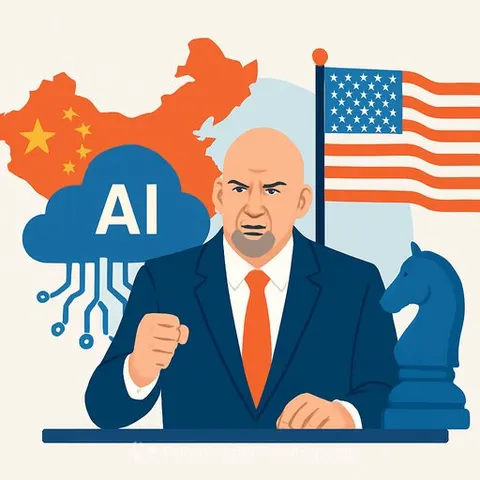
Sen. John Fetterman, D-Pa., dismissed "AI doomsdaying" on Saturday and warned that China is benefiting from an American "overreaction" in the race for artificial intelligence dominance. In a post on X sharing a Bloomberg analysis, Fetterman argued that pulling back on AI development would hand an advantage to U.S. competitors.
"AI supremacy and energy dominance underpins our national security," Fetterman wrote. "China continues to fuel and benefit from our overreaction." He also said he rejects "the political pandering and hyperbole over data centers or AI doomsdaying."
Fetterman's push for aggressive AI investment
Fetterman has repeatedly urged aggressive U.S. investment in AI and data centers. Earlier this month, he responded to reporting that Sen. Bernie Sanders, I-Vt., was considering a pause on AI development by saying "America must lead in the development of AI, otherwise we live under China's rules."
He also opposed a March proposal to impose a moratorium on new AI data centers, calling the idea "China First," according to his remarks.
The administration's stance on data centers
President Donald Trump has urged governors and local officials to welcome AI data centers and praised their job creation. Speaking at the White House, he said "the construction jobs is enormous" and that he would welcome a big AI plant in a town. The president has said the industry needs better public relations as Americans express concerns about local data center construction.
Trump signed an executive order in July aimed at expediting the permitting process for data centers, the White House said. A Gallup poll in May found a majority of Americans opposed construction of new data centers near where they live, citing concerns about electricity and water consumption and environmental impact.
The Bloomberg analysis that Fetterman shared said the U.S. lead over China in AI is narrowing and that Chinese companies are deploying advanced models at a faster pace.
Why this matters for IT and development professionals
For developers and IT teams, the policy debate around AI infrastructure directly affects the tools and platforms available for building and deploying models. If the U.S. slows data center construction or imposes pauses on development, it could delay access to compute resources and affect deployment timelines for AI projects. The narrowing gap between U.S. and Chinese AI capabilities also means technology professionals should track how global competition shapes the availability and cost of AI services, model releases, and infrastructure investment in the coming quarters.